
Natto
Legume
- Age Suggestion
- 6 months
- Iron-Rich
- Yes
- Common Allergen
- Yes
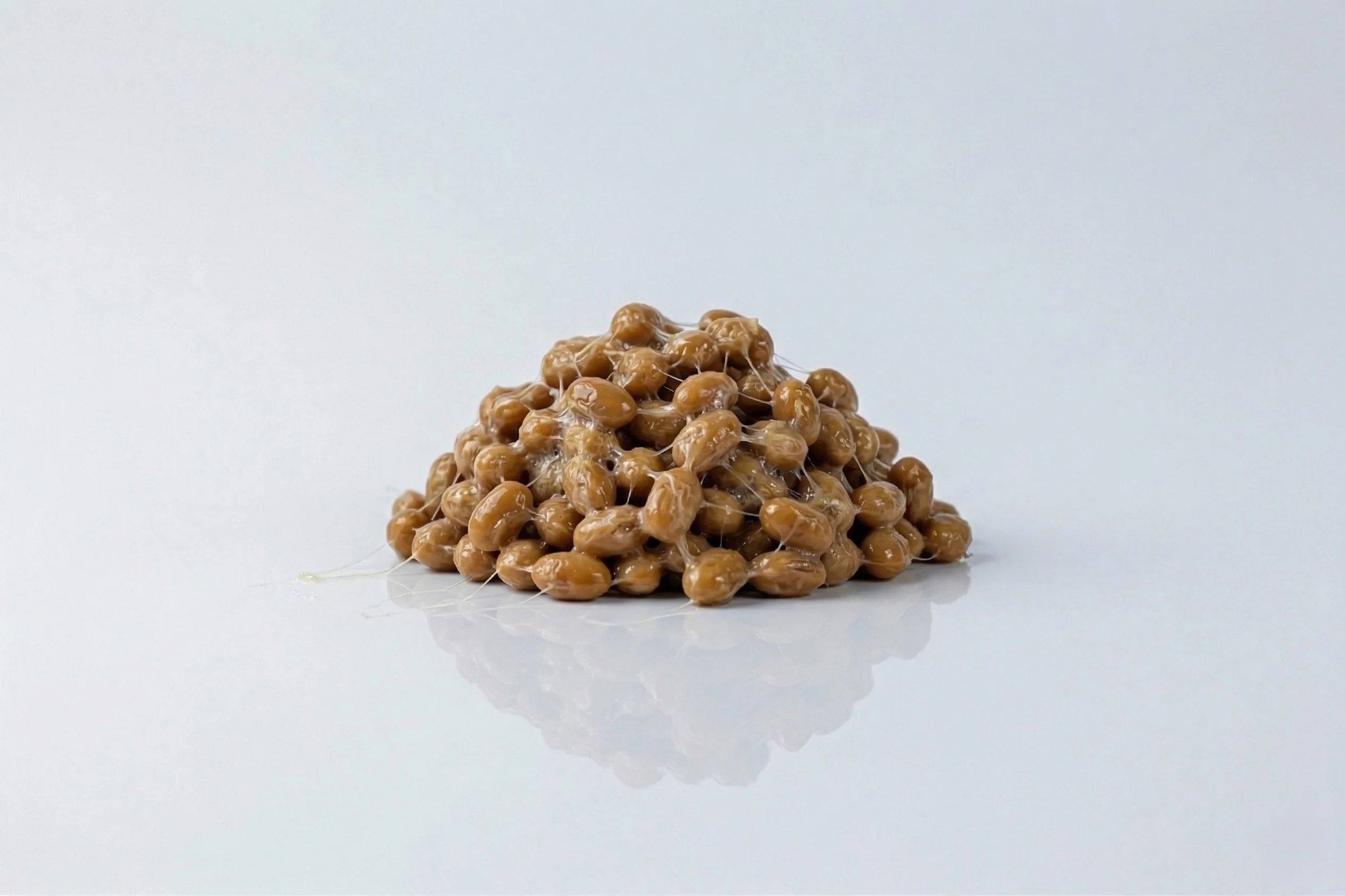
When can babies have natto?
Natto may be introduced as soon as baby is ready to start solids, which is generally around 6 months of age. Take care when introducing natto, as it is made of soy and sometimes other common food allergens.
Natto is a traditional Japanese food made from soybeans that have been fermented with a beneficial bacteria called Bacillus subtilis var. natto. The result is a uniquely pungent, savory food with a sticky, stringy texture and a bold umami flavor that people tend to either love or hate. Natto has been enjoyed for over a thousand years and remains a staple of the Japanese table, typically served over steamed rice with soy sauce, mustard, and sometimes egg or green onions.
How do you serve natto to babies?
Every baby develops on their own timeline, and the suggestions on how to cut or prepare particular foods are generalizations for a broad audience.
6 months old +:
Lightly mash natto with the back of a fork to break up the whole beans and reduce their roundness, then serve on its own or mix into soft, scoopable foods like rice porridge (okayu or congee), mashed tofu, or pureed sweet potato. Let baby scoop the mashed natto with their hands or offer on a pre-loaded spoon. Natto can also be chopped up and added to finger foods like rice balls or egg strips for baby to pick up and munch on. It’s fine to share natto with soy sauce in it, although if baby has natto regularly, use only a small amount of soy sauce to keep baby’s sodium intake low. Consider waiting until a child is older to share natto with runny egg due to increased risk of foodborne illness.
9 months old +:
Serve natto lightly mashed on its own or over rice for baby to self-feed with their developing pincer grasp. If baby is handling the texture well, you can mash the natto less or offer unmodified natto. The sticky texture of natto naturally clings to rice, making the grains stick together and make the meal easier for baby to eat. Natto can also be mixed into other dishes such as noodles, scrambled eggs, or mashed vegetables. It’s fine to share natto with soy sauce in it, although if baby has natto regularly, use only a small amount of soy sauce to keep baby’s sodium intake low. Consider waiting until a child is older to share natto with runny egg due to increased risk of foodborne illness.
12 months old +:
Natto can be served in most preparations as desired—over rice, stirred into noodle dishes, mixed with eggs, or incorporated into soups. Even if the child is managing natto’s texture in the mouth well, it is notoriously tricky to pick up with utensils, so don’t be discouraged if the child continues to opt for using their hands or if you still need to pre-load a spoon for them.
Is natto a choking hazard for babies?
Yes. While generally soft in texture, natto can be sticky and challenging to manage in the mouth, qualities that can increase the risk of choking. To reduce the risk, prepare and serve natto in an age-appropriate way as described in How to Serve. As always, create a safe eating environment and stay within reach of baby during meals.
Learn the signs of choking and more about choking first aid in our free guides, Infant Rescue and Toddler Rescue.
Is natto a common allergen?
Yes. Natto is made of soybeans, a common food allergen among infants.[1] Dishes prepared with natto may contain other common allergens, such as fish and wheat, and natto is often served with egg. Natto may also contain mustard, which is a common allergen in some regions of the world. Always read the ingredients in a recipe or on the label of store-bought natto before serving to baby to check which common allergens it contains.
Prior to sharing natto with baby, it is important to introduce common food allergens on their own and establish that they are well-tolerated before serving them together in a prepared food. This way, you'll be able to identify which allergen is responsible if baby has a reaction. Then, when you are ready to offer natto, you will be confident that baby has already safely eaten any common food allergens in the food.
Is natto healthy for babies?
Yes. Natto is an excellent source of plant-based iron, which is important for brain development and the prevention of iron-deficiency anemia. It is also rich in protein, calcium, magnesium, potassium, and zinc. Notably, natto offers lots of vitamin K which plays an important role in blood clotting, bone development, and cardiovascular health.[2] [3]
As a fermented food, natto also contains beneficial probiotic bacteria and prebiotic fiber that can help support baby's rapidly developing gut microbiome, which plays a role in immune function and overall digestive health.[4]
Does natto taste good to babies?
While every child is different, babies who are introduced to a wide variety of foods early on often learn to appreciate diverse flavors, including unique ones like natto. Natto has a deep, savory umami flavor that pairs well with the mild starchy flavor of rice and some vegetables. If baby seems reluctant to try it, mix a small amount of natto into a familiar food like rice porridge or mashed sweet potato.
Can babies eat natto every day?
Natto can be offered regularly as part of a varied diet, but as with any food, rotating it alongside other nutrient-rich foods is the best approach. One consideration worth noting is natto's very high vitamin K content. While vitamin K is beneficial, infants who are receiving vitamin K antagonist medications (a rare but possible situation) should have their natto intake discussed with a healthcare provider, as the high vitamin K content could interfere with medication.
Reference Material
Food Allergy Research and Education. Soy Allergy.
Tsukamoto Y, Ichise H, Kakuda H, Yamaguchi M. (2000). Intake of fermented soybean (natto) increases circulating vitamin K2 (menaquinone-7) and gamma-carboxylated osteocalcin concentration in normal individuals. J Bone Miner Metab. 18(4):216-22. doi: 10.1007/s007740070023. PMID: 10874601.
Katsuyama H, Ideguchi S, Fukunaga M, Saijoh K, Sunami S. (2002). Usual dietary intake of fermented soybeans (Natto) is associated with bone mineral density in premenopausal women. J Nutr Sci Vitaminol (Tokyo) 48(3):207-15. doi: 10.3177/jnsv.48.207. PMID: 12350079.
Start solids with confidence
- Guided Introduction to 100+ Foods
- Smart Tools to Simplify Mealtime
- Food Allergen 101
- 300+ Meal Ideas
- First Foods® Database
Start solids with confidence
- Guided Introduction to 100+ Foods
- Smart Tools to Simplify Mealtime
- Food Allergen 101
- 300+ Meal Ideas
- First Foods® Database
Expert Tips Delivered to Your Inbox
Sign up for weekly tips, recipes and more.