
Mayonnaise
Condiment
- Age Suggestion
- 6 months
- Iron-Rich
- No
- Common Allergen
- Yes
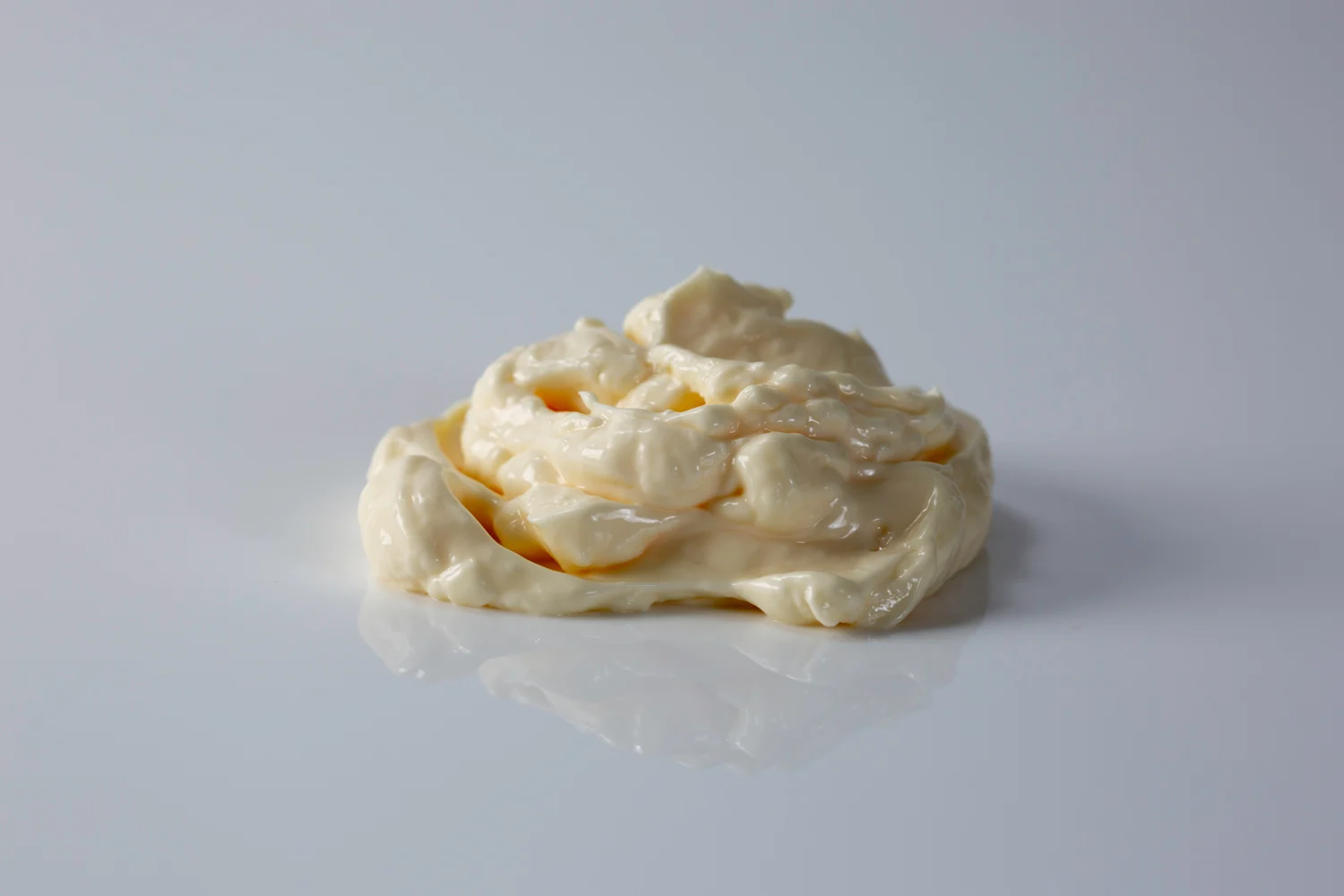
When can babies eat mayonnaise?
Mayonnaise, when made with pasteurized eggs, may be introduced as soon as baby is ready to start solids, which is generally around 6 months of age. Avoid mayonnaise that contains honey, which is associated with a risk of infant botulism for babies under 12 months of age.
How do you prepare mayonnaise for babies with baby-led weaning?
Every baby develops on their own timeline, and the suggestions on how to cut or prepare particular foods are generalizations for a broad audience.
6 to 8 months old:
Serve store-bought, honey-free mayonnaise. Homemade mayonnaise is typically made with raw egg, which carries a high risk of foodborne illness, and honey is associated with a risk of infant botulism for babies under 12 months. When possible, use low-sodium or “no salt added” mayonnaise (100 mg or less per serving) to minimize sodium in the child’s diet. To encourage baby to feed themselves, spread a thin layer of mayonnaise on food that is easy for the child to grab and munch on, like a corn cob or a strip of toasted bread, or use it to bind and season finger foods like fish cakes, fritters, or tamagoyaki. Mayonnaise may also be mixed into a soft food that baby can scoop, like egg salad, pasta, or mashed potatoes.
9 to 11 months old:
Serve store-bought, honey-free mayonnaise. Homemade mayonnaise is typically made with raw egg, which carries a high risk of foodborne illness, and honey is associated with a risk of infant botulism for babies under 12 months. When possible, use low-sodium or “no salt added” mayonnaise (100 mg or less per serving) to minimize sodium in the child’s diet. At this age, use mayonnaise as a sauce or seasoning for foods that can be cut into bite-sized pieces for the child to practice picking up, which promotes development of the pincer grasp (where the thumb and pointer finger meet).
12 to 24 months old:
Offer store-bought mayonnaise in any dish that you’d like to share with the child. When serving mayonnaise with a hot dog, make sure to cut and serve the hot dog in an age-appropriate size, as hot dogs are a common choking hazard. Feel free to offer a small cup of dip made with mayonnaise—just know that, at this age, the child is just as likely to eat or drink the sauce on its own, so consider offering a very small amount.
24 months old+:
Serve store-bought mayonnaise in any dish that you want to share with the child or use it to make a sauce to offer in a small cup for dipping. At this age, you can also help the child squeeze or spread mayonnaise on their own food, which can help engage toddlers in the meal.
Is mayonnaise a common choking hazard for babies?
No, mayonnaise is not a common choking hazard, although the foods it is served with could pose a risk. As always, make sure you create a safe eating environment and stay within arm’s reach of baby during meals. For more information on choking, visit our sections on gagging and choking and familiarize yourself with the list of common choking hazards.
Does mayonnaise contain common allergens?
Yes. Mayonnaise typically contains egg, a common food allergen. In some preparations, mayonnaise may also contain other common food allergens like sesame, soy, or wheat. Certain varieties of mayonnaise contain mustard, which is a common food allergen in some areas of the world.
Mayonnaise may contain sulfites, and while sulfites are not a common allergen, certain individuals, particularly those with asthma, may have allergy-like reactions to added sulfites.[1] If sulfites are a concern, avoid ingredients such as sulfur dioxide, potassium bisulfate, potassium metabisulfite, sodium bisulfite, sodium metabisulfite, and sodium sulfite, to name a few.[1]
Prior to sharing mayonnaise with baby, it is important to introduce any common food allergens in the condiment on their own and rule them out as an allergy. This way, when you are ready to offer mayonnaise, you’ll be confident that the child has already safely eaten any common food allergens in the condiment. This approach will also help you identify which food is responsible if baby has an allergic reaction when eating a dish that contains mayonnaise combined with other ingredients.
As you would when introducing any new food, start by offering a small quantity for the first few servings. If there is no adverse reaction, gradually increase the quantity over future meals.
Is mayonnaise healthy for babies?
Yes, as long as it does not contain raw egg or honey. Raw egg carries a high risk of foodborne illness, and honey is associated with a risk of infant botulism for babies under 12 months of age. Most mayonnaise is rich in fat, which provides energy to fuel baby’s rapid growth and development, as well as omega-3 fatty acids and vitamin K, with a bit of choline. Collectively, these nutrients help support baby’s blood clotting, bone health, and neurodevelopment.
When offering mayonnaise:
Serve store-bought mayonnaise rather than homemade versions made with raw egg yolk, which carries a high risk of foodborne illness, to which babies are more susceptible for severe symptoms.[2] Store-bought mayonnaise is more likely to be made with pasteurized egg. Alternatively, make and serve eggless mayonnaise.
Look for low-sodium or “no salt added” mayonnaise with no or minimal added sweeteners. Reducing exposure to sodium can help prime baby’s palate for a wider variety of foods, increase the nutrient density of their diet, and live an overall healthier lifestyle.[3] [4] [5]
Select full-fat mayonnaise over “light” versions when possible, as babies need lots of fat for healthy growth.
★Tip: Use mayonnaise as a vehicle to introduce your favorite herbs, spices, or other seasonings that you want baby to learn to love.
Can mayonnaise help babies poop?
No. Mayonnaise lacks fiber and is high in fat, which are both qualities that slow the processes of digestion and pooping. Remember that pooping patterns can vary significantly from baby to baby. If you have concerns about baby’s pooping and digestive function, talk to your pediatric healthcare provider.
Reference Material
Cleveland Clinic. (2020). Sulfite sensitivity.
Centers for Disease Control and Prevention. (2023). 10 Dangerous food safety mistakes.
Liem D. G. (2017). Infants' and Children's Salt Taste Perception and Liking: A Review. Nutrients, 9(9), 1011. DOI: 10.3390/nu9091011
Start solids with confidence
- Guided Introduction to 100+ Foods
- Smart Tools to Simplify Mealtime
- Food Allergen 101
- 300+ Meal Ideas
- First Foods® Database
Start solids with confidence
- Guided Introduction to 100+ Foods
- Smart Tools to Simplify Mealtime
- Food Allergen 101
- 300+ Meal Ideas
- First Foods® Database
Expert Tips Delivered to Your Inbox
Sign up for weekly tips, recipes and more.