
Mace
Herb/Spice
- Age Suggestion
- 6 months
- Iron-Rich
- No
- Common Allergen
- No
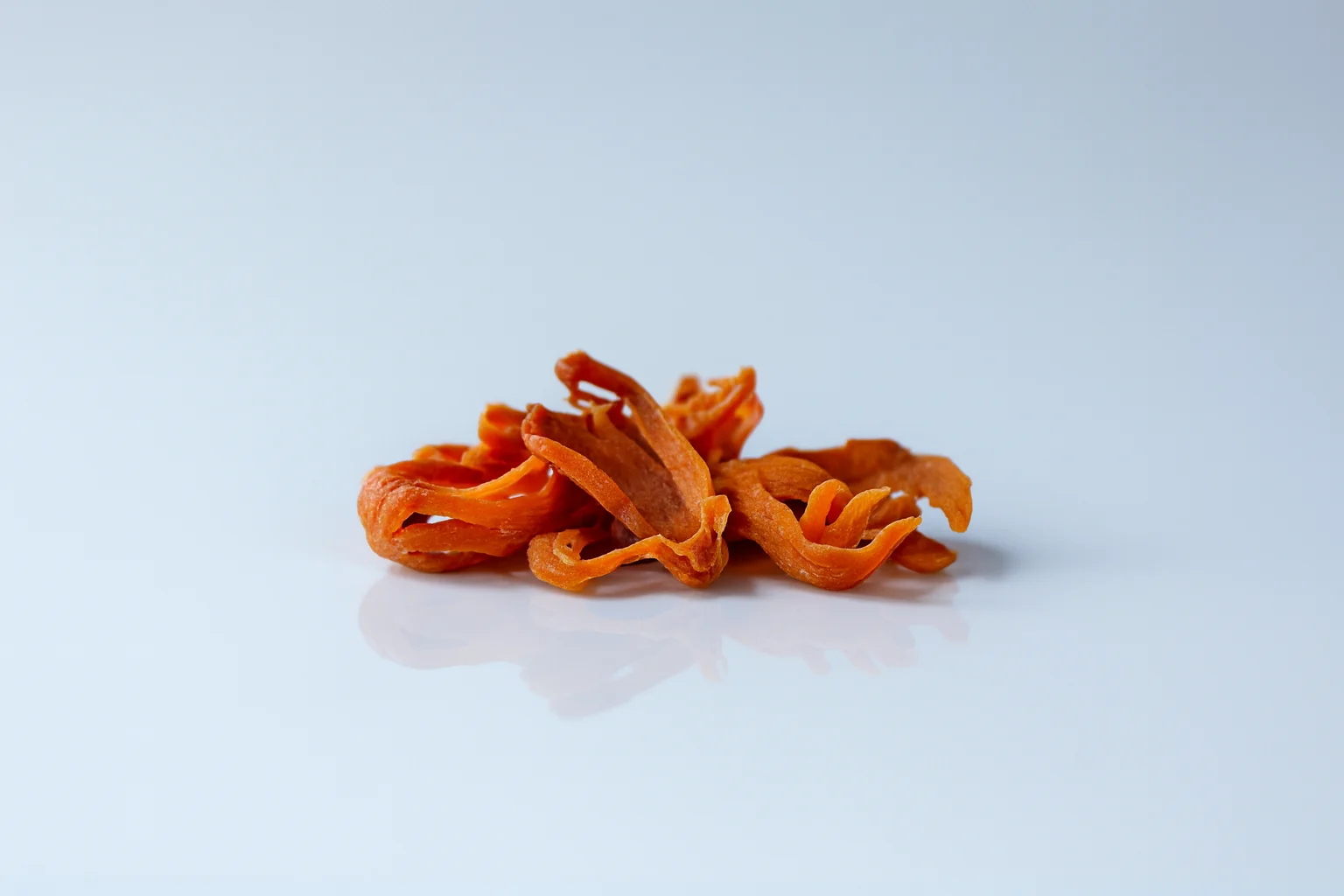
When can babies have mace?
Mace may be introduced as soon as baby is ready to start solids, which is generally around 6 months of age.
Mace is the lacy, bright red covering that surrounds the seed commonly known as nutmeg. After drying, this covering turns orange-gold and can be sold as blades (whole pieces) or ground into a fine powder. Although similar to nutmeg in flavor, mace is often considered to be more delicate and a bit more mild and floral. Native to islands off the coast of Southeast Asia, mace and nutmeg have a long and complex history tied to the global spice trade and colonization. Its warm, citrusy, and slightly sweet flavor plays a part in South Asian biryanis, Caribbean desserts, European baked goods, and more.
How do you serve mace to babies?
Every baby develops on their own timeline, and the suggestions on how to cut or prepare particular foods are generalizations for a broad audience.
6 months old +:
Sprinkle tiny amounts of powdered mace on age-appropriate foods like strips of toast, warm cereals, and yogurt, or into the batter for pancakes or baked goods. You can also use whole blades of mace to flavor marinades, sauces, or stews to share with baby—just make sure to remove the blades before serving to reduce choking risk.
12 months old +:
Cook with powdered mace or mace blades as desired in shared meals, just continue to keep the amounts small and remove any whole blades of mace before serving. Use mace in combination with other ingredients to create flavorful sauces, season batters and baked goods, and much more.
Is mace a choking hazard for babies?
Yes. Whole blades of mace can be firm and challenging to chew, qualities that increase the risk of choking, although powdered mace poses a low choking risk. To reduce the risk, prepare and serve mace in an age-appropriate way as described in the How to Serve section. As always, create a safe eating environment and stay within reach of baby during meals.
Learn the signs of choking and more about choking first aid in our free guides, Infant Rescue and Toddler Rescue.
Is mace a common allergen?
No. Allergies to mace are rare, but have been reported.[1] [2] [3] Note that certain spice blends that feature mace may contain common food allergens, so make sure to read labels thoroughly if your child has food allergies.
Spices such as mace can also cause symptoms that resemble allergic reactions. For example, inhaling a puff of powdered mace can irritate the nasal passageways and trigger sneezing and coughing, but may not be triggered by an allergic reaction.[4] Additionally, certain spices, like mace, may cause contact rashes due to potentially skin-irritating components in the food, but not necessarily due to an allergy.[5] [4]
Foods seasoned with spices like mace may cause a harmless rash around the mouth while baby eats or may cause or worsen diaper rash. Try applying a thin layer of barrier cream or ointment—such as pure petroleum jelly or a plant-based oil/wax balm—to baby’s face and diaper area to help prevent contact rashes.
Is mace safe for babies?
Yes, mace is generally recognized as safe when used in amounts typically used in cooking.[6] Like nutmeg, mace contains a compound called myristicin that can theoretically lead to hallucinogenic effects if mace was consumed in a large amount.[7] [8] [9] In cooking, mace is typically used in small amounts spread over multiple portions of a dish, making it fine to serve, even for babies just starting solids. Mace can also come in the form of oil, which should be avoided for baby to avoid excessive ingestion.
Is mace healthy for babies?
Yes. Mace offers small amounts of a variety of vitamins, minerals, and fiber. Research suggests that mace may offer anti-inflammatory, antimicrobial, and anticancer properties to support baby’s overall health.[7] Mace can also come in the form of oil, which should be avoided for baby to avoid excessive ingestion.
Is mace the same as nutmeg?
Not exactly. Mace and nutmeg come from the same fruit, but mace is the dried outer aril, while nutmeg is the seed it covers. In terms of flavor, they’re similar, but mace is more floral and delicate, while nutmeg is earthier and warmer.
Can babies have whole mace blades?
Whole mace blades can be used to flavor shared meals during cooking, but always remove them before serving to babies to reduce choking risk. Only powdered mace should remain in a final dish.
Reference Material
Sanchez Moreno, G. V., Cepeda, S. T., Gimenor, M. P. B., Peloche, M. P., Burgaleta, R. M., Martinez, F. J. S., Amerigo, D. A., Petruta, C. V., & Alvarez-Cuesta, E. (2011). Rhinitis induced to mace. Clinical and Translational Allergy, 1(Suppl 1), P11. DOI: 10.1186/2045-7022-1-S1-P11
Gimenez, L., & Zacharisen, M. (2011). Severe pepper allergy in a young child. WMJ : official publication of the State Medical Society of Wisconsin, 110(3), 138–139.
van den Akker, T. W., Roesyanto-Mahadi, I. D., van Toorenenbergen, A. W., & van Joost, T. (1990). Contact allergy to spices. Contact dermatitis, 22(5), 267–272. DOI: 10.1111/j.1600-0536.1990.tb01594.x
Start solids with confidence
- Guided Introduction to 100+ Foods
- Smart Tools to Simplify Mealtime
- Food Allergen 101
- 300+ Meal Ideas
- First Foods® Database

Start solids with confidence
- Guided Introduction to 100+ Foods
- Smart Tools to Simplify Mealtime
- Food Allergen 101
- 300+ Meal Ideas
- First Foods® Database
Expert Tips Delivered to Your Inbox
Sign up for weekly tips, recipes and more.