
Licorice Root
Herb/Spice
- Age Suggestion
- 6 months
- Iron-Rich
- No
- Common Allergen
- No
Warning
Licorice root contains a compound named glycyrrhizin which, when eaten in excess, can cause serious illness, including fluid, electrolyte, blood pressure, and heart rhythm abnormalities. Only use licorice root in small amounts and on occasion in meals and avoid all forms of licorice supplements for baby.[1] [2] [3] [4] Consider avoiding licorice entirely if a child has heart, kidney, blood pressure, or cortisol-related health issues.[5]
When can babies have licorice root?
Licorice root may be introduced as soon as baby is ready to start solids, which is generally around 6 months of age. Use licorice root in small amounts and only serve foods that contain licorice on occasion, as serving in excess can lead to illness.[1][2] [3] [4] Avoid sharing licorice candies until a child is older due to increased choking risk and sugar levels.
Licorice root comes from a perennial plant native to parts of Europe, the lands around the Mediterranean, and Asia and has been used for thousands of years in both culinary and cultural traditions. Its distinctive flavor appears in foods and drinks across the world, from East Asian broths and Scandinavian candies to sweets and liqueurs. Over time, licorice root has also become associated with herbal remedies, though culinary use and medicinal use are not the same.
How do you serve licorice root to babies?
Every baby develops on their own timeline, and the suggestions on how to cut or prepare particular foods are generalizations for a broad audience.
6 months old +:
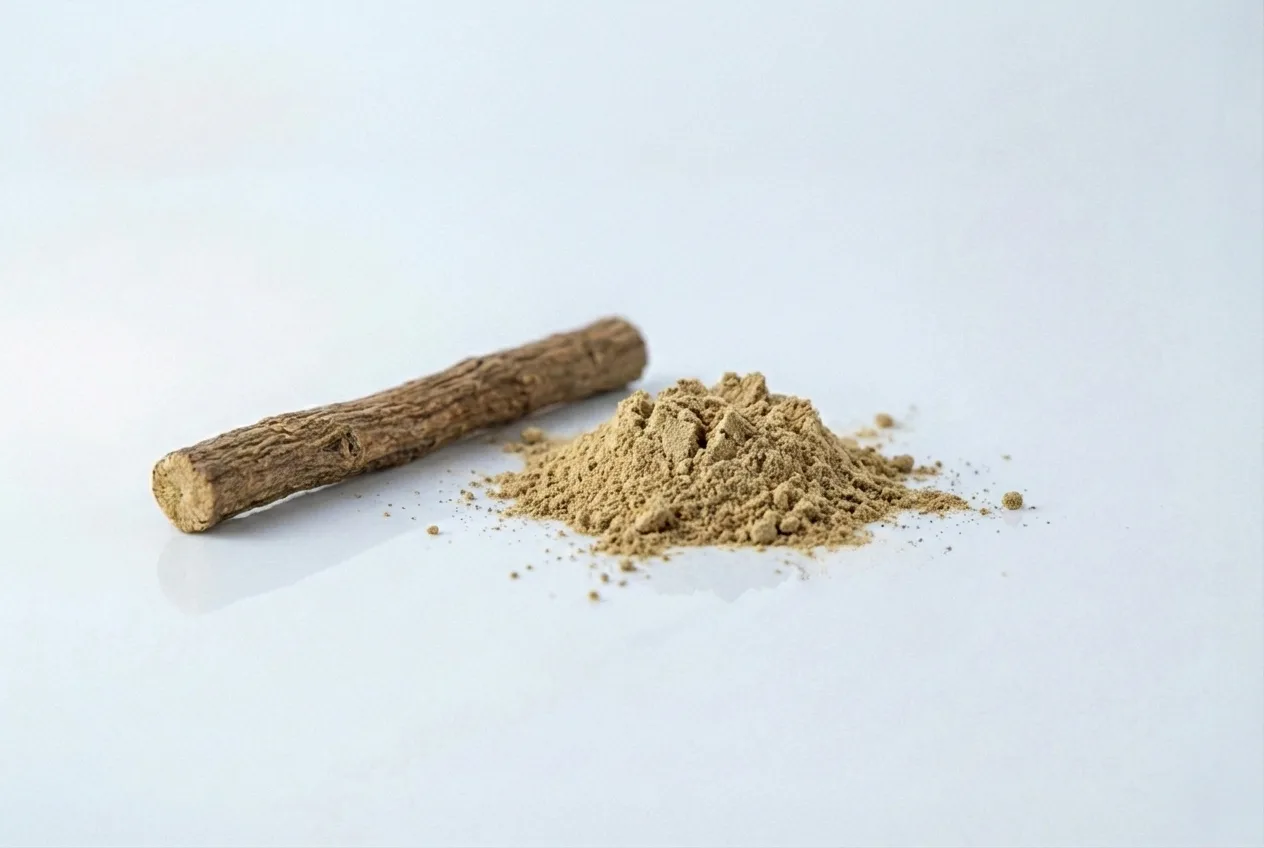
Use a very small amount of food-grade licorice root powder mixed into shared meals, such as strips of fish, a marinade for meat or vegetables, or soups and stews. Avoid licorice candies, due to increased choking risk, as well as licorice pellets, due to choking risk and exposure to concentrated forms of licorice root.
12 months old +:
Use food-grade licorice root powder sparingly in family dishes from marinades and sauces to soups and stews. Continue to avoid licorice candies, due to increased choking risk, as well as licorice pellets, due to choking risk and exposure to concentrated forms of licorice root.
Is licorice root a choking hazard for babies?
Yes. Licorice root is firm and fibrous, and pieces of the root can be hard and woody, which are qualities that pose an increased risk of choking. Licorice candies also pose an increased risk, as they are hard and chewy. To reduce the risk, prepare and serve licorice root in an age-appropriate way as described in How to Serve. As always, create a safe eating environment and stay within reach of baby during meals.
Learn the signs of choking and more about choking first aid in our free guides, Infant Rescue and Toddler Rescue.
Is licorice root a common allergen?
No. Allergies to licorice root are rare, but not unheard of.[6] Note that certain spice blends that feature licorice may contain common food allergens, so make sure to read labels thoroughly if your child has food allergies.
Spices such as licorice root can also cause symptoms that resemble allergic reactions. For example, inhaling a puff of powdered licorice can irritate the nasal passageways and trigger sneezing and coughing, but may not be triggered by an allergic reaction.[7] Additionally, certain spices, like licorice, may cause contact rashes due to potentially skin-irritating components in the food, but not necessarily due to an allergy.[7] [8]
Foods seasoned with spices like licorice root may cause a harmless rash around the mouth while baby eats or may cause or worsen diaper rash. Try applying a thin layer of barrier cream or ointment—such as pure petroleum jelly or a plant-based oil/wax balm—to baby’s face and diaper area to help prevent contact rashes.
Is licorice root safe for babies?
Yes, licorice is generally recognized as safe when occasionally used in small amounts in cooking.[9] Avoid supplements containing licorice such as teas, oils, capsules, powders, and tinctures, as well as licorice-containing candies. Research regarding their safety in children is lacking and cases of toxicity have been reported.[4]
Is licorice root healthy for babies?
Is licorice root the same as licorice candy?
No. Licorice candy is a processed sweet that may or may not contain real licorice root and often includes added sugar, flavorings, and dyes. Licorice root is a whole plant ingredient used to flavor a variety of foods.
Can babies have licorice root tea?
No. Licorice root tea is not recommended for babies or young children due to the potential ill effects of concentrated licorice compounds.
Reference Material
Kwon, Y. J., Son, D. H., Chung, T. H., & Lee, Y. J. (2020). A Review of the Pharmacological Efficacy and Safety of Licorice Root from Corroborative Clinical Trial Findings. Journal of medicinal food, 23(1), 12–20. DOI: 10.1089/jmf.2019.4459
Edelman, E. R., Butala, N. M., Avery, L. L., Lundquist, A. L., & Dighe, A. S. (2020). Case 30-2020: A 54-Year-Old Man with Sudden Cardiac Arrest. The New England journal of medicine, 383(13), 1263–1275. DOI: 10.1056/NEJMcpc2002420
Allcock, E., & Cowdery, J. (2015). Hypertension induced by liquorice tea. BMJ case reports, 2015, bcr2015209926. https://doi.org/10.1136/bcr-2015-209926
Start solids with confidence
- Guided Introduction to 100+ Foods
- Smart Tools to Simplify Mealtime
- Food Allergen 101
- 300+ Meal Ideas
- First Foods® Database

Start solids with confidence
- Guided Introduction to 100+ Foods
- Smart Tools to Simplify Mealtime
- Food Allergen 101
- 300+ Meal Ideas
- First Foods® Database
Expert Tips Delivered to Your Inbox
Sign up for weekly tips, recipes and more.