


Access our First Foods® Database in the Solid Starts App.
Learn moreHoneydew Melon
Fruit
Age Suggestion
6 months
Iron-Rich
No
Common Allergen
No
Warning
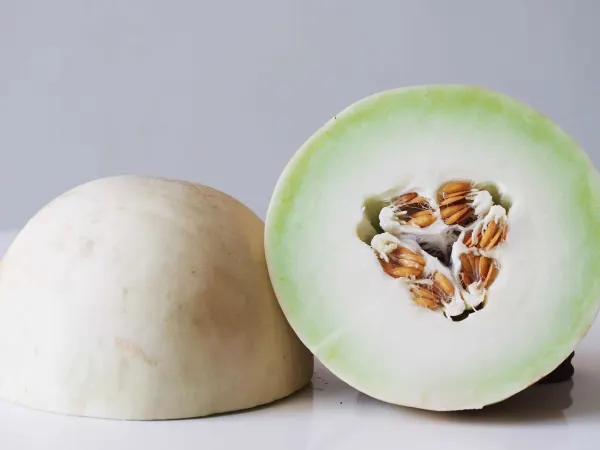
Honeydew melon, especially in the form of melon balls, is a choking hazard, so keep reading to learn how to serve this fruit safely.
When can babies have honeydew melon?
Honeydew melon may be introduced as soon as baby is ready to start solids, which is generally around 6 months of age.
Honeydew melons are a type of muskmelon—a family of melons that includes many varieties, including canary, cantaloupes, casaba, cavallion, crenshaw, winter melons, and more. While the fruit’s exact origins are unknown, there are records of honeydew melons being cultivated in parts of Northern and Western Africa dating back thousands of years. Today, the melons are grown in hot, dry climates worldwide, including in China, where the beloved fruit is known as the bailan melon, among other names.
How do you serve honeydew melon to babies?
Every baby develops on their own timeline, and the suggestions on how to cut or prepare particular foods are generalizations for a broad audience.

6 months old +:
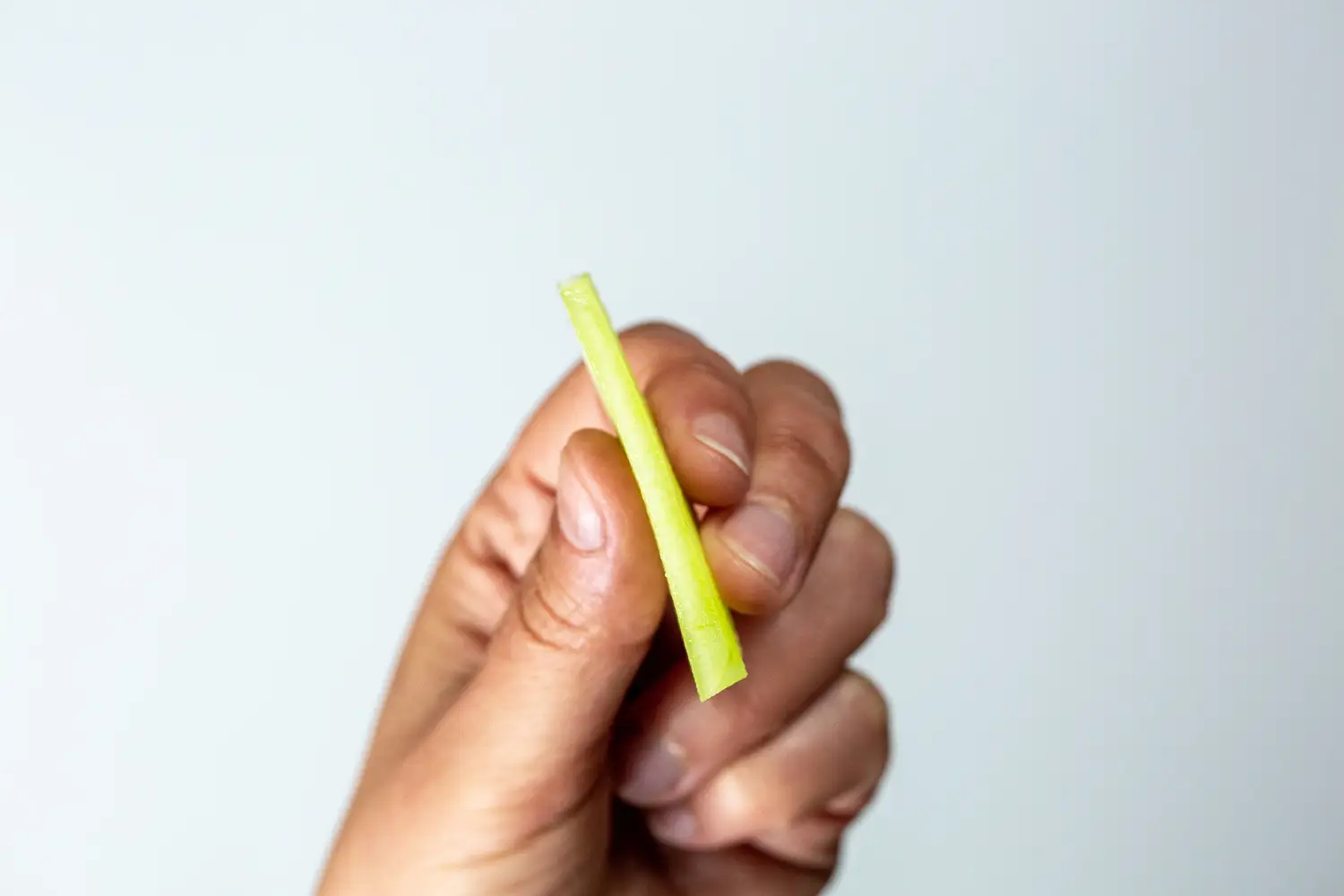
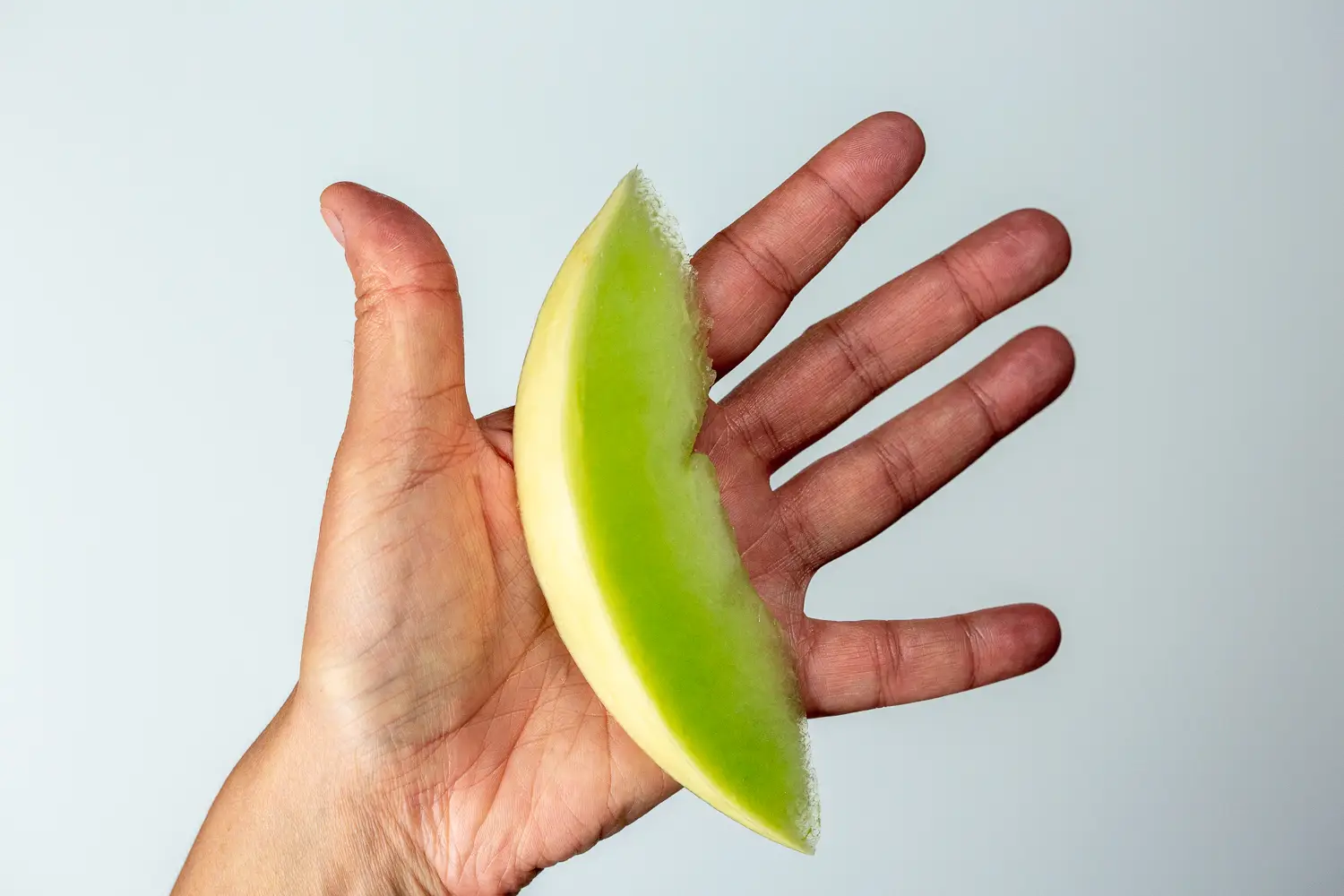
Offer long, flat crescent moons or long, flat rectangular shapes of soft, ripe honeydew melon, seeds and rind removed. To encourage self-feeding, hold a piece in the air in front of baby and let the child grab it from you and bring it to the mouth on their own. Even ripe melon can be challenging to chew, so don’t worry if baby doesn’t get much food in the belly right away. Avoid melon balls or large chunks of honeydew melon because the firm, slippery consistency poses a high risk of choking.
9 months old +:
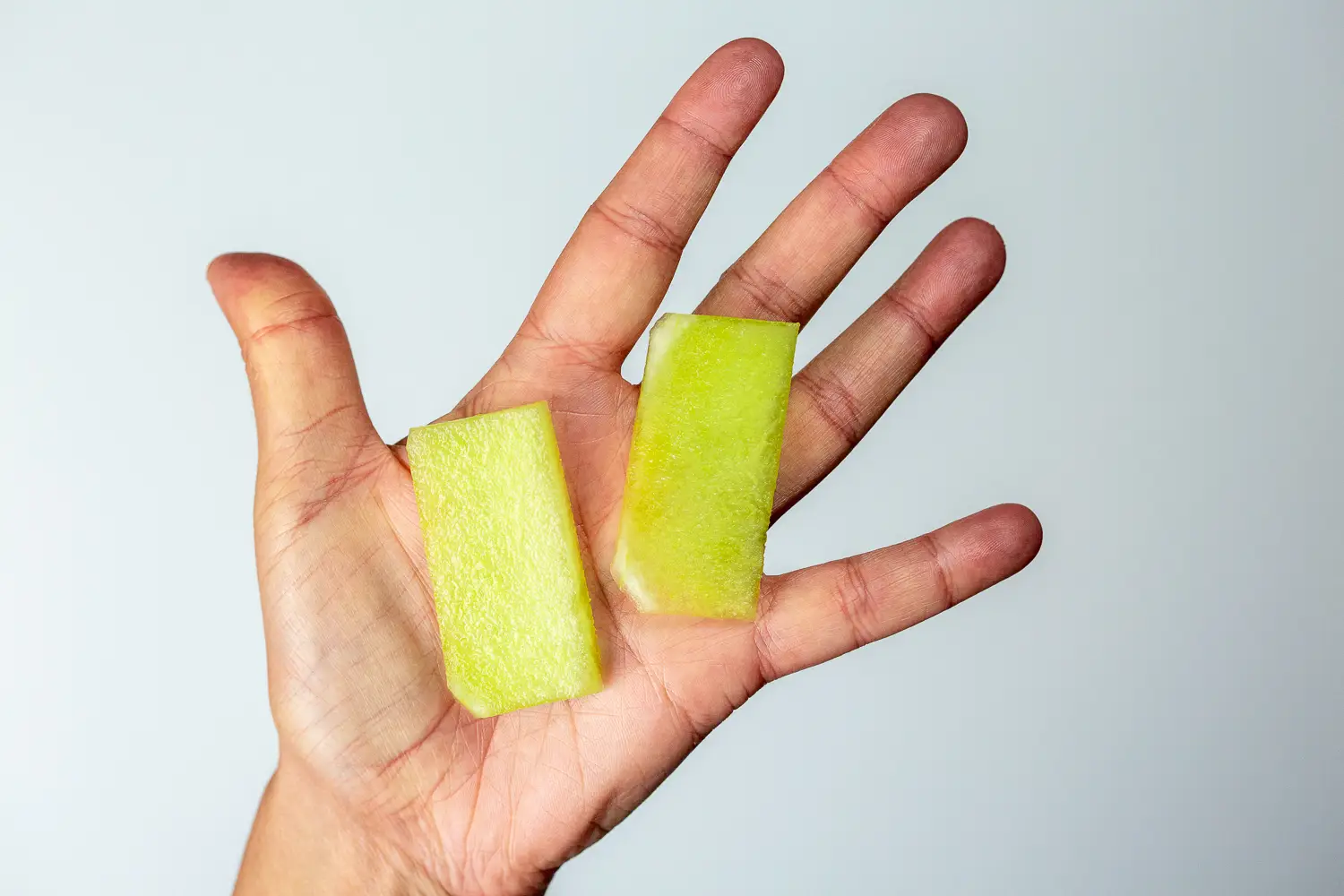
Serve flat rectangular shapes about the size of two adult fingers pressed together, or continue to serve as flat crescent moons of soft, ripe honeydew melon, seeds and rind removed. Continue to avoid offering melon balls or large chunks of honeydew melon because the firm, slippery consistency poses a high risk of choking.
18 months old +:
Serve long, flat pieces of ripe honeydew melon, seeds and rind removed, for the child to take bites from. At this age, if the child is able to listen to directions and chews food thoroughly, you can try serving large wedges of ripe melon with the rind still attached. Just make sure to wash the rind before cutting into the melon and remove any lingering seeds. Demonstrate to the toddler how to bite into the fruit, avoiding the rind, before handing over a piece. You may need to hold on to the rind while the child bites at first.
24 months old +:
Continue serving ripe honeydew melon in long, flat pieces or as large wedges on the rind, for the child to practice taking bites from. At about 2 years of age, a child may be ready to start taking bites of melon chunks, as often sold in containers of pre-cut fruit. Chunks of honeydew can pose a choking risk because they are slippery. Oftentimes, melon chunks can be about the size of a toddler’s mouth, increasing the risk that the child will attempt to place the entire fruit in their mouth instead of taking a manageable bite. If the child is able to eat and swallow a variety of soft, easy-to-chew foods using the following skills, they may be ready to try chunks of melon:
Bites into food to break off smaller pieces
Moves food to the side of the mouth (to the molars) with the tongue
Chews food and breaks it down before swallowing
Manages food when it breaks apart in the mouth and spit out food when necessary
Before offering a melon chunk to a child at this age, we suggest demonstrating how to safely take a bite and show how you move the piece to your molars to chew. You may want to hold the chunk of melon for the child to practice biting—hold at the corner of the mouth and allow the child to close their teeth on the food. Coach the child to thoroughly chew the chunk of melon before swallowing. You can demonstrate this by chewing with your mouth open to show how your molars have mashed the fruit so that it is safe to swallow.
Videos
Is honeydew melon a choking hazard for babies?
Yes. Honeydew melon is firm and slippery, qualities that increase the risk of choking. The risk is greatest when the melon is cut into melon balls or large chunks, or when it is underripe and even more firm. To reduce the risk, make sure the fruit is ripe, and serve in an age-appropriate way as described in the How to Serve section. As always, make sure you create a safe eating environment and stay within an arm’s reach of baby during meals.
Learn the signs of choking and more about choking first aid in our free guides, Infant Rescue and Toddler Rescue.
Is honeydew melon a common allergen?
No, honeydew melons are not a common food allergen, though individuals with Oral Allergy Syndrome (also known as pollen food allergy syndrome), especially those who are allergic to ragweed pollen, may be sensitive to honeydew melon. Oral Allergy Syndrome typically results in short-lived itching, tingling, or burning in the mouth and is unlikely to result in a dangerous reaction. Cooking the melon can help minimize or even eliminate the reaction. If baby experiences Oral Allergy Syndrome, contact rashes may occur on the hands or face after handling or eating the melon. Washing hands immediately after handling honeydew melon and applying a barrier ointment (such as pure petroleum jelly or a plant-based oil/wax combination) to baby’s face before eating can help to prevent such rashes.
As you would when introducing any new food, start with a small amount at first and follow baby’s lead.
Is honeydew melon healthy for babies?
Yes. Honeydew melon is rich in potassium, folate, and vitamins B6 and C. Plus, it’s packed with antioxidants, phenolic compounds, and flavonoids. Together, these nutrients support baby’s hydration, electrolyte balance, nervous system, metabolism, immunity, and overall bodily resilience.
It is important to wash and prepare honeydew melon and all melons with a little extra care. The melon’s rind can carry pathogenic bacteria picked up from the soil it grows in. Immediately before serving melon, thoroughly wash and scrub the rind, then pat it dry. Washing with water works just fine; there is no need to use any special produce wash or detergent.
★Tip: Choose honeydew melon that feels heavy for its size and appears free of soft spots and mold. Note that honeydew melon is quite perishable; it is best consumed within a day or two after it has ripened. To tell if the melon is ripe, smell it: the fruit will smell floral, musky, and sweet.
What are the signs of readiness for solids?
Baby should be able to sit with minimal support, hold their head up well, and be able to reach and grab an item and successfully bring it to their mouth while seated. Baby should also show interest in eating and watching caregivers eat. For example of babies who are ready vs not, see our article on readiness.
Does baby need a high chair?
While a high chair can help create a safe eating environment, there are alternative ways for baby to eat safely, such as holding the child on your lap or sitting together on the floor. For more information, see our article on high chairs.
Our Team
Written by

Dr. Rachel Ruiz
Pediatrician & pediatric gastroenterologist

Dr. Sakina Bajowala
Pediatrician & pediatric allergist/immunologist

Kim Grenawitzke
Pediatric occupational therapist, feeding & swallowing specialist, international board-certified lactation consultant

Venus Kalami
Pediatric registered dietitian & nutritionist
Expert Tips Delivered to Your Inbox
Sign up for weekly tips, recipes and more.




Copyright © 2026 • Solid Starts Inc