
Goji Berry
Fruit
- Age Suggestion
- 6 months
- Iron-Rich
- No
- Common Allergen
- No
When can babies have goji berries?
Goji berries may be introduced as soon as baby is ready to start solids, which is generally around 6 months old.
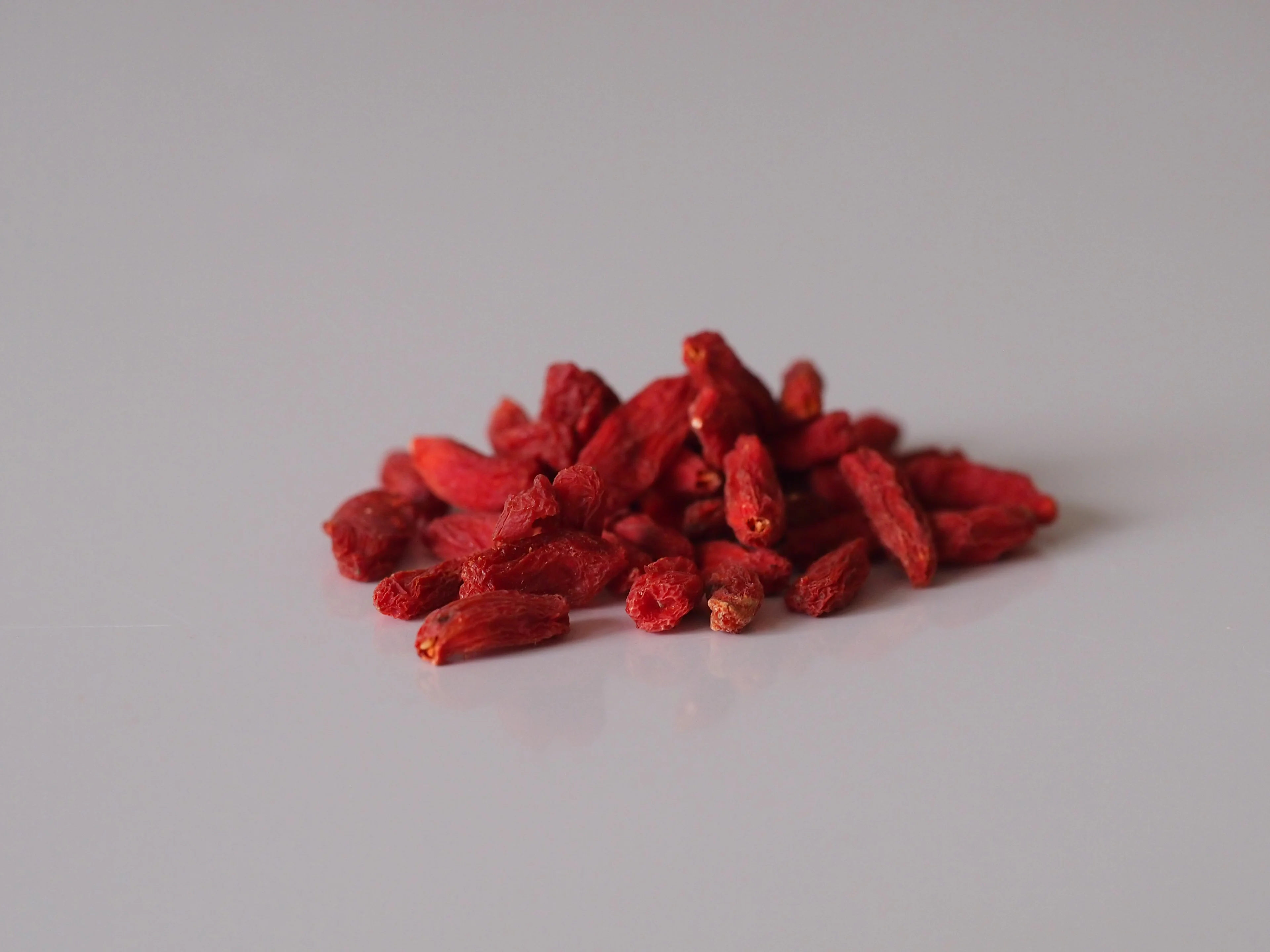
Goji berries, also called wolfberries, are small, bright red berries that have been cultivated in East Asia for thousands of years. The English name goji derives from the word for the fruit in Chinese, 枸杞 or gǒuqǐ. Used in traditional Chinese medicine and cooking, goji berries are most often dried and are prized for their sweet-tart flavor and vibrant color. Today, they are grown around the world and are often found in trail mixes, teas, smoothies, and soups.
How do you serve goji berries to babies?
Every baby develops on their own timeline, and the suggestions on how to cut or prepare particular foods are generalizations for a broad audience.
6 months old +:
Rehydrate dried goji berries in hot water for 15 minutes. Once the fruit is fully softened, finely chop, mash, or puree. Serve the rehydrated berries on their own or mixed into other foods, such as oatmeal or yogurt. Alternatively, share goji berries that have been fully rehydrated and softened as part of soups and stews. Consider starting with a small amount and increasing the serving size as tolerated by baby–goji berries have lots of fiber and can cause some uncomfortable gas or blowouts in large amounts.
If you have fresh goji berries, mash or cook them until they’ve burst, then serve mixed into a soft, scoopable food.
9 months old +:
Offer whole dried goji berries that have been fully rehydrated in warm water for baby to pick up on their own or mixed into a dish. Alternatively, continue to offer soft, rehydrated goji berries that have been mashed or chopped and mixed into scoopable foods.
If you have fresh goji berries, you can gently flatten them into discs and offer a few at a time on baby’s tray.
3 years old +:
Around the third birthday, many toddlers may have the molars and the chewing skills needed to eat whole, dried goji berries, which are very firm and challenging to chew. To model how to eat whole goji berries, start by telling the child: "This is a hard one. Watch me." Show how you move the food to your molars with your tongue. Chew with your mouth open (you can even demonstrate by opening and closing your hands at the same time). Once you have chewed the goji berry well, open your mouth to show the toddler how it has been broken down. Say, "I moved it to my big strong teeth to chew it. It needs a lot of chewing." Demonstrate a couple of times before offering a goji berry to the toddler. Consider serving only one or two berries at a time at first to pace the practice.
Hold off on foods like trail mixes and granola that contain whole dried goji berries mixed with other ingredients until the child has had practice eating the whole dried berries on their own.
Are goji berries a choking hazard for babies?
Yes. Goji berries are small, firm, and challenging to chew, which are qualities that pose an increased risk of choking. To reduce the risk, prepare and serve goji berries in an age-appropriate way as described in the How to Serve section. As always, make sure to create a safe eating environment and stay within reach of baby during meals.
Learn the signs of choking and more about choking first aid in our free guides, Infant Rescue and Toddler Rescue.
Are goji berries a common allergen?
No. Allergies to goji berries are uncommon, but have been reported.[1] Individuals with Oral Allergy Syndrome (also known as pollen food allergy syndrome), and particularly those with allergies to peach, tomato, or nuts may be at increased risk of sensitivity to goji berry.[2] [3] [1] Oral allergy syndrome can result in temporary itching, tingling, or burning in the mouth. Cooking goji berries may help minimize and even eliminate the reaction.[4] [5]
Dried goji berries may be preserved with sulfites. Individuals sensitive to sulfites, particularly those with asthma, may experience breathing difficulty, rashes, or gastrointestinal symptoms after ingestion.[6] If sulfites are a concern, avoid ingredients such as sulfur dioxide, potassium bisulfate, potassium metabisulfite, sodium bisulfite, sodium metabisulfite, and sodium sulfite.[6]
Are goji berries healthy for babies?
Yes. Goji berries are rich in carbohydrates and fiber and can offer varying amounts of iron, folate, and vitamin E. Plus, they’re rich in vitamin C, which supports baby’s immune system. Lastly, they’re rich in certain carotenoids, especially zeaxanthin, which helps support eye health.[7]
Note that goji berry can interact with certain medications, so check with your child’s pediatric healthcare provider before offering goji berry if the child is taking medication.[8]
Can babies have goji berry juice?
Small amounts of goji berry juice may be shared as a drink after 12 months of age. That said, it can be beneficial to wait for when a child is older to regularly share juice and other sugary drinks. Research suggests that regular intake of juice and other sweet drinks tends to increase the risk of dental cavities and take up space in the belly, which may decrease a child’s motivation to eat other foods at mealtime and may negatively affect the child’s growth over time.[9] [10] However, occasional servings of juice after one year of age generally aren't a cause for concern. Learn more about serving juice to babies and toddlers.

Reference Material
Monzón Ballarín, S., López-Matas, M. A., Sáenz Abad, D., Pérez-Cinto, N., & Carnés, J. (2011). Anaphylaxis associated with the ingestion of Goji berries (Lycium barbarum). Journal of investigational allergology & clinical immunology, 21(7), 567–570.
Larramendi, C. H., García-Abujeta, J. L., Vicario, S., García-Endrino, A., López-Matas, M. A., García-Sedeño, M. D., & Carnés, J. (2012). Goji berries (Lycium barbarum): risk of allergic reactions in individuals with food allergy. Journal of investigational allergology & clinical immunology, 22(5), 345–350.
Start solids with confidence
- Guided Introduction to 100+ Foods
- Smart Tools to Simplify Mealtime
- Food Allergen 101
- 300+ Meal Ideas
- First Foods® Database
Start solids with confidence
- Guided Introduction to 100+ Foods
- Smart Tools to Simplify Mealtime
- Food Allergen 101
- 300+ Meal Ideas
- First Foods® Database
Expert Tips Delivered to Your Inbox
Sign up for weekly tips, recipes and more.