
Fenugreek
Herb/Spice
- Age Suggestion
- 6 months
- Iron-Rich
- No
- Common Allergen
- No
When can babies have fenugreek?
Fenugreek may be introduced as soon as baby is ready to start solids, which is generally around 6 months of age.
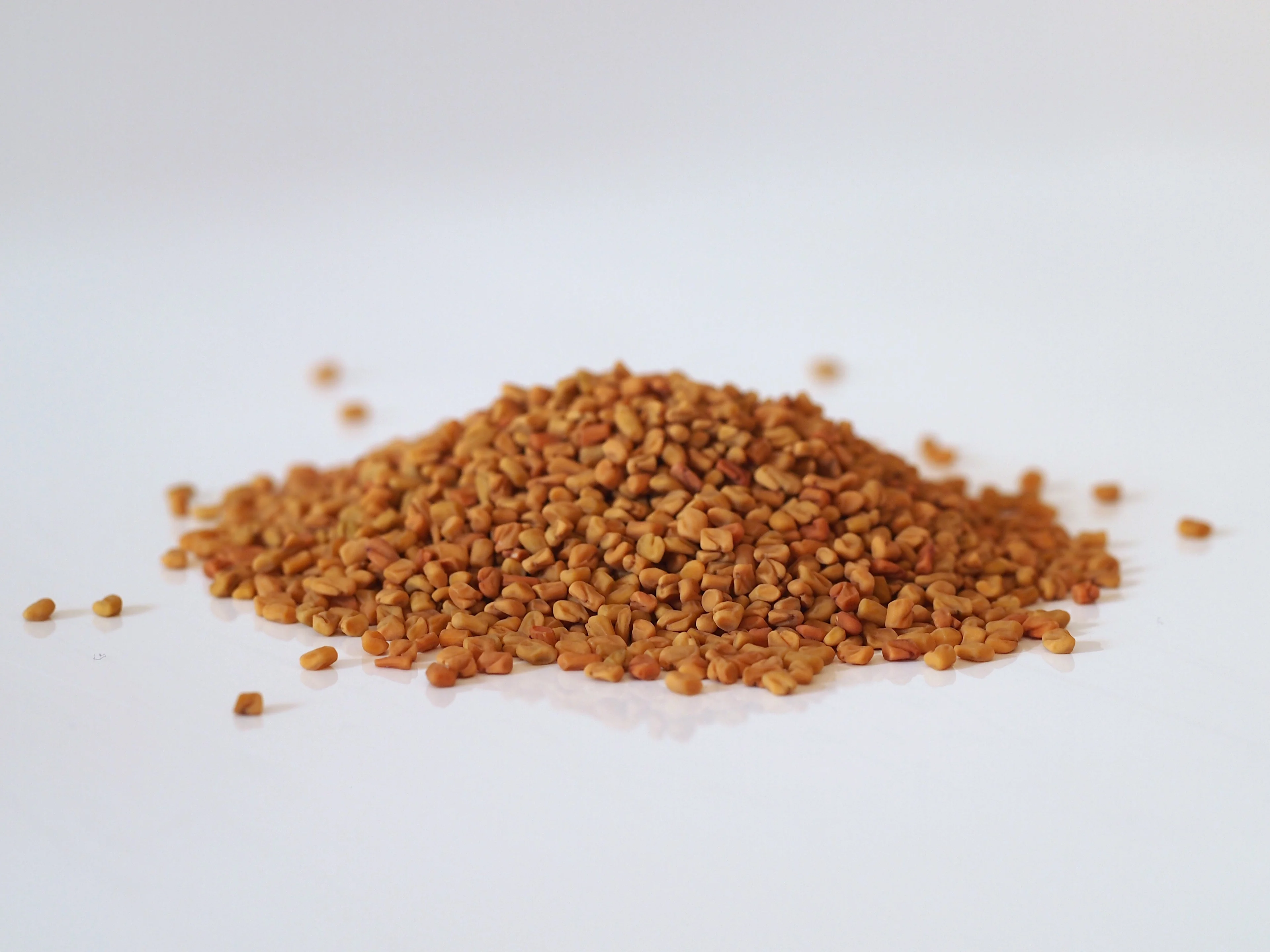
Fenugreek, also known as methi among other names, is an ancient crop native to regions of Southwest Asia and the Mediterranean. The seeds and leaves of fenugreek have been used for thousands of years in cooking and food traditions: Fenugreek seeds are a key ingredient in spice blends such as curry powder and berbere and are valued for their very bitter, nutty flavor, which mellows slightly to gain more maple-like notes when lightly toasted.
How do you serve fenugreek to babies?
Every baby develops on their own timeline, and the suggestions on how to cut or prepare particular foods are generalizations for a broad audience.
6 months old +:
Use whole fenugreek seeds to flavor food such as pickles, soups, stews, lentils, or rice, then remove all of the seeds before serving. A fine mesh strainer can be handy for this. Whole seeds remain firm, even after cooking, and pose an increased risk of choking. Alternatively, use a small amount of powdered fenugreek mixed into purées, mashed vegetables, or cooked grains. Use a very small amount of fenugreek, especially if you’re not used to cooking with it, as the spice has a strong flavor.
12 months old +:
Cook with fenugreek–whole seeds or powdered spice–-as desired in shared meals. Continue to remove whole fenugreek seeds before sharing the meal with a toddler, as the whole seeds are firm and pose an increased choking risk.
Is fenugreek a choking hazard for babies?
Yes. Fenugreek seeds are small, hard, and round, which are qualities that pose an increased risk of choking. To reduce the risk, prepare and serve fenugreek seed in an age-appropriate way as described in How to Serve. As always, create a safe eating environment and stay within reach of baby during meals.
Learn the signs of choking and more about choking first aid in our free guides, Infant Rescue and Toddler Rescue.
Is fenugreek a common allergen?
No. Allergies to fenugreek are not common, but have been reported, particularly when ground fenugreek is accidentally inhaled.[1] [2] Note that certain dried herb and spice blends that feature fenugreek may contain common food allergens, so make sure to read labels thoroughly if your child has food allergies. Fenugreek is a legume, and although cross-reactive allergic reactions among the legumes are not common, certain individuals who are allergic to peanuts, chickpeas, or other members of the Fabaceae family may have an increased risk of being sensitive to fenugreek.[3] [4] [5]
Is fenugreek safe for babies?
Yes, fenugreek is generally recognized as safe when used in amounts typical in cooking.[6] [7] Avoid fenugreek capsules, extracts, teas, powders, and other nonculinary uses for baby, as research on their safety is limited and there have been reports of serious illness.[7] [8]
Talk to a doctor before using fenugreek as a supplement or in a medicinal application. More research is needed to support the efficacy and safety of fenugreek for lactation and other medicinal uses.[7] [9] [10]
Is fenugreek healthy for babies?
Yes. Fenugreek seeds, which are used to flavor dishes as a spice, are a good source of fiber and iron, as well as trace amounts of other micronutrients. These nutrients work to support baby’s bone, blood, immune, and gut health.
Can fenugreek be used to help with digestion in babies?
While fenugreek has a long history of traditional use, fenugreek teas, supplements, or remedies are not recommended for babies. Fenugreek should only be used in typical amounts in cooking, with whole seeds removed before serving.
Reference Material
Patil, S. P., Niphadkar, P. V., & Bapat, M. M. (1997). Allergy to fenugreek (Trigonella foenum graecum). Annals of allergy, asthma & immunology : official publication of the American College of Allergy, Asthma, & Immunology, 78(3), 297–300. DOI: 10.1016/S1081-1206(10)63185-7
Joseph, N. I., Slavin, E., Peppers, B. P., & Hostoffer, R. W., Jr (2018). Fenugreek Anaphylaxis in a Pediatric Patient. Allergy & rhinology (Providence, R.I.), 9, 2152656718764134. DOI: 10.1177/2152656718764134
Faeste, C. K., Namork, E., & Lindvik, H. (2009). Allergenicity and antigenicity of fenugreek (Trigonella foenum-graecum) proteins in foods. The Journal of allergy and clinical immunology, 123(1), 187–194. DOI: 10.1016/j.jaci.2008.09.012
Start solids with confidence
- Guided Introduction to 100+ Foods
- Smart Tools to Simplify Mealtime
- Food Allergen 101
- 300+ Meal Ideas
- First Foods® Database

Start solids with confidence
- Guided Introduction to 100+ Foods
- Smart Tools to Simplify Mealtime
- Food Allergen 101
- 300+ Meal Ideas
- First Foods® Database
Expert Tips Delivered to Your Inbox
Sign up for weekly tips, recipes and more.