
Chorizo
Meat
- Age Suggestion
- 6 months
- Iron-Rich
- Yes
- Common Allergen
- No
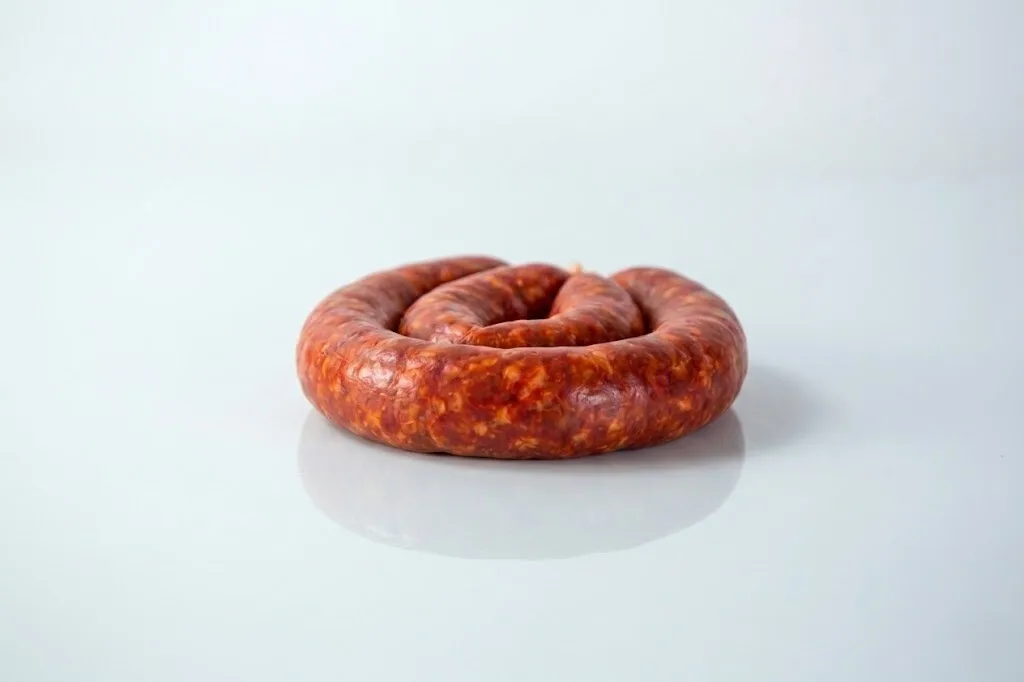
When can babies have chorizo?
Chorizo may be introduced as soon as baby is ready to start solids, which is generally around 6 months of age. Make sure chorizo is served in an age-appropriate way and well-cooked to be safe for babies. While chorizo is high in sodium, an occasional taste is fine as part of a varied diet.
Chorizo refers to sausages that are often spicy, including a fresh, raw ground pork sausage sometimes called Mexican chorizo seasoned with dried chiles, garlic, vinegar, and spices, which must be cooked before eating and is typically fried loose and crumbled. Spanish chorizo is a cured, dried, and fermented sausage seasoned with pimentón and garlic, which is eaten without cooking and sliced thin. Both are among the most widely used flavoring meats in Latin American and Iberian cooking, with varieties including Portuguese chouriço, Argentine chorizo criollo (a fresh grilling sausage), and Colombian chorizo (fresh, often grilled whole).
How do you serve chorizo to babies?
Every baby develops on their own timeline, and the suggestions on how to cut or prepare particular foods are generalizations for a broad audience.
6 months old +:
Serve tiny crumbles of well-cooked chorizo mixed into soft food that baby can scoop, like mashed vegetables, porridge, or thick stew. If the chorizo has a casing that can be removed, peel and discard it before crumbling the chorizo. At this age, do not serve chorizo crumbles on their own, or slices or large pieces of chorizo, since these presentations pose a higher risk of choking. When serving chorizo, make sure it is well-cooked to the safe internal temperature of whatever meat is in the chorizo. Consider serving the meal with a cooling food like yogurt or mashed avocado to help balance the heat, if serving spicy chorizo. At this age, avoid dried or cured chorizo, which tends to be too firm for baby to chew, which increases the risk of choking.
9 months old +:
Offer small crumbles of soft chorizo that is well-cooked and mixed into sauces or scoopable foods. When serving chorizo, make sure it is well-cooked to the safe internal temperature of whatever meat is in the chorizo. Consider serving the meal with a cooling food like yogurt or mashed avocado to help balance the heat, if serving spicy chorizo. Continue to avoid dried or cured chorizo, which tends to be too firm for baby to chew, which increases the risk of choking.
12 months old +:
Offer soft, cooked crumbles of chorizo with the casing removed, and when you feel the child is ready, consider keeping the casing on and cutting the chorizo lengthwise into long quartered sticks. To further reduce choking risk, cut off the very ends of the chorizo where it’s tapered and closer in size to the child's airway. Avoid cutting chorizo into coins or other round shapes, as these can increase the risk of choking. Consider serving the meal with a cooling food like yogurt or mashed avocado to help balance the heat, if serving spicy chorizo. Hold off on serving dried or cured chorizo that is firm and difficult to chew until at least 24 months of age.
18 months old +:
Offer well-cooked chorizo cut lengthwise into long halves, or continue cutting into long, quartered sticks. If the child is struggling with chorizo pieces in the casing, you can remove the casing before serving. Avoid offering chorizo cut into coins or rounds, as these shapes increase choking risk. You can also serve ground chorizo that has been crumbled into sauces. Consider serving the meal with a cooling food like yogurt or mashed avocado to help balance the heat, if serving spicy chorizo.
24 months old +:
At this age, if a child has mature eating skills (not overstuffing their mouth, taking accurate bites, and chewing thoroughly before swallowing), they can likely practice eating a whole chorizo. Just expect lots of spitting as the child learns to deal with the challenging food. A whole chorizo actually poses less choking risk than chorizo cut into rounds or small coin-shaped pieces, as when the brain is actively engaged in taking bites, the body is more prepared for safe chewing and swallowing.
Sometime between 2 and 3 years of age, when you believe the child is able to follow directions and has had success in eating a variety of firm, hard-to-chew foods, you can offer rounds or coin-shaped slices. Offer one slice at a time and encourage the child to take a bite of the food with their front teeth before moving it to the side and chewing thoroughly. When practicing, make sure the child is seated and supervised in a safe eating environment.
Around this same age, if the child has developed advanced chewing and swallowing skills and is able to sit calmly and follow directions, you can begin offering dried or cured chorizo. Offer one long, thin piece at a time and encourage the child to take a bite of the food with their front teeth before moving it to the side and chewing thoroughly. Taking bites from the whole piece of dried chorizo poses less choking risk than small chunks or small coin-shaped pieces as when the brain is actively engaged in taking bites the body is more prepared for safe chewing and swallowing. Always make sure the child is in a safe eating environment.
Is chorizo a choking hazard for babies?
Yes. Chorizo is often cylindrical in shape and firm and springy in texture, qualities that increase the risk of choking. To reduce the risk, prepare and serve chorizo in an age-appropriate way as described in How to Serve. As always, create a safe eating environment and stay within reach of baby during meals.
Learn the signs of choking and more about choking first aid in our free guides, Infant Rescue and Toddler Rescue.
Does chorizo contain common allergens?
It depends. Chorizo and other sausages often do not contain common allergens, although it is possible to have allergies to ingredients in chorizo, such as beef, pork, and others.[1] [2] [3] Also, other ingredients that are common food allergens may be added to chorizo, such as dairy, tree nuts, soy, and wheat, so make sure to read the label carefully.
Certain tick bites (mainly the Lone Star tick in the continental United States, but other ticks in different parts of the world), are associated with the development of an allergy to galactose-alpha-1, 3-galactose (“alpha gal”), a sugar which is present in all non-primate mammalian meat. This results in a delayed allergic reaction 3 to 8 hours after red meat is consumed.[3] However, some individuals with alpha gal allergy also react to small amounts of the sugar present in dairy products, gelatin, or organ tissues from mammals.
Chorizo often contains capsaicin from chiles or pimentón, which can cause skin irritation around the mouth and in the diaper area. Try applying a thin layer of barrier cream or ointment, such as pure petroleum jelly or a plant-based oil/wax balm, to baby's face and diaper area to help prevent contact rash.
Is it safe to share chorizo with babies?
Yes, as long as the chorizo is well-cooked and prepared in an age-appropriate way to reduce the risk of choking. Chorizo is often rich in protein, heme iron, zinc, and B vitamins, including B12, all of which support growth, brain development, and immune function. While chorizo tends to be high in sodium, the amount of sodium consumed from solid food tends to be low as babies learn to feed themselves. Learn more about salt and babies.
Is chorizo too spicy for babies?
No. Spices and bold flavors are safe starting at 6 months of age, or whenever baby is ready for solids, and there is no need to wait to introduce spicy foods. The level of spiciness varies by type and brand of chorizo, so make sure to taste the chorizo yourself before serving to baby. Consider serving the meal with a cooling food like yogurt or mashed avocado to help balance the heat. Applying barrier cream to the face and diaper area before the meal can help prevent contact rashes.
Can I use soy chorizo or plant-based chorizo for babies?
Yes. Soy chorizo and other plant-based alternatives are widely available and can be a convenient option for families who don't eat meat. Most plant-based chorizo products contain soy (a common allergen) and may also contain wheat, sesame, or other allergens, so make sure any common allergens in the food have been safely introduced before serving to baby. Check the consistency of the food too: some plant-based meat alternatives are softer or firmer than their meat-based counterparts and may need to be prepared slightly differently to reduce choking risk.
Reference Material
American College of Asthma, Allergy, & Immunology. Meat Allergy. Retrieved June 1, 2021
Wilson, J.M., Platts-Mills, T. (2018). Meat allergy and allergens. Molecular immunology, 100, 107–112. DOI:10.1016/j.molimm.2018.03.018. Retrieved June 1, 2021.
American Academy of Allergy, Asthma, & Immunology. Alpha-gal defined. Retrieved June 1, 2021.
Start solids with confidence
- Guided Introduction to 100+ Foods
- Smart Tools to Simplify Mealtime
- Food Allergen 101
- 300+ Meal Ideas
- First Foods® Database

Start solids with confidence
- Guided Introduction to 100+ Foods
- Smart Tools to Simplify Mealtime
- Food Allergen 101
- 300+ Meal Ideas
- First Foods® Database
Expert Tips Delivered to Your Inbox
Sign up for weekly tips, recipes and more.