
Challah
Grain
- Age Suggestion
- 6 months
- Iron-Rich
- No
- Common Allergen
- Yes
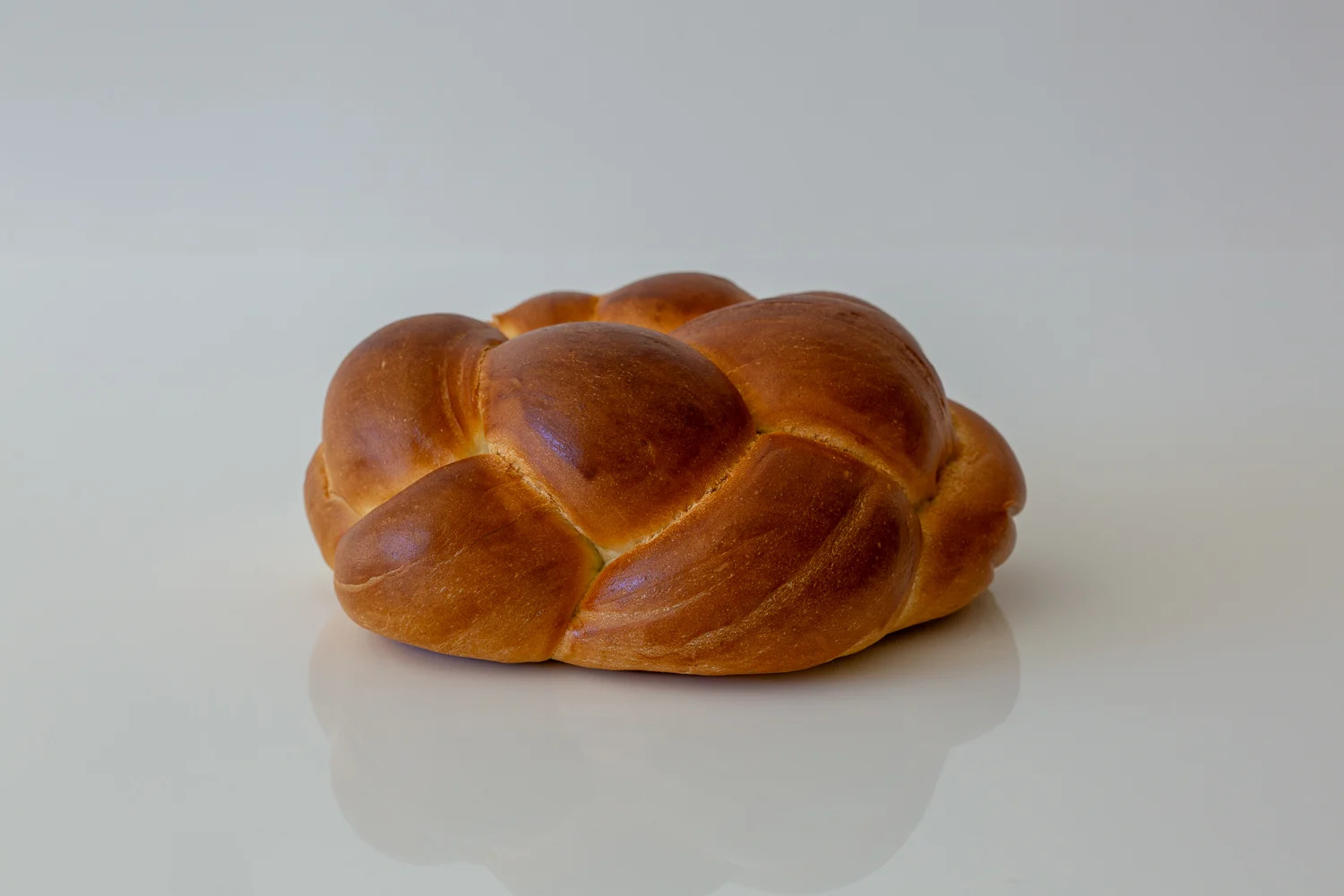
When can babies have challah?
Challah may be introduced as soon as baby is ready to start solids, which is generally around 6 months of age. When sharing challah with babies under 12 months of age, try to avoid styles made with honey, which is associated with a risk of infant botulism, and take care to modify or remove any ingredients that pose a choking hazard, such as dried fruit, large seeds, pieces of nuts, and olives. In addition, read the label and make sure to safely introduce any common allergens before offering challah, which typically contains common allergens like egg, sesame, and wheat.
Challah originated in the lands around the Mediterranean Sea, where it is known by many different names including berkhes, kitke, and koylach. For thousands of years, challah has held a special place in Jewish traditions around the world. Typically enriched with eggs and braided, it is traditionally eaten on the Sabbath and religious holidays like Hanukkah, Rosh Hashanah, and Sukkot.
How do you serve challah to babies?
Every baby develops on their own timeline, and the suggestions on how to cut or prepare particular foods are generalizations for a broad audience.
6 months old +:
Offer a large strip of challah, ideally a piece from the outer edges that still has crust on it, which will help hold the bread together better. Aim for a piece about the size of two adult fingers pressed together and offer to baby vertically in the air. If the bread is getting too sticky and hard to manage in baby's mouth, try toasting the bread before serving. Avoid challah that contains honey due to the risk of infant botulism, and take care to modify or remove any ingredients that pose a choking hazard, such dried fruit, large seeds, pieces of nuts, and olives.
9 months old +:
Tear off very small shreds and offer just a couple pieces at a time so that baby cannot stuff their mouth. Alternatively, continue to offer large strips. If baby is overstuffing their mouth, try serving one or two pieces at a time. Avoid challah that contains honey due to the risk of infant botulism, and take care to remove any ingredients that pose a choking hazard, such dried fruit, large seeds, pieces of nuts, and olives.
12 months old +:
Serve challah in strips, bite-sized pieces, or as a large piece pulled from the bread (slices are fine, too). At this age you can serve challah with honey as well. Continue to remove any ingredients that pose a choking hazard, such dried fruit, large seeds, pieces of nuts, and olives.
24 months old +:
Anything goes! Serve challah in strips, bite-sized pieces, or as a large piece pulled from the bread (slices are fine, too). At this age it is fine to leave pieces of nuts or fruit in the bread as it is to serve with honey.
Is challah a choking hazard for babies?
Yes. Soft breads like challah tend to soften and stick together upon contact with saliva, forming a sticky clump that can cling to the tongue and roof of the mouth and become difficult to manage, qualities that increase the risk of choking. To reduce the risk, prepare and serve challah in an age-appropriate way as described in the How to Serve section. As always, make sure to create a safe eating environment and stay within an arm’s reach of baby during mealtime.
Learn the signs of choking and gagging and more about choking first aid in our free guides, Infant Rescue and Toddler Rescue.
Does challah contain common allergens?
Yes. Challah is commonly made with wheat, eggs, and sesame, and some styles may include other common food allergens like cow’s milk and tree nuts. Prior to sharing challah with baby, it is important to introduce common food allergens on their own and rule them out as allergens before serving them together in a prepared food. This way, you’ll be able to identify which allergen is responsible if baby has a reaction. Then, when you are ready to offer challah, you will be confident that they have already safely eaten any common food allergens in it. As you would when introducing any new food, start by offering a small quantity for the first few servings. If there is no adverse reaction, gradually increase the quantity over future meals.
Is challah healthy for babies?
Yes. Challah offers carbohydrates, as well as some protein and fat. It can also contain a variety of micronutrients, like calcium, iron, folate, B vitamins, and various other vitamins and minerals. These nutrients work to provide energy for baby’s growth, play, and exploration, in addition to supporting bone health, red blood cells, neurodevelopment, metabolic processes, and more.
How much food should I serve to baby?
When first getting started, offer a small amount and trust that baby knows how to show interest in wanting more by grunting, pointing, or reaching out. Keep in mind that most babies between 6 and 9 months of age do not consume much solid food at first. For babies between 10 and 12 months of age, work toward what a balanced adult meal would look like, just with smaller portions than what you might have. Follow the child’s lead: when baby indicates “more”, offer more food. When baby shows signs that they are finished, stop offering food.
How do I calm my own nerves around starting solids?
Knowledge and practice with rescue maneuvers. Parents and caregivers who watch the choking and rescue videos in our Starting Solids bundle often share how confident they feel.
Start solids with confidence
- Guided Introduction to 100+ Foods
- Smart Tools to Simplify Mealtime
- Food Allergen 101
- 300+ Meal Ideas
- First Foods® Database
Start solids with confidence
- Guided Introduction to 100+ Foods
- Smart Tools to Simplify Mealtime
- Food Allergen 101
- 300+ Meal Ideas
- First Foods® Database
Expert Tips Delivered to Your Inbox
Sign up for weekly tips, recipes and more.