
Brown Lentils
Legume
- Age Suggestion
- 6 months
- Iron-Rich
- Yes
- Common Allergen
- No
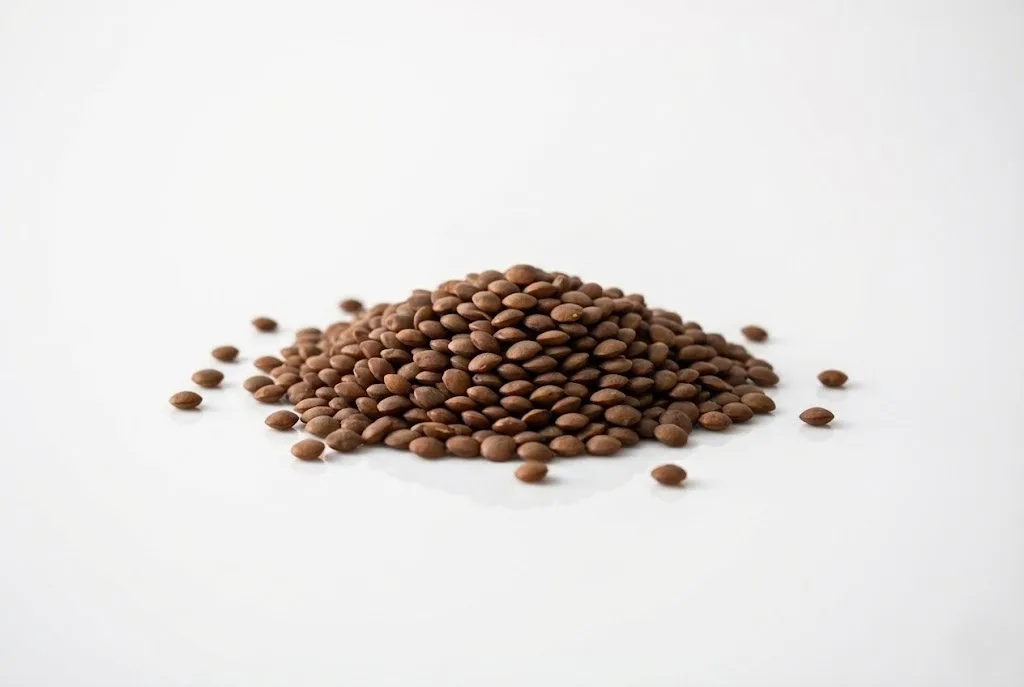
When can babies have brown lentils?
Brown lentils may be introduced as soon as baby is ready to start solids, which is generally around 6 months of age.
Brown lentils are one of the most widely available lentil varieties and are used in cuisines across South Asia, where they are known as sabut masoor dal, around the Mediterranean, Europe, and North America. There are a number of varieties of brown lentil, including the popular pardina lentil, but generally speaking, these lentils tend to hold their shape more than red or yellow lentils when cooked, with a slightly firmer texture. Because of this, brown lentils are commonly used in soups, stews, salads, and lentil-based patties.
How do you serve brown lentils to babies?
Every baby develops on their own timeline, and the suggestions on how to cut or prepare particular foods are generalizations for a broad audience.
6 months old +:
Serve soft, cooked brown lentils in dishes like soup or stew, or mixed into soft, scoopable foods like mashed potato, porridge, or yogurt. Encourage self-feeding by letting baby scoop with their hands or by pre-loading a spoon for baby to grab. This is also a great age to explore using lentils to make large, soft burgers or patties, easy shapes for babies to pick up and hold.
9 months old +:
At this age, you can serve bite-sized pieces of foods made with soft, cooked brown lentils, or even clumps of cooked lentils held together with a binding ingredient, but keep in mind that individual lentils may be too small for babies to pick up easily with their developing pincer grasp. You can also continue to serve soft, cooked brown lentils in dishes like soup or stew, or mixed into soft, scoopable foods like mashed potato, porridge, or yogurt. Encourage self-feeding by letting baby scoop with their hands or by pre-loading a spoon for baby to grab.
12 months old +:
Offer soft, cooked brown lentils in meals as desired, from mashed or scoopable dishes to lentil salads and soups. Let the child eat with their hands or offer an age-appropriate utensil for practice. Just remember that small, loose cooked lentils can be tricky to keep on a spoon without some sort of binding ingredient, and using utensils can be exhausting for new eaters, so don’t be surprised if the child toggles back and forth between feeding themselves with their fingers and utensils. Try not to apply too much pressure; consistent and accurate utensil use will come in due time — often sometime after the second birthday.
Are brown lentils a choking hazard for babies?
No. Well-cooked lentils present a low risk when safely prepared for a child’s age and developmental ability, though, in theory, an individual could choke on any food. To reduce the risk, prepare and serve lentils in an age-appropriate way. As always, create a safe eating environment and stay within reach of baby during meals.
Learn the signs of choking and more about choking first aid in our free guides, Infant Rescue and Toddler Rescue.
Are lentils a common allergen?
No. Lentils are not recognized as a common allergen in the United States. However, allergies to lentils are possible.[1] [2] In Spain, for example, lentil allergy impacts a significant portion of the pediatric population.[3] [4]
Being allergic to other legumes, particularly pea and chickpea (and to a lesser extent, peanut), may increase the risk of allergy to lentils.[5] [6] However, cross-reactivity among legumes is more commonly seen on blood and skin testing than it is in practice. Children with lentil allergy do not necessarily need to avoid all other legumes. Individuals with allergies to birch tree pollen and/or Oral Allergy Syndrome (also called pollen food allergy syndrome) may be sensitive to lentils.[7] Oral Allergy Syndrome typically results in short-lived itching, tingling, or burning in the mouth and is unlikely to result in a dangerous reaction. Cooking the lentils completely can help to minimize the reaction.
Are brown lentils healthy for babies?
Yes. Lentils are rich in complex carbohydrates, fiber, and plant-based protein. They also provide iron, zinc, folate, potassium, magnesium, and B vitamins—nutrients that support baby’s growth, neurodevelopment, and immune function.
Do you need to soak lentils for a baby?
No, although soaking dried lentils before cooking can help significantly reduce cooking time, as well as reduce the content of lectins and make the food easier to digest.[8] [9]
Here are a couple of soaking methods:
Overnight soak: Use a ratio of 1 lb (454 g) of dried lentils and 10 c (2 ½ liter) water, and soak the lentils in water for 4 or more hours or overnight. Drain and rinse the beans prior to cooking.
Hot soak method: Use a ratio of 1 lb (454 g) of dried lentils and 10 c (2 ½ liter) water, and bring the mixture to a boil for 2-3 minutes. Turn off the heat, then soak for a few hours. Drain and rinse the lentils prior to cooking.
Can babies have canned brown lentils?
Yes. Both cooked dried lentils and canned lentils can be shared with babies in age-appropriate ways as soon as they are ready for solids. Canned brown lentils can be high in sodium, but occasional high-sodium meals won’t hurt; if you’d like to reduce baby’s sodium intake, choose low-sodium or no-salt-added canned lentils, when available, or rinse the canned lentils well before serving.
Reference Material
Martínez San Ireneo, M., Ibáñez, M. D., Sánchez, J. J., Carnés, J., & Fernández-Caldas, E. (2008). Clinical features of legume allergy in children from a Mediterranean area. Annals of allergy, asthma & immunology : official publication of the American College of Allergy, Asthma, & Immunology, 101(2), 179–184. DOI: 10.1016/s1081-1206(10)60207-4.
Lyons, S.A., Clausen, M., Knulst, A.C., Ballmer-Weber, B.K., Fernandez-Rivas, M., et al. (2020). Prevalence of Food Sensitization and Food Allergy in Children Across Europe. The journal of allergy and clinical immunology. In practice, 8(8), 2736–2746.e9. DOI:10.1016/j.jaip.2020.04.020.
Pascual, C.Y., Fernandez-Crespo, J., Sanchez-Pastor, S., Padial, M.A., Diaz-Pena, J.M., et al. (1999). Allergy to lentils in Mediterranean pediatric patients. The Journal of allergy and clinical immunology, 103(1 Pt 1), 154–158. DOI:10.1016/s0091-6749(99)70539-7.
Start solids with confidence
- Guided Introduction to 100+ Foods
- Smart Tools to Simplify Mealtime
- Food Allergen 101
- 300+ Meal Ideas
- First Foods® Database
Start solids with confidence
- Guided Introduction to 100+ Foods
- Smart Tools to Simplify Mealtime
- Food Allergen 101
- 300+ Meal Ideas
- First Foods® Database
Expert Tips Delivered to Your Inbox
Sign up for weekly tips, recipes and more.