


Access our First Foods® Database in the Solid Starts App.
Learn moreBlack-Eyed Peas
Legume
Age Suggestion
6 months
Iron-Rich
Yes
Common Allergen
No
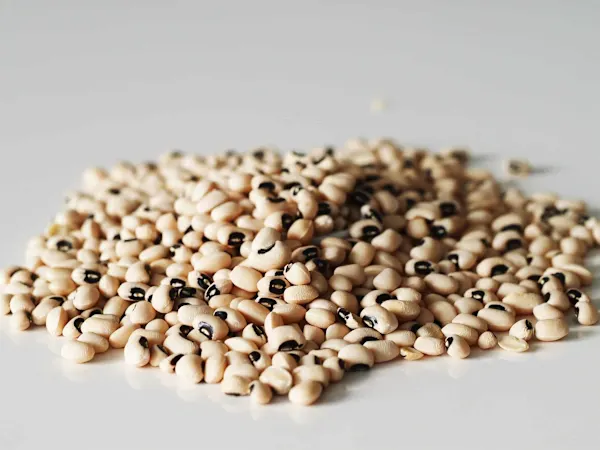
When can babies have black-eyed peas?
Black-eyed peas may be introduced as soon as baby is ready to start solids, which is generally around 6 months of age.
Black-eyed peas are part of the sprawling legume family of plants. The small cream-colored bean with a black “eye” is also called cow pea and field pea—names that hint at the history of the plant. Black eyed peas were a favored crop on farms in the American South and Caribbean islands, where black-eyed peas traveled along with enslaved people from West Africa, the bean’s native land. Today, black-eyed peas are a popular staple food in many cultures as well as a celebratory ingredient that symbolizes good luck and prosperity.
How do you serve black-eyed peas to babies?
Every baby develops on their own timeline, and the suggestions on how to cut or prepare particular foods are generalizations for a broad audience.
6 months old +:
Crush or blend cooked black-eyed peas into a textured mash or smooth paste for baby to scoop with their hands. If you prefer, serve the mash or paste with a spoon. Baby may experience some harmless gagging given the texture of black-eyed peas. If this occurs, consider, thinly spreading the mash or smooth paste on a thin rice cake or toast strip or feel free to stir in breast milk, formula, olive oil, or even yogurt when making the mash or paste to help thin it out a little. You can also stir the crushed or pureed black-eyed peas into soft, scoopable foods like corn grits, mashed vegetables, rice porridge, or stewed greens. Just start with small portions at first, to minimize any digestive discomfort from the high-fiber food.
9 months old +:
For babies with a developing pincer grasp (where the thumb meets the pointer finger), offer gently flattened black-eyed peas, either on their own or as part of a shared meal. Alternatively, continue serving mashed or pureed black-eyed peas for baby to scoop with hands, dip in fingers or pieces of cooked vegetables, or practice eating with a spoon.
12 months old +:
By this age, toddlers should be able to handle whole cooked black-eyed peas so try offering them on their own or as part of a shared meal. You can, of course, continue to mash and pre-load on spoons. To encourage self-feeding with utensils, scoop some up and lay the utensil next to the food for the child to try to pick up.
Videos
Are black-eyed peas a choking hazard for babies?
Yes. Black-eyed peas are small, rounded, and can be firm, especially when raw or undercooked, qualities that increase the risk of choking. To reduce the risk, prepare and serve black-eyed peas in an age-appropriate way as described in the How to Serve section. As always, make sure you create a safe eating environment and stay within an arm’s reach of baby during meals.
Learn the signs of choking and gagging and more about choking first aid in our free guides, Infant Rescue and Toddler Rescue.
Are black-eyed peas a common allergen?
No. Black-eyed peas are not a common food allergen. However, some individuals with allergies to other legumes (such as peanut, soy, chickpea, lentil, or pea) may also be sensitive to black-eyed peas.
Individuals with Oral Allergy Syndrome (also known as pollen food allergy syndrome), and in particular, those with sensitivities to birch pollen, may also be sensitive to black-eyed peas. Oral Allergy Syndrome typically results in short-lived itching, tingling, or burning in the mouth and is unlikely to result in a dangerous reaction.
As with all new foods, start by introducing a small amount for the first few servings. If there is no adverse reaction, gradually increase the serving size over future meals.
Are black-eyed peas healthy for babies?
Yes. Black-eyed peas are rich in carbohydrates, fiber, and protein, in addition to calcium, iron, potassium, zinc, selenium, folate, and vitamin K and various B vitamins. Together, these nutrients support energy for movement and exploration, growth and development, gut microbiome diversity, bone density, red blood cell health, electrolyte balance, immunity, metabolic processes, and more. Try serving black-eyed peas with foods rich in vitamin C, like tomatoes and bell peppers, to boost iron absorption in the body.
What are some great first foods for babies?
There are many wonderful options. Look for foods that are easy for baby to feed to themselves, that are low in choking risk, and that offer nutrients babies need, such as iron. A few of our favorite first foods include cooked broccoli, oatmeal, and mango pits.
Do I need to start solids with purees?
You can if you’d like, but there's no developmental need to start with textureless food. Babies can be served modified versions of what you eat. Use our First Foods Database to find how to safely serve any food.
Our Team
Written by


Dr. Rachel Ruiz
Pediatrician & pediatric gastroenterologist

Dr. Sakina Bajowala
Pediatrician & pediatric allergist/immunologist

Kim Grenawitzke
Pediatric occupational therapist, feeding & swallowing specialist, international board-certified lactation consultant

Jenna Longbottom
Speech-language pathologist, feeding & swallowing specialist, certified lactation counselor

Marisa Suarez
Occupational therapist, feeding & swallowing specialist, certified lactation education counselor
Expert Tips Delivered to Your Inbox
Sign up for weekly tips, recipes and more.




Copyright © 2026 • Solid Starts Inc