
Barberry (Zereshk)
Fruit
- Age Suggestion
- 6 months
- Iron-Rich
- No
- Common Allergen
- No
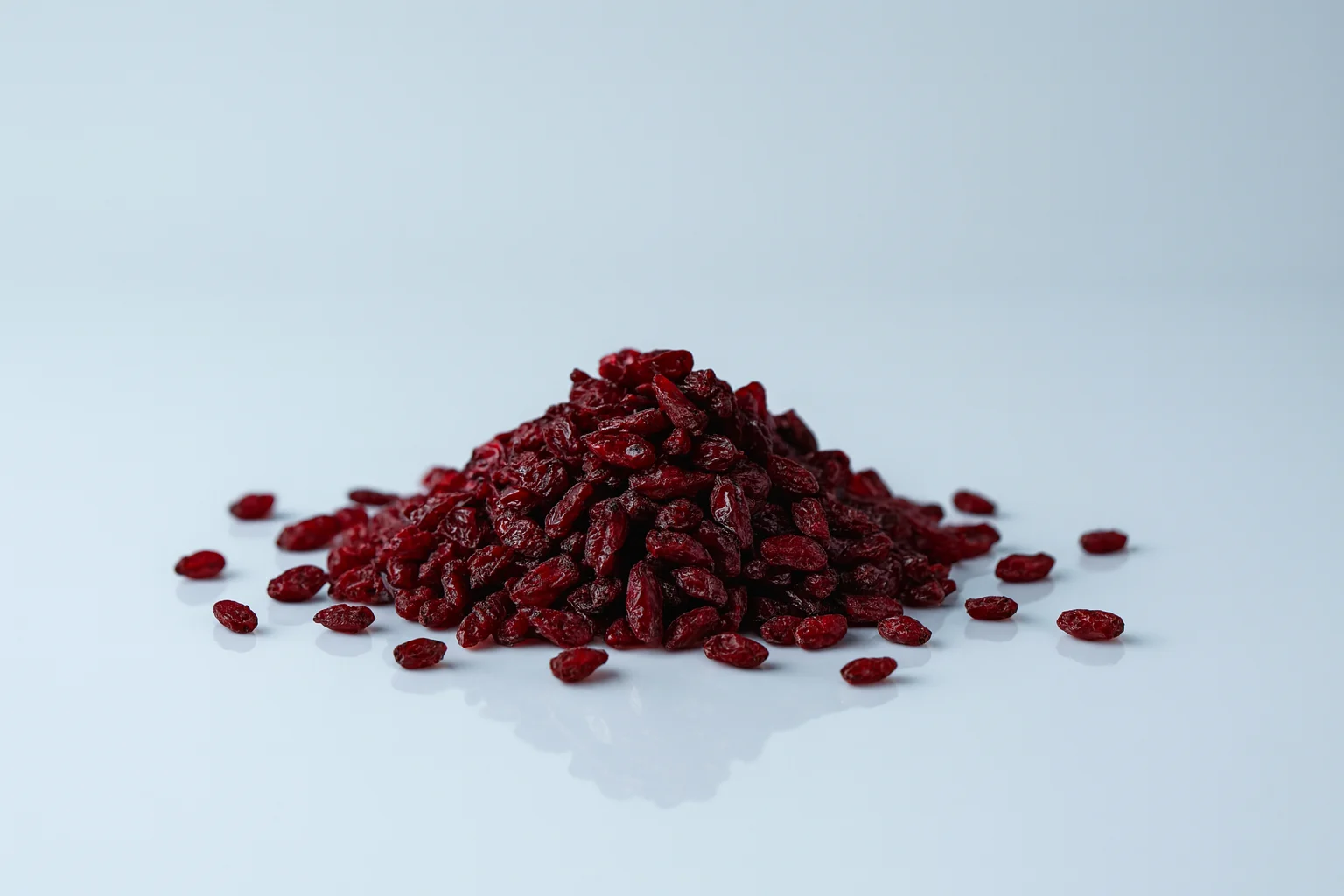
When can babies have barberries?
Barberries may be introduced as soon as baby is ready to start solids, which is generally around 6 months old.
Barberries are small, tangy red berries that grow on a shrub native to regions of Asia and parts of Europe. They’ve been cultivated and used for thousands of years, both for their flavor and their medicinal properties. In Persian cuisine, barberries—known as zereshk—are prized for their bright tartness and jewel-like color, adding balance to savory dishes like zereshk polo (rice with barberries and saffron). They also appear in jams, teas, and traditional sweets across Central and Western Asia.
How do you serve barberries to babies?
Every baby develops on their own timeline, and the suggestions on how to cut or prepare particular foods are generalizations for a broad audience.
6 months old +:
Rehydrate dried barberries in hot water for 15 minutes. Once the fruit is fully softened, finely chop, mash, or puree. Serve the rehydrated berries on their own or mixed into other foods, such as oatmeal or yogurt. Alternatively, share barberries that have been fully rehydrated and softened in rice dishes, soups, and stews.
9 months old +:
Offer whole dried barberries that have been softened and fully rehydrated in warm water for baby to pick up on their own or served into mixed dishes or scoopable foods.
18 months old +:
At this age, if a child has molars and shows readiness for more challenging textures by consistently taking bites and chewing food thoroughly, you can try offering fruit leathers made from barberry. Serve a whole, long strip of fruit leather and demonstrate with your own piece how to take a bite, then chew the food thoroughly with your molars. Fruit leathers are challenging to chew, so don't be surprised to see the child spit out pieces as they learn how to manage the texture. You can also continue to serve rehydrated barberries, either whole or chopped, as part of mixed rice dishes, stews, and more.
3 years old +:
Around the third birthday, many toddlers may have the molars and the chewing skills needed to eat whole, dried barberries, which are firm and challenging to chew. To model how to eat whole barberries, start by telling the child: "This is a hard one. Watch me." Show how you move the food to your molars with your tongue. Chew with your mouth open (you can even demonstrate by opening and closing your hands at the same time). Once you have chewed the berry well, open your mouth to show the toddler how it has been broken down. Say, "I moved it to my big strong teeth to chew it. It needs a lot of chewing." Demonstrate a couple of times before offering a barberry to the toddler. Consider serving only one or two berries at a time at first to pace the practice.
Are barberries a choking hazard for babies?
Yes. Barberries are small, firm, and challenging to chew, which are qualities that pose an increased risk of choking. To reduce the risk, prepare and serve barberries in an age-appropriate way as described in the How to Serve section. As always, make sure to create a safe eating environment and stay within reach of baby during meals.
Learn the signs of choking and more about choking first aid in our free guides, Infant Rescue and Toddler Rescue.
Are barberries a common allergen?
No. Barberries are not a common food allergen.[1] What is quite common with acidic foods like barberries, however, is a harmless contact rash around the mouth or skin that the barberries come into contact with, such as the mouth and diaper areas. Applying a thin layer of barrier ointment—such as pure petroleum jelly or a plant-based oil/wax balm—to baby’s face and bottom prior to mealtime can help prevent contact rashes.
Are barberries healthy for babies?
Yes. Barberries are rich in carbohydrates and fiber and offer iron, zinc, and plenty of antioxidants, which together aid in blood cell health, taste perception, and bodily resilience.[2] [3]Plus, they’re rich in vitamin C, which supports immunity and helps the body absorb plant-based sources of iron. Lastly, barberries offer phytochemicals with anti-inflammatory benefits that may also support heart, liver, and metabolic health.[2] [3]
Avoid offering barberry supplements, powders, and extracts to babies and toddlers, as there is not enough evidence to support their safety.
When can babies drink barberry juice?
Small amounts of barberry juice may be shared as a drink after 12 months of age. That said, it can be beneficial to wait for when a child is older to regularly share juice and other sugary drinks. Research suggests that regular intake of juice and other sweet drinks tends to increase the risk of dental cavities and take up space in the belly, which may decrease a child’s motivation to eat other foods at mealtime and may negatively affect the child’s growth over time.[4] [5] However, occasional servings of juice after one year of age generally isn’t a cause for concern. Learn more about serving juice to babies and toddlers.
Reference Material
Nabavizadeh SH, Moghtaderi M, Aleyasin S, Esmaeilzadeh H, Araghi M (2019). The skin prick test results to saffron, sumac and barberry in patients with atopy. Glob J Allergy 5(1): 001-003. DOI: 10.17352/2455-8141.000022
Zarei A, Changizi-Ashtiyani S, Taheri S, Ramezani M. (2015). A quick overview on some aspects of endocrinological and therapeutic effects of Berberis vulgaris L. Avicenna. J Phytomed. 5(6):485-97. PMID: 26693406; PMCID: PMC4678494.
Rad, S. Z. K., Rameshrad, M., & Hosseinzadeh, H. (2017). Toxicology effects of Berberis vulgaris (barberry) and its active constituent, berberine: a review. Iranian journal of basic medical sciences, 20(5), 516–529. DOI: 10.22038/IJBMS.2017.8676
Start solids with confidence
- Guided Introduction to 100+ Foods
- Smart Tools to Simplify Mealtime
- Food Allergen 101
- 300+ Meal Ideas
- First Foods® Database

Start solids with confidence
- Guided Introduction to 100+ Foods
- Smart Tools to Simplify Mealtime
- Food Allergen 101
- 300+ Meal Ideas
- First Foods® Database
Expert Tips Delivered to Your Inbox
Sign up for weekly tips, recipes and more.