
Asian Pear
Fruit
- Age Suggestion
- 6 months
- Iron-Rich
- No
- Common Allergen
- No
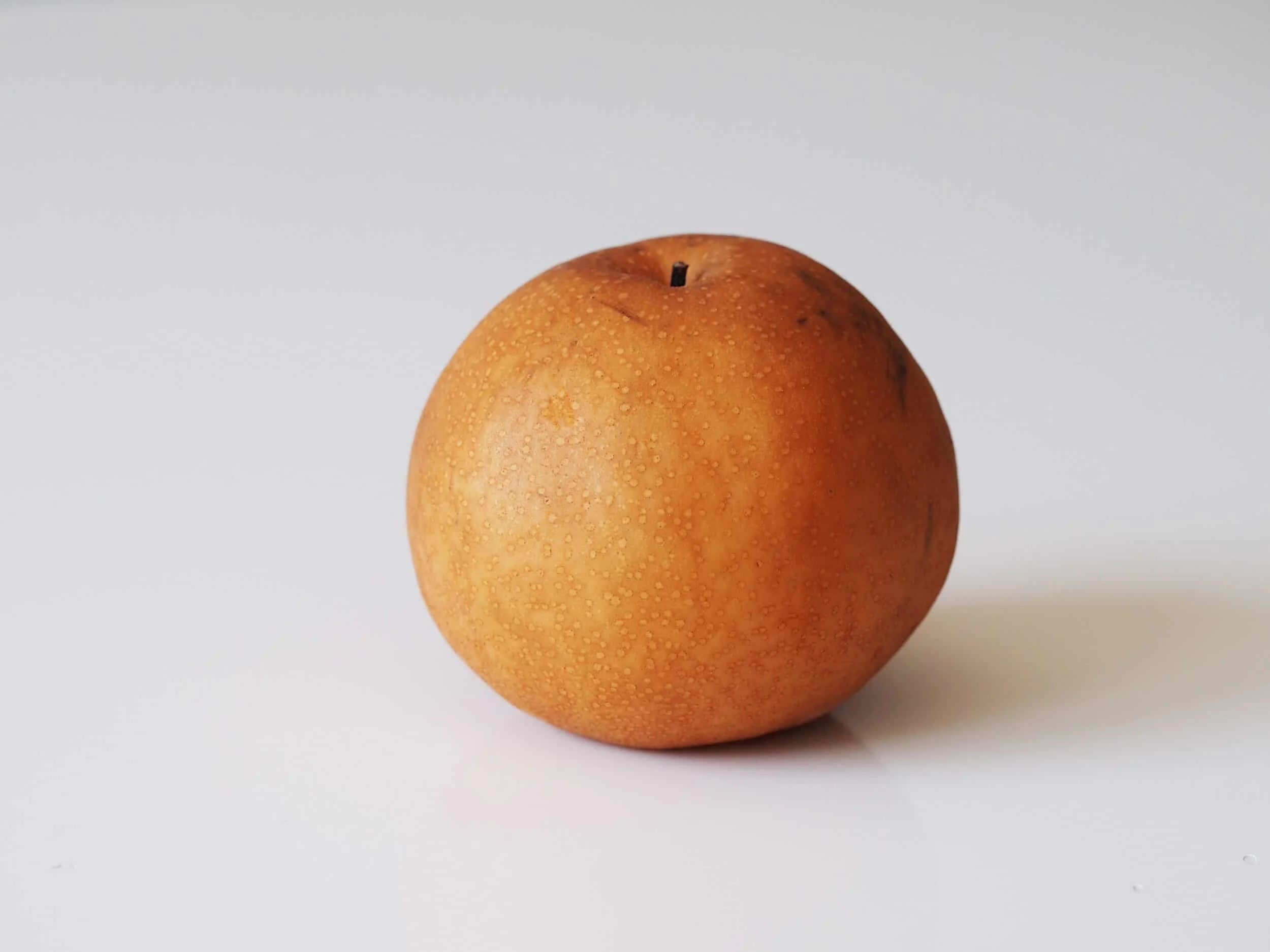
When can babies have asian pear?
Asian pear may be introduced as soon as baby is ready to start solids, which is generally around 6 months of age.
Native to the mountainous regions of Central Asia and cultivated for centuries by farmers and horticulturalists throughout Asia, the asian pear is grown for its cultural significance, medicinal benefits, and symbolism of grace, purity, and wisdom. Reverence for the fruit (along with Asian immigration to Australia, North America, and other parts of the world) have resulted in thousands of varieties that, when ripe, range in ombre hues of the sun—some sandy and mottled, others golden and speckled white, even a few that are kissed with fiery bronze.
How do you serve asian pears to babies?
Every baby develops on their own timeline, and the suggestions on how to cut or prepare particular foods are generalizations for a broad audience.
6 months old +:
Offer large wedges or halves of cooked, soft Asian pear with the core and stem removed (removing the skin is optional). Rolling cooked pear in hemp seeds, finely shredded coconut, or finely ground nut can help add grip. Alternatively, mash the cooked fruit and let baby scoop with their hands or stir the mashed pear into scoopable foods like yogurt.
9 months old +:
Continue to offer large halves of cooked, soft Asian pear with the core and stem removed. Alternatively, offer raw Asian pear in thinly sliced rounds or half-round slices, with or without the skin. Aim for slices that are just thick enough that they do not flop over as baby holds them. Babies often chew on the skin and spit it out, and while this can seem like waste, building familiarity with skin can help encourage a child to eat fruit with the skin later in life. Skin also helps the fruit stay together as baby munches on it, and the act of chewing and spitting the skin can help develop oral-motor skills. If baby takes a big bite of the raw slice, give baby a moment to either chew and swallow it or spit it out, keeping your fingers out of baby’s mouth. You can help by putting your hand on baby’s back and gently leaning the baby forward to allow gravity to help pull the piece of food towards the front of the mouth for baby to more easily spit out.
18 months old +:
When and if you think the child is ready (they chew food thoroughly and are willing to stay seated for the meal), you can try offering whole, raw Asian pears for biting and chewing practice. Offering whole Asian pears can be safer than quartered pieces. This is because even a big bite from the whole fruit often results in a flat, more manageable piece, but taking a bite from a wedge could result in a small, firm, tapered piece, which would pose more choking risk. If the child is struggling with the skin, simply peel the fruit, or peel it in “stripes” so that some skin is left on for exposure.
24 months old +:
Sometime after the 2nd birthday, most typically developing toddlers will be ready for thicker sections of raw Asian pear, such as quarters or wedges of Asian pears. Large sections of Asian pear can be more risky than the whole fruit, so wait until you observe the child to be ready. The child should be consistently taking accurate-sized bites, moving the food to the side of the mouth, and chewing thoroughly. They should also be able to sit calmly while eating. As always, stay within an arm’s reach during mealtime and refrain from offering thick slices of Asian pear in strollers or car seats.
Is asian pear a choking hazard for babies?
Yes. Asian pear is firm and slippery, even when ripe, which are qualities that pose an increased risk of choking. To reduce the risk, prepare and serve asian pear in an age-appropriate way as described in How to Serve. As always, make sure you create a safe eating environment and stay within an arm’s reach of baby during meals.
Learn the signs of choking and gagging and more about choking first aid in our free guides, Infant Rescue and Toddler Rescue.
Are asian pears a common allergen?
Are asian pears healthy for babies?
Yes. Asian pears offer lots of fiber to help diversify the gut microbiome.[4] [5] The fruit also contains plenty of vitamin C (for healthy skin and a robust immune system) and copper to help the body absorb iron from other foods. The skin of asian pears in particular is rich in antioxidants—beneficial compounds that combat bodily stress and help keep us healthy.[6]
How do I know when an asian pear is ripe?
Asian pears remain firm and crunchy, even when fully ripe. Look for fruit that feels heavy for its size and smells lightly sweet and floral near the stem, and skip any with soft, mushy spots. Because even the ripe fruit stays firm and crisp, asian pear should be cooked until soft for babies starting solids.
When can babies drink asian pear juice?
Small amounts of asian pear juice may be shared as a drink after 12 months of age. That said, it can be beneficial to wait for when a child is older to regularly share juice and other sugary drinks. Research suggests that regular intake of juice and other sweet drinks tends to increase the risk of dental cavities and take up space in the belly, which may decrease a child's motivation to eat other foods at mealtime and may negatively affect the child's growth over time. However, occasional servings of juice after one year of age generally isn't a cause for concern. Learn more about serving juice to babies and toddlers.
Reference Material
American Academy of Allergy Asthma and Immunology. Oral Allergy Syndrome (OAS) or Pollen Fruit Syndrome (PFS). Retrieved September 11, 2020
Mayo Clinic. Food Allergy. Retrieved September 11, 2020
Gotoda, H., Maguchi, S., Kawahara, H., Terayama, Y., Fukuda, S. (2018). Springtime pollinosis and oral allergy syndrome in Sapporo. Auris Nasus Larynx, 28, S49-S52. doi:10.1016/s0385-8146(01)00070-0
Start solids with confidence
- Guided Introduction to 100+ Foods
- Smart Tools to Simplify Mealtime
- Food Allergen 101
- 300+ Meal Ideas
- First Foods® Database
Start solids with confidence
- Guided Introduction to 100+ Foods
- Smart Tools to Simplify Mealtime
- Food Allergen 101
- 300+ Meal Ideas
- First Foods® Database
Expert Tips Delivered to Your Inbox
Sign up for weekly tips, recipes and more.