
Ají Amarillo
Vegetable
- Age Suggestion
- 6 months
- Iron-Rich
- No
- Common Allergen
- No
When can babies have ají amarillo?
Ají amarillo may be introduced as soon as baby is ready to start solids, which is generally around 6 months of age.
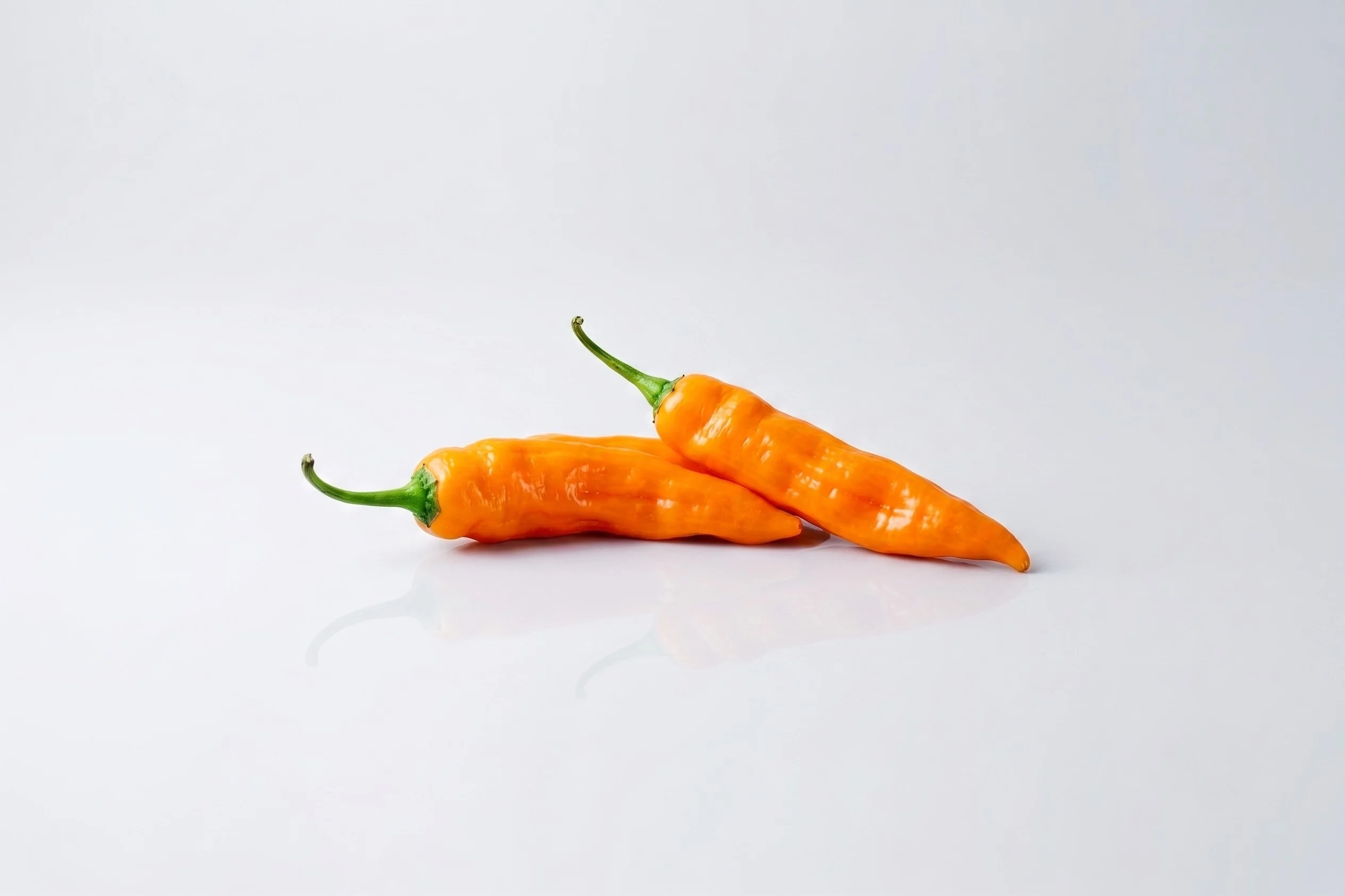
Ají amarillo is a bright orange chile pepper with deep roots in the cooking of what is today Peru. Along with garlic and red onion, it forms the aromatic base of countless Peruvian dishes, including ají de gallina, papa a la huancaína, causa limeña, and many ceviches. The pepper has a distinctive fruity, moderately spicy flavor that is more complex and less aggressive than many other chiles. Outside Peru, ají amarillo is most commonly found as a jarred paste (pasta de ají amarillo), though frozen, fresh, and dried forms (called ají mirasol when dried) are also available.
How do you serve ají amarillo to babies?
Every baby develops on their own timeline, and the suggestions on how to cut or prepare particular foods are generalizations for a broad audience.
6 months old +:
Let baby taste some of your food that contains a small amount of ají amarillo paste, and consider waiting until baby is a little older to regularly offer very spicy dishes. Use a spoonful of ají amarillo paste to flavor foods like mashed potatoes, scrambled eggs, rice, or stew. Start with a small amount stirred into a larger portion of food, and increase as baby shows tolerance. When you decide to let baby try a food seasoned with ají amarillo by serving alongside a creamy food like mashed avocado or yogurt. If you’re making ají amarillo paste from scratch, you can make it less spicy by removing the seeds and white veins from each pepper before blending them.
12 months old +:
Cook family meals with ají amarillo as desired and share age-appropriate pieces of food like soft, shredded chicken in sauce from aji de gallina or a large, soft slice of cooked potato from papa a la huancaína. Follow the child’s lead and tolerance for spice, and serve with a creamy food like mashed avocado or yogurt to help the child manage the heat.
Is ají amarillo a choking hazard for babies?
No. Ají amarillo as typically used in cooking presents a low risk when safely prepared for a child’s age and developmental ability, though, in theory, an individual could choke on any food. To reduce the risk, prepare and serve ají amarillo in an age-appropriate way as described in How to Serve. As always, create a safe eating environment and stay within reach of baby during meals.
Learn the signs of choking and more about choking first aid in our free guides, Infant Rescue and Toddler Rescue.
Is ají amarillo a common allergen?
No. Allergies to chili peppers like ají amarillo are rare, but have been reported.[1] [2] Contact reactions (such as temporary rashes, eye irritation, respiratory difficulty, and digestive upset) to spicy peppers are frequently mistaken for allergic reactions.[3] This is due to the irritating qualities of capsaicin (the spicy component in peppers) in sensitive individuals and is not typically a true allergic reaction.[4]
People who are allergic to latex or certain plant pollens may also be allergic to ají amarillo or experience oral allergy syndrome (OAS), also known as pollen-food allergy syndrome.[5] [6] [7] OAS typically results in short-lived itching, tingling, or burning in the mouth and is unlikely to result in a dangerous reaction. Cooking, canning, and/or peeling ají amarillo may help minimize and even eliminate the reaction.[5] [8]
Note that foods containing ají amarillo may cause a harmless rash around the mouth while baby eats or may cause or worsen diaper rash. Try applying a thin layer of barrier cream or ointment—such as pure petroleum jelly or a plant-based oil/wax balm—to baby’s face and diaper area to help prevent contact rashes.
Is ají amarillo healthy for babies?
Yes. Ají amarillo offers vitamin C to help boost immunity and iron absorption, in addition to fiber and vitamins A, B6, and E. It also provides antioxidants to support the body’s resilience against stressors. Even ají amarillo powder offers some vitamin A and vitamin C.
Contrary to popular belief, babies can enjoy big flavors, including hot peppers, but it is important to start with small tastes and adjust the spice level to suit the child. The goal is to avoid a negative experience from too much heat and to ensure that the child does not get confused about which foods are inherently spicy. To reduce the heat of a chili pepper, remove the seeds and pith (the veins that hold the seeds) and taste the food before offering to baby. If it seems too spicy, adjust the seasonings to mellow the flavor.
Can I use jarred ají amarillo paste in shared meals?
Yes. Depending on where you live, jarred ají amarillo paste may be the most practical and accessible form. Read the ingredients list to make sure that any common allergens in the product have been safely introduced before serving. Sodium content varies by brand, and while young babies are unlikely to consume much of any given meal, if you cook with ají amarillo paste regularly, consider choosing a low-sodium product or make your own at home to reduce the sodium.
What is the difference between ají amarillo and ají mirasol?
They are the same pepper in different forms. Ají amarillo refers to the fresh form of the pepper. Ají mirasol is the dried version of the same pepper with a deeper, more concentrated flavor and a slightly different heat profile. Dried ají mirasol is typically rehydrated in hot water and then blended into sauces or stews.
Reference Material
Callero, A., Cabrera-Hernandez, V., Perez-Rodríguez, E., Jimeno-Nogales, L., Martinez-Tadeo, J., Plata-Rodríguez, E., & Garcia-Robaina, J. (2018). Bell Pepper Allergy: Different Sensitization Profiles. Journal of Investigational Allergology and Clinical Immunology, 28(5), 340–342. DOI: 10.18176/jiaci.0278.
Garcia-Menaya, J.M., Cordobes-Duran, C., Bobadilla-Gonzalez, P., Ledesma, A., Perez-Rangel, I., Sanchez-Vega, S., Zambonino, M.A., Corrales-Vargas, S. (2014). Anaphylactic reaction to bell pepper (Capsicum annuum) in a patient with a latex-fruit syndrome. Allergologia et Immunopathologia. 42.3: 263-265. DOI: 10.1016/j.aller.2012.12.006
Yenigun, O. M., & Thanassi, M. (2019). Capsaicin: An Uncommon Exposure and Unusual Treatment. Clinical practice and cases in emergency medicine, 3(3), 219–221. DOI: 10.5811/cpcem.2019.3.41231
Start solids with confidence
- Guided Introduction to 100+ Foods
- Smart Tools to Simplify Mealtime
- Food Allergen 101
- 300+ Meal Ideas
- First Foods® Database

Start solids with confidence
- Guided Introduction to 100+ Foods
- Smart Tools to Simplify Mealtime
- Food Allergen 101
- 300+ Meal Ideas
- First Foods® Database
Expert Tips Delivered to Your Inbox
Sign up for weekly tips, recipes and more.