When Baby Stuffs Food in the Mouth
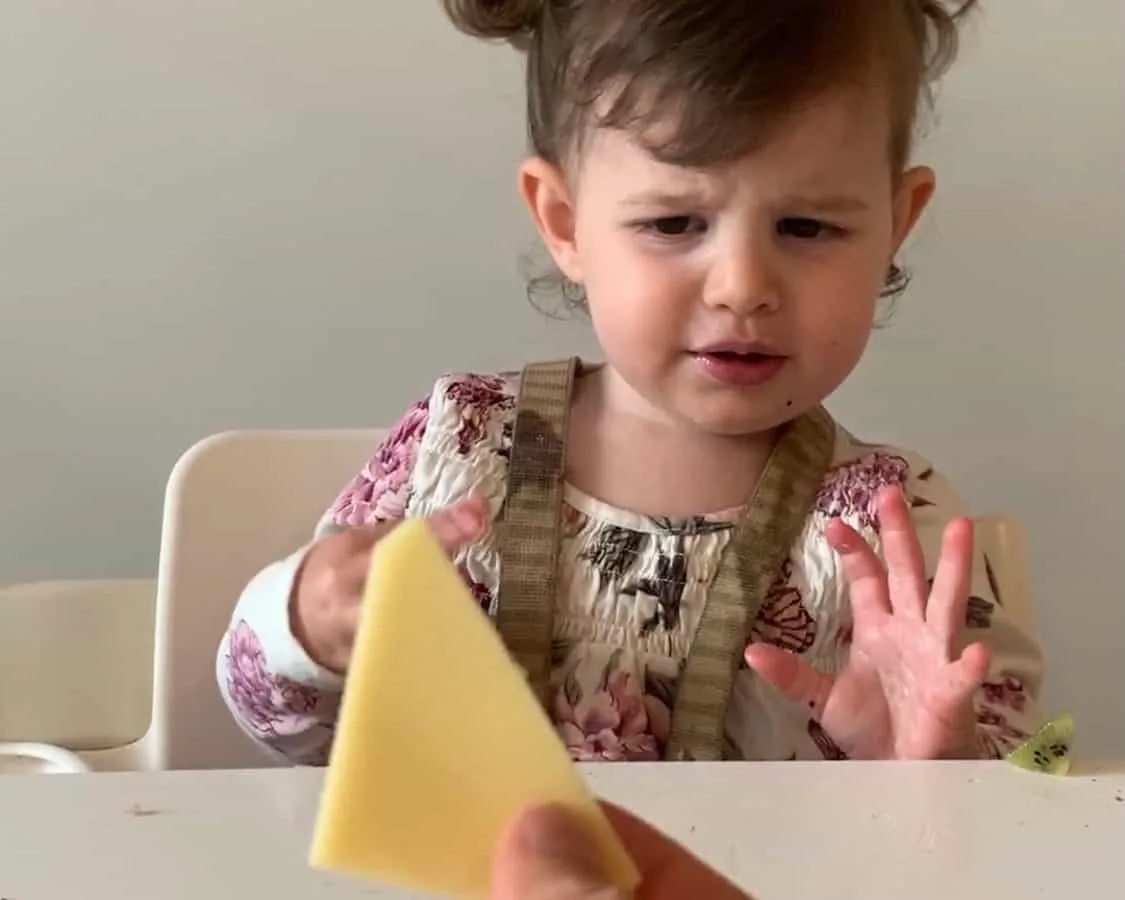
What to do when baby shoves too much food in their mouth or is hiding food inside their cheeks and not swallowing it.
Key Points
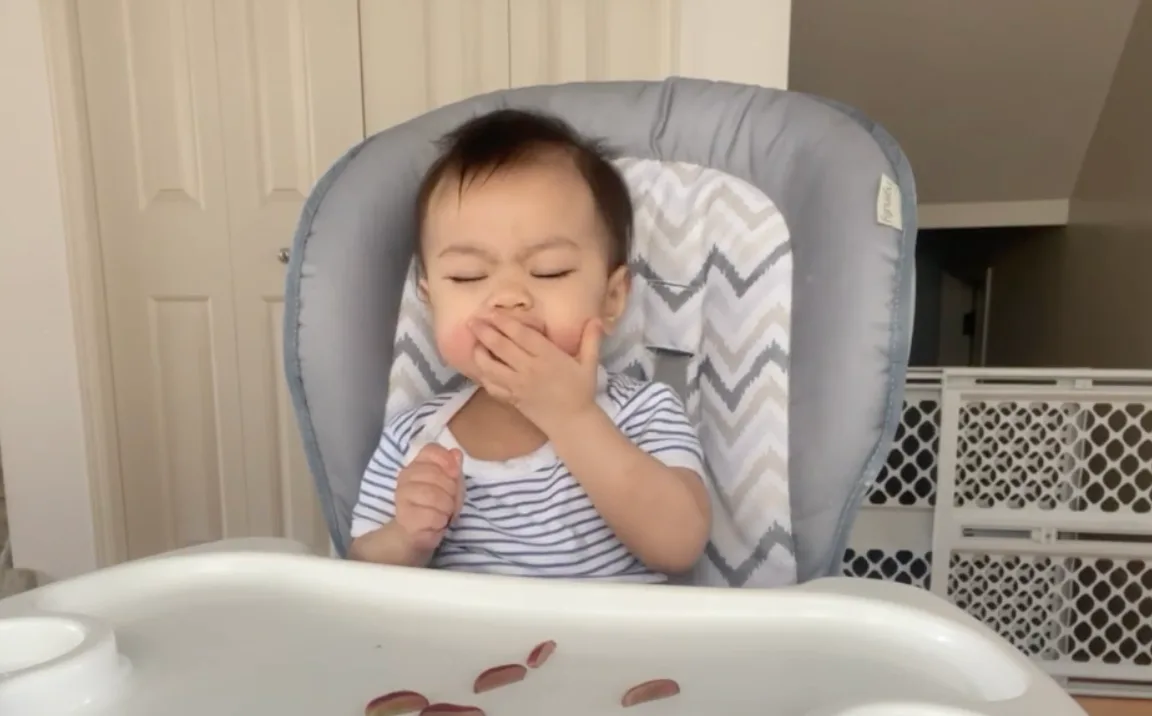
Babies stuff and pocket food in their mouths as they’re learning to eat
It’s normal for babies to put too much food in their mouth and pocket food in their cheeks, and there’s actually value in this behavior. It helps babies develop a “mental map” of the mouth and helps them learn what “too much” feels like.
Encourage them to spit out the food, but do not reach into their mouth
Putting your fingers in their mouth increases the risk of choking. Instead, stay calm, kneel down in front of baby to let gravity help, and coach them to spit out the food. You can cup your hand below their chin and exaggerate spitting yourself.
Letting baby practice with big flavorful foods can be helpful
A baby who always pocket food or overstuff their mouth benefits from biting and tearing bigger pieces of food. Try bold flavors to wake up the senses in their mouth—a mango pit, asparagus spear dipped in tasty sauce, or a chicken drumstick with juicy meat on the bone.
Why is baby stuffing food in their mouth?
Stuffing food is normal. Babies rely on touch and feedback from muscles in the mouth to learn how to take manageable bites, move food around, and chew a variety of textures. This helps create what’s known as a “mental map” of the mouth.
Overstuffing provides lots of deep touch and pressure feedback to baby’s brain. Babies overstuff food in the mouth because:
They are learning how much food is too much.
They enjoy playing and tasting the foods.
They don’t realize there is already food in the mouth.
They just don’t know how to take it slow… yet.
The flavor, texture, and pressure from the food “teaches” the brain about the inside of the mouth. The bigger, firmer, and more flavorful the piece of food, the more input it gives to baby’s brain. Learn more about what to do when baby takes a big bite.
Why do babies pocket food in the mouth?
Babies may pocket food in their cheeks or in the roof of the mouth as they are learning how to eat. If baby cannot locate where food is in their mouth, or can't figure out how to reach it with their tongue, they may pocket it.
Moving food around the mouth takes lots of time and practice to build, and it is normal for babies to pocket food briefly (for a minute or so) in those first few months of starting solids. However, it is much more common for babies to spit out pieces of unchewed food rather than holding them in their mouth for long periods of time.
If baby is pocketing all or most chewable food for several minutes or longer at most meals, this is a red flag. Connect with your pediatrician and ask if a referral to a pediatric occupational therapist or a speech and language pathologist is needed.
Is stuffing and pocketing dangerous?
Generally, no. But the risk increases if baby leaves the meal with food pocketed in the mouth. Babies typically gag or spit out food that they have stuffed in the mouth. Pocketed food in the mouth becomes a concern when baby moves on from mealtime with food still in the mouth. Why? Babies are likely to forget about the food, which can pose a serious choking risk. Pocketing also carries a significant risk for tooth decay and cavities as food sits for an extended time against teeth. If baby is pocketing food, teach baby to spit out food.
What should I do when baby stuffs or pockets food?
Stay calm. While it may feel like an emergency, it is likely not.
Clear the food from the table or tray. So baby does not put more food in their mouth.
Give it a minute. Baby may spit out food on their own.
Kneel down in front of baby to encourage them to look down, which allows gravity to help them spit out the food.
Coach baby. Say, “Too much food. Spit out.” Then, exaggerate spitting out a small bit of food with your tongue. You can also stick out your own tongue as you hold your hand just below baby’s mouth, which helps prompt them to spit out the food.
Use gravity if needed. Lean your baby forward gently, which can help encourage the to spit out the food.
If pocketing… Demonstrate swallowing. Show “swallow” by swallowing a bit of your own food (or drink) while moving your hand from your lips, along your throat, and down to your stomach.
Offer an empty spoon. Baby will likely open their mouth (to help you see where the food is), and oftentimes they may chew or suck on the spoon. This can initiate moving the food around and swallowing or spitting.
Offer a drink. Offer a small sip of water, breast milk, or formula from an open cup. An open cup lets liquid enter your child’s mouth right at the front to clear all areas.
Avoid putting your fingers in baby’s mouth. Any time you put your fingers in baby’s mouth, the risk of choking increases.
As a last resort, you can perform a finger sweep.
How can I get my baby to stop stuffing food?
Stuffing food in the mouth is normal, and over time, baby learns what “too much” feels like. These strategies can help.
Talk to baby. Every time you see baby starting to overstuff the mouth, say, “That looks like a lot. Finish that bite.” Or: “Slow down. Too much.”
Let them investigate. When baby spits out food, don’t take it away. Looking at it, touching it, and even putting it back in the mouth to try again can decrease overstuffing next time. Point to the food, and say: “See? Too much. Smaller bite next time.”
Space out food on the table or tray. Baby is less likely to pick up lots of food at once.
Introduce a fork. Fork practice can slow baby down as they work with one bite at a time. Sound effects like “boop!” when piercing can help encourage baby to participate.
Go big. If baby is between 9 and 12 months of age and eating bite-sized pieces of food, larger cuts can decrease overstuffing.
Teach how to bite and tear. Offer big foods and practice biting. Sound effects help, ““Grrrr!” as you bite, and “Rrrrrippp!” as you tear. If baby needs support, model how it’s done by taking a bite of your food, then hold a piece of food in front of baby and let them try. As they take a bite, gently pull away, encouraging them to hold on with their teeth. Show them where they bit the food; say, “Look! You took a bite.”
Choose foods that “wake up” the mouth. Soft, bland foods are usually more likely to be stuffed. Offer foods with stronger flavors (such as citrus, herbs, or spices) or more complex textures (such as roasted or grilled vegetables instead of steamed).
It can be tempting to try to prevent stuffing by only offering one bite of food at a time. Unfortunately, this isn’t a long-term solution. Baby will eventually be offered more food at once, and stuffing may continue. Remember that stuffing in itself is an “exercise” in building skill; letting baby learn helps decrease stuffing overtime.
How do I prevent food pocketing and break the habit?
These strategies can help:
Practice with food teethers. Offer long, unbreakable sticks of food (such as a chicken drumstick, corn cob, or mango pit) that baby can move in and around the mouth with ease. This teaches baby about the space inside their mouth, and encourages practice using the tongue to move food around.
Offer soft, well-cooked foods. Take a break from offering any dry foods (such as bread or dry chicken), and let baby practice with soft foods (such as cooked fruit or ripe vegetables). Baby may pocket food less when it is easier to manage in the mouth. This can also encourage baby to practice chewing and moving food to the back of the mouth to swallow. After 1 or 2 weeks of practice, reintroduce the more challenging foods.
Pump up the flavor. Offer foods with bright flavors: oranges or lemons, mashed blackberries, marinara sauce, and tangy yogurt are all examples. Sour and tangy foods “wake up” the muscles in the mouth and generate saliva, which prepares baby to swallow.
Regular oral hygiene. Brushing your baby’s gums, teeth, and tongue twice a day also “wakes up” and helps to “map” the mouth.
Talk to baby. Share what you see: “That bite is really chewy. There is still food in your mouth. Keep chewing and then swallow.”
When should I seek support for food stuffing or pocketing? Who can help me with this?
It may be time to seek support for food stuffing if:
Your baby frequently overstuffs their mouth and then becomes agitated and unconsolable despite trying the strategies mentioned in this article.
Your baby overstuffs to the point of throwing up frequently.
You have tried the strategies above for a month or so and see no progress.
It may be time to seek support for pocketing if:
You regularly find food in your baby’s mouth 5-10 minutes or more after meals.
Baby is regularly pocketing foods of all textures at most meals for more than a few minutes at a time.
You have tried the strategies above for a month and see no progress.
Discuss options with your pediatrician. You can find support from an occupational therapist or speech therapist with expertise in pediatric feeding, eating, and swallowing.
Frequently Asked Questions
Overstuffing means baby puts a lot of food in their mouth at once. Pocketing means baby holds food in their cheeks or against the roof of the mouth for an extended time without chewing or swallowing.
Overstuffing and pocketing food usually happens between 6 and 18 months as babies learn to chew and figure out how much fits in their mouth. Most toddlers grow out of it by age 2, though overstuffing may still happen sometimes. If they’re still stuffing food at most meals after age 2, talk to your pediatrician about a feeding evaluation.
While occasional food pocketing for short periods of time can be normal when baby or toddler is eating challenging foods, most will outgrow this entirely by ~18 months. Frequent pocketing should be discussed with your pediatrician.
Usually, no. Babies and young toddlers often stuff food in their mouth, then spit it out as they learn what “too much” feels like. Offering big, flavorful foods to bite and tear can help them move past this. Sometimes toddlers come to the table very hungry and take in more than they can handle. Serving meals and snacks at the same times each day can help them settle into a routine so they don't arrive too hungry.
Yes. Television, tablets, and toys at mealtime pull their attention away from eating and may lead to eating without much awareness of how much food feels in their mouth. Try to keep the table free of screens and toys to help them focus on eating.
Stay calm and act quickly. Gently wake baby, and sit them up or hold them in a positon that puts gravity on your side, and encourage them to spit out the food. You can try cupping your hand below their chin and stick out your tongue and pretending to spit. Give baby a moment to work the food our of their mouth. If they don’t or can’t, you can perform a finger sweep. Do not let baby sleep with food still in their mouth—pocketed food during sleep is a choking risk.
No. Gagging is their built-in safeguard against choking when they can’t manage food in their mouth. The gag reflex pushes food forward and away from the airway. Repeated gagging while learning to eat is normal and protective, not dangerous. That said, if gagging happens at every meal or seems to distress baby significantly, talk to your pediatrician about ways to help baby gagging on solids.