Toddlers and Fear of New Foods
Around 12 to 18 months, many toddlers become wary of new foods, a normal phase called food neophobia. Here's why it happens and how to respond so it passes smoothly.
Key Points
Fear of new foods is a normal phase, not a problem
Around 12 to 18 months, many toddlers who once ate almost anything become wary of unfamiliar foods. This is called food neophobia, it's developmentally normal, and it usually fades with time.
Keep offering and don't swap in a "sure thing."
A toddler can't warm up to a food that never appears on their plate. Continue serving new and refused foods without pressure, and resist replacing them with a preferred food, which can tip a normal phase into picky eating.
How you respond matters as much as what you serve
Toddler food refusal isn't personal and rarely means a lasting dislike. Staying calm, eating the food yourself, and keeping mealtimes low-pressure helps the phase pass sooner, while big reactions or short-order cooking tend to stretch it out.
What is food neophobia and when does it start?
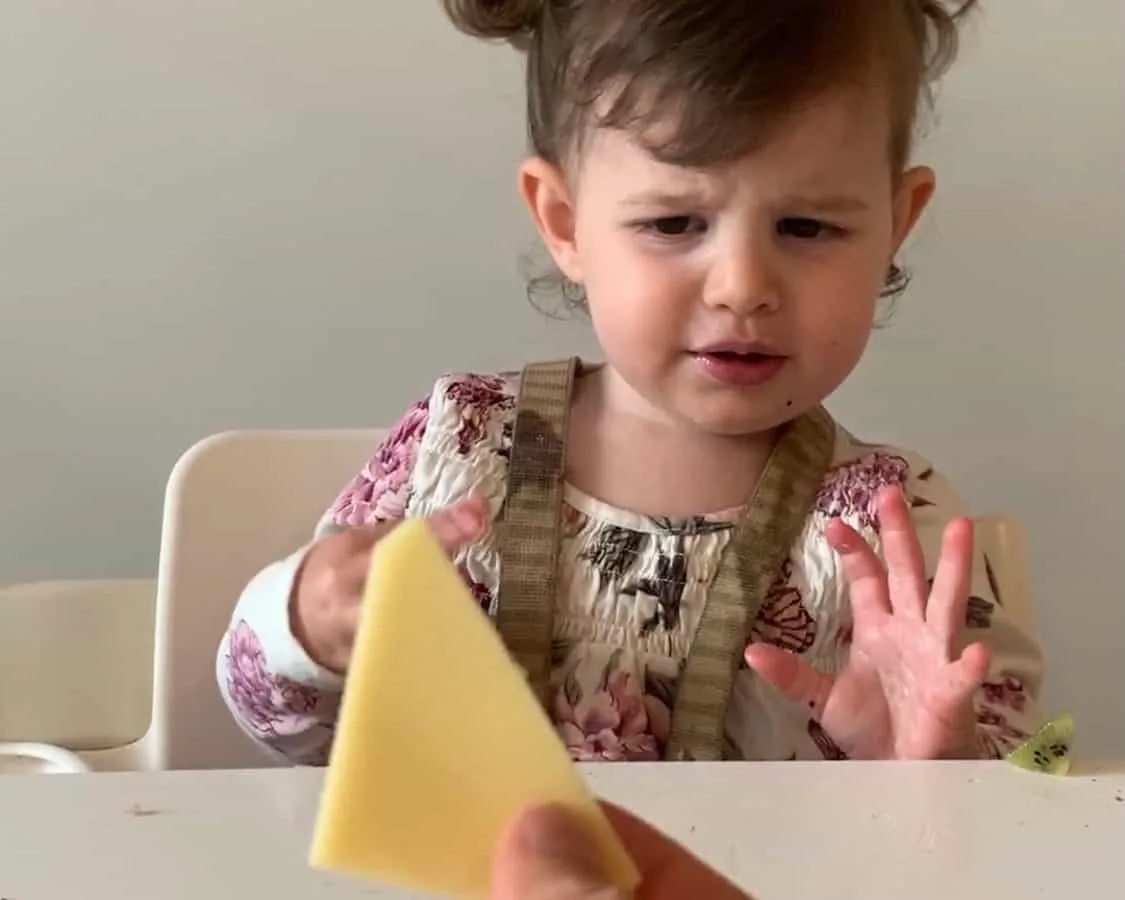
Fear of new foods or food neophobia is a normal (but tricky!) phase that many toddlers enter around 12 to 18 months of age, when they become much more reluctant to taste foods that they haven’t tried before.
Why do toddlers suddenly fear new foods?
A big part of this is simply a developmental change as your baby becomes a toddler. You may have noticed there are lots of areas where your previously easy-going baby has suddenly begun to show preferences (being held by a preferred parent, resisting diaper changes, etc.) as they become more mobile, more independent, and more aware that “no” is an option. Mealtime is one area where toddlers can feel that sense of control.
There may be an older reason at work too. Some anthropologists believe food neophobia is baked into our DNA through evolution. They suggest it would have been protective earlier in human history, since a child who was cautious about putting unfamiliar things in their mouth was less likely to eat something poisonous if they wandered away from a caregiver.[1] [2] This is just a hypothesis however, and whatever the cause, the wariness is normal.
Food neophobia or picky eating: what's the difference?
The two overlap, but they aren't the same thing. Food neophobia is specifically a fear of new or unfamiliar foods, and it’s a normal, time-limited phase most toddlers pass through. There’s no official definition of picky eating, but it tends to affect most mealtimes and can include your child refusing foods they used to eat happily, narrowing down to a short list of accepted foods, or having strong feelings about whole categories of textures or colors of foods.
That said, the two can be connected. Neophobia is a normal developmental stage, but the way caregivers respond to it can nudge a child toward or away from picky eating. If a toddler learns that refusing a new, unfamiliar food reliably gets them one of their favorite foods instead, the refusal can become a habit rather than a passing phase. The good news is that the reverse is also true: calm, consistent, no-pressure meals help most toddlers move through neophobia without it turning into a long-term bout of picky eating.
What to do when your toddler refuses new foods
Our biggest piece of advice: Try to keep your cool. Food refusal during this phase is not personal, and it doesn't mean your toddler actually dislikes the food or won't come to enjoy it later. It just takes more patience and a little more care in how you approach the meal and how you respond if it's rejected. A few things that can help:
Eat the same food at the same time as your toddler. This tip works for babies who are learning to eat solid food, and it works for the same reason now: Your child trusts you and wants to do things just like you.
Think of food as an activity. Offer an age-appropriate junior knife so they can cut their own food, have a "build your own taco" night, and ask them to help wash fruits and vegetables during meal prep. Even touching and engaging with the food can help make it more familiar.
Offer foods to sprinkle (like grated cheese, nutritional yeast, hemp seeds) and dips to make new foods more inviting.
Keep serving new foods, even when you think they'll be refused. Your child can't try a food that never shows up on their plate.
Above all, stay relaxed and remember the division of responsibility: you decide what's offered and when, and your toddler decides whether and how much to eat. Try a strategy or two, then enjoy your own meal and move on. Pressure can work against your long-game goals, and there's always another meal tomorrow.
How long does food neophobia last?
Food neophobia as a phase usually ends around 4 or 5 years of age, but how long it lasts depends partly on how you handle it. If you've been consistent about offering a wide variety of foods, and you haven't replaced those foods with something else every time your toddler refuses, the phase tends to pass more quickly.
Frequently Asked Questions
We hear this all the time: baby used to eat anything and everything, but right around the first birthday, they start refusing foods, even the ones they used to love. It's not personal and it doesn't mean the food is gone for good. Toddlers are simply in a new developmental phase of life and are driven to say no, test boundaries, and see what happens by trying out different behaviors. Keep serving the food in a low-key and low-pressure way alongside other foods, experiment with different ways of serving the food, resist swapping in a preferred food, and there's a good chance it will cycle back into favor.
Toddlers notice small changes that adults barely register, and in this phase, familiarity feels safe. A banana cut into coins instead of a spear or a new flavor of a familiar granola bar can feel like an entirely new (and therefore untrustworthy) food. This is normal. Toddlers have a better memory than they had as a baby, and they now have expectations, so when a food is served that was different from what they were expecting, this can feel quite frustrating. And because their language is limited and their executive functioning skills are still immature, that frustration can often lead to tantrums and all-out refusals. You can help by keeping some things predictable while varying others a bit over time. Giving the child a heads-up can help so that the change doesn’t feel like a surprise: “Today, we’re having banana circles instead of banana sticks!”
Try not to think of it in terms of giving up. It can take many exposures (often ten to fifteen or more positive or at least neutral experiences with a food!) before a toddler is willing to taste and accept a new food, and some foods take longer. Each time you serve it without pressure, you're making progress, even if it goes untouched. Keep it in the rotation and let repeated, low-key exposure do the work.
No, we don’t recommend it. Here’s the thing: Pressure to take a bite can result in the child tasting the food in the short-term. But in the long-term, it tends to backfire and can make a child more resistant to that food over time. Stick to the division of responsibility: your job is to offer the food and model enjoying it, and your toddler's job is to decide whether to eat it. Letting them come to it on their own terms is more effective than a required bite.
Absolutely. Seeing a food on their plate, touching it, smelling it, squishing it, helping to serve it, or watching you eat it all count as exposures and help build familiarity. Every calm, positive or even neutral encounter chips away at the feeling of "this is new and scary", even when nothing makes it into the toddler’s belly. Tasting is just one part of a longer process of getting comfortable.
For most toddlers, wariness of new foods is a normal phase that resolves with time and patience. But it's worth checking in with your pediatrician if your child's eating is very restricted (if they only have a small handful of accepted foods); if they gag, retch, or vomit at the sight, smell, or texture of many foods; if they're steadily dropping foods without adding new ones back; or if you're concerned about their growth or weight. In these cases, a pediatrician or a feeding therapist can help rule out an underlying feeding or sensory issue and help you come up with a plan.
Reference Material
Start solids with confidence
- Guided Introduction to 100+ Foods
- Smart Tools to Simplify Mealtime
- Food Allergen 101
- 300+ Meal Ideas
- First Foods® Database

Start solids with confidence
- Guided Introduction to 100+ Foods
- Smart Tools to Simplify Mealtime
- Food Allergen 101
- 300+ Meal Ideas
- First Foods® Database