


Acceda a la base de datos First Foods® en Solid Starts App.
Leer másTopinambur (alcachofa de Jerusalén)
Vegetal
Sugerencia de edades
6 meses
Alto contenido de hierro
Sí
Alérgeno común
No
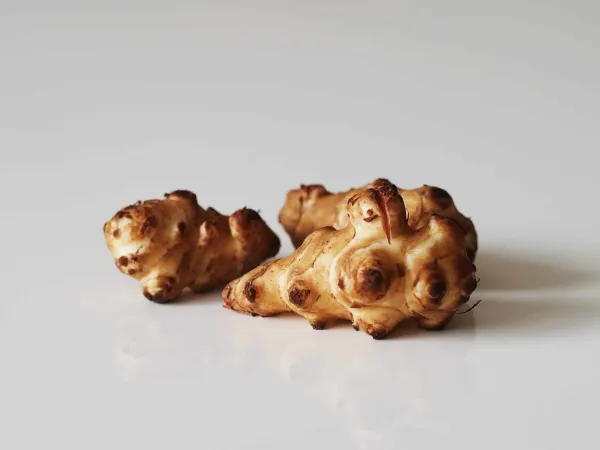
When can babies eat sunchokes?
¡Lo sentimos, esta página aún no está disponible en español! Estamos trabajando tan rápido como podemos para traducir todo nuestro contenido, gracias por tu paciencia y apoyo.
Sunchokes (Jerusalem artichokes) may be introduced as soon as baby is ready to start solids, which is generally around 6 months of age. Due to the naturally gas-producing fiber in sunchokes, start off with small amounts and gradually increase the serving size as baby tolerates to help avoid digestive discomfort.
How do you prepare sunchokes for babies with baby-led weaning?
Cada bebé se desarrolla a su propio ritmo, y las sugerencias que ofrecemos sobre cómo cortar o preparar determinados alimentos son generalizaciones para una amplia audiencia.
6 to 9 months old:
Offer cooked sunchoke wedges that baby can grab and munch. If baby breaks off a too-big piece while eating, stay calm and give the child a chance to work the food forward in the mouth. At this age, babies have built-in reflexes to help keep food forward and spit it out if not properly chewed. If this method of serving sunchoke feels intimidating, you can always mash sunchoke for baby to scoop with hands.
9 to 12 months old:
At this age, babies develop the pincer grasp (where the thumb and forefinger meet), which enables them to pick up smaller pieces of food. When you see signs of this development, try moving down in size by offering cooked sunchoke that has been cut into bite-sized pieces. Try not to fret when you see baby trying to shovel food into the mouth: it is normal at this age and it is a good learning experience for the child. If you always only offer one piece of food at a time, baby will never learn how much food is too much for their mouth. If the child struggles with overstuffing, model how to spit by sticking out your own tongue while saying “ah” as you do so. Of course, if serving bite size pieces makes you feel uncomfortable, go ahead and mash sunchoke to minimize the risk of choking.
12 to 24 months old:
Try offering thinly sliced or grated raw sunchoke, or continue to offer bite-sized pieces of cooked sunchoke as finger food or alongside a fork or spoon to encourage utensil practice. If the child is not interested in using a utensil, don’t worry: using utensils can be exhausting for new eaters, and many children toggle back and forth between feeding themselves with their fingers and utensils. Consistent and accurate utensil use will come in due time, probably between 18 and 24 months of age. Thin slices of peeled sunchoke can also be stored in full-strength vinegar in the refrigerator and offered to toddlers for a delicious, tangy flavor.
Learn more about how to cut and cook foods to make them safe for babies in our video Preparing Food for Baby.
¡Lo sentimos, esta página aún no está disponible en español! Estamos trabajando tan rápido como podemos para traducir todo nuestro contenido, gracias por tu paciencia y apoyo.
Videos
Are sunchokes a common choking hazard for babies?
Yes. Undercooked or raw sunchoke poses a choking risk. To minimize the risk, grate or thinly slice the raw root or offer the root cooked until soft. As always, make sure you create a safe eating environment and stay within an arm’s reach of baby during meals. For more information on choking, visit our section on gagging and choking and familiarize yourself with the list of common choking hazards.
Are sunchokes a common allergen?
No. Sunchokes are not a common allergen, though cases have been reported. Individuals who are allergic to birch pollen or who have Oral Allergy Syndrome (also called pollen food allergy syndrome) may be sensitive to sunchoke. Oral Allergy Syndrome typically results in short-lived itching, tingling, or burning in the mouth and is unlikely to result in a dangerous reaction. Cooking sunchoke can minimize the reaction.
As you would when introducing any new food, start by offering a small quantity of sunchoke for the first few servings. If there is no adverse reaction, gradually increase the quantity over future meals.
Are sunchokes healthy for babies?
Yes. Sunchokes are a great source of iron and potassium, as well as a good source of vitamin B6, choline, magnesium, and phosphorus, all of which are nutrients that support baby’s overall development. Sunchokes are also high in certain types of fiber, particularly inulin (not to be confused with insulin), which are essential for healthy digestion. As with most fiber-rich foods, too much sunchoke at once can lead to excess gassiness and discomfort, so offer babies small amounts and gradually increase serving sizes as baby’s digestive system becomes more adept at processing the fibers in sunchokes.
In addition to the rhizomes or root-like portion, the stems, leaves, and flowers of sunchokes are also edible and nutritious. The leaves and flowers offer some iron, potassium, magnesium, and zinc, as well as a wide variety of polyphenols that support many bodily functions. All parts of the plant offer beneficial plant-derived nutrients including carotenoids and antioxidants, which support immune health and help baby’s body repair damaged cells.
Can sunchokes make baby gassy?
Yes. Sunchoke is a great source of prebiotic fiber, inulin, which promotes healthy gut bacteria and regular pooping. That said, inulin can generate gas as a result of helpful bacteria in the gut breaking it down. While gas is normal, excess gas can make baby uncomfortable. Cooking sunchokes doesn’t resolve this problem, although preparing the roots with acidic ingredients like vinegar or lemon juice may help a bit. To minimize digestive discomfort, introduce high-fiber foods like sunchoke gradually and make sure baby is consuming adequate fluids to support digestive processes.
Where do sunchokes come from?
Sunchokes are knobby tubers that thrive in cool, sunny climates worldwide, but it was the ancestors of the First Nations peoples of North America who learned to cultivate the native plant. When European colonizers arrived, they took sunchokes across the Atlantic Ocean, where the tubers became known as an alternative to the potato. Europeans also applied new names: “topinambur,” after the Tupinambá people of South America (the mistaken origin for the plant) and “Jerusalem artichokes”—a curious naming choice, since the roots have no connection to the city or the vegetable. Back in North America, the roots became known as “sunchokes” in the 20th century after a campaign by Frieda Kaplan to grow the plant’s market.
What are recipe ideas for sunchokes?
Pickle them, roast them, or shave them into salads or slaws. Sunchokes work as a substitute in most recipes that call for potatoes, so try them in bolani, braises, casseroles, dosas, dumplings, frittatas, gratins, hashes, mashes, meatballs or beanballs, paratha, patties, samosas, soups, stews, stir-fries, tortillas—the list could go on given this tuber’s versatility. Want to keep it simple for baby? Use sunchoke as a vehicle to introduce citrus juice, your family’s favorite seasonings, or common allergens like tree nuts, which complement the vegetable’s earthy sweetness.
Escrito y revisado por los/las siguientes especialistas
J. Truppi, MSN, CNS
V. Kalami, MNSP, RD, CSP
K. Grenawitzke, OTD, OTR/L, SCFES, IBCLC, CNT
Dr. S. Bajowala, MD, FAAAAI. Board-Certified Allergist & Immunologist (allergy section)
Dr. R. Ruiz, MD, FAAP. Board-Certified General Pediatrician & Pediatric Gastroenterologist
Consejos de expertos directo a tu bandeja de entrada
¡Suscríbete y recibe correos semanales con recetas, consejos y más!




Copyright © 2026 • Solid Starts Inc