


Acceda a la base de datos First Foods® en Solid Starts App.
Leer másMangosteen
Fruta
Sugerencia de edades
6 meses
Alto contenido de hierro
No
Alérgeno común
No
When can babies have mangosteen?
Mangosteen, when ripe and free of seeds, may be introduced as soon as baby is ready to start solids, which is generally around 6 months of age.
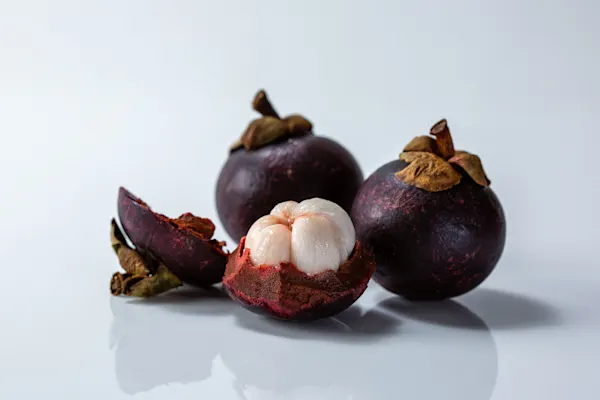
Mangosteen is sometimes called the “queen of fruits” and has been beloved in its native land of Southeast Asia for centuries. Historically, it was prized not only for its juicy, sweet-tart flesh, but also for its role in traditional medicine, particularly in Thailand and Indonesia. The skin is dusky purple when ripe and almost woody in texture. Inside the inedible skin are pearly white segments of fruit that are often enjoyed fresh on their own, or incorporated into desserts, salads, and more.
How do you serve mangosteen to babies?
Cada bebé se desarrolla a su propio ritmo, y las sugerencias que ofrecemos sobre cómo cortar o preparar determinados alimentos son generalizaciones para una amplia audiencia.
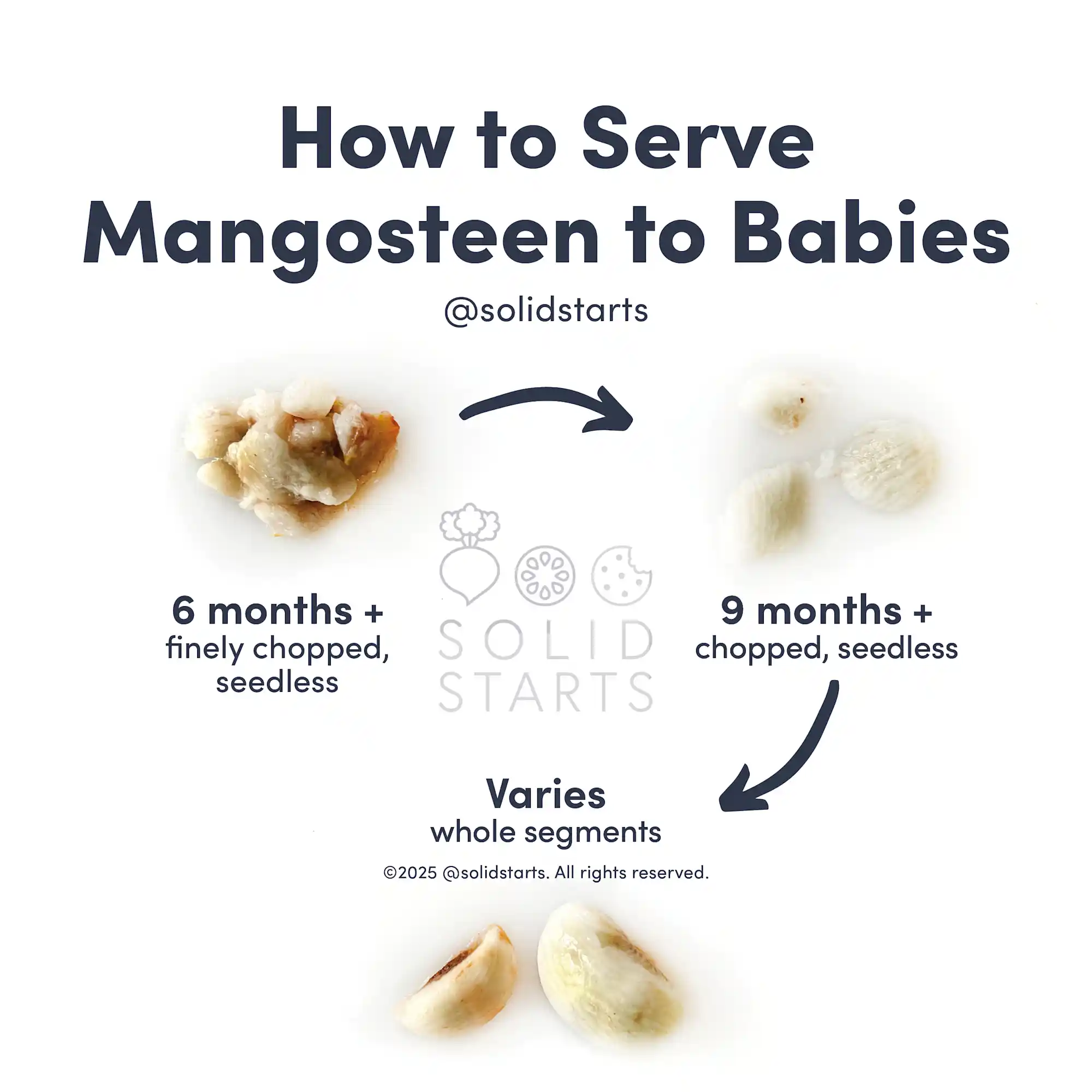
6 months old +:
Mash or finely chop ripe sections of mangosteen with no seeds into soft, scoopable foods for baby to scoop with their hands or eat from a pre-loaded spoon.
9 months old +:
Offer chopped, bite-sized pieces of ripe mangosteen with no seeds for baby to pick up with their developing pincer grasp, where the thumb and first finger meet. If the pieces of fruit are too slippery for baby to pick up, try rolling them in finely shredded coconut or hemp hearts, or continue to serve finely chopped or mashed, de-seeded mangosteen in scoopable foods.
24 months old +:
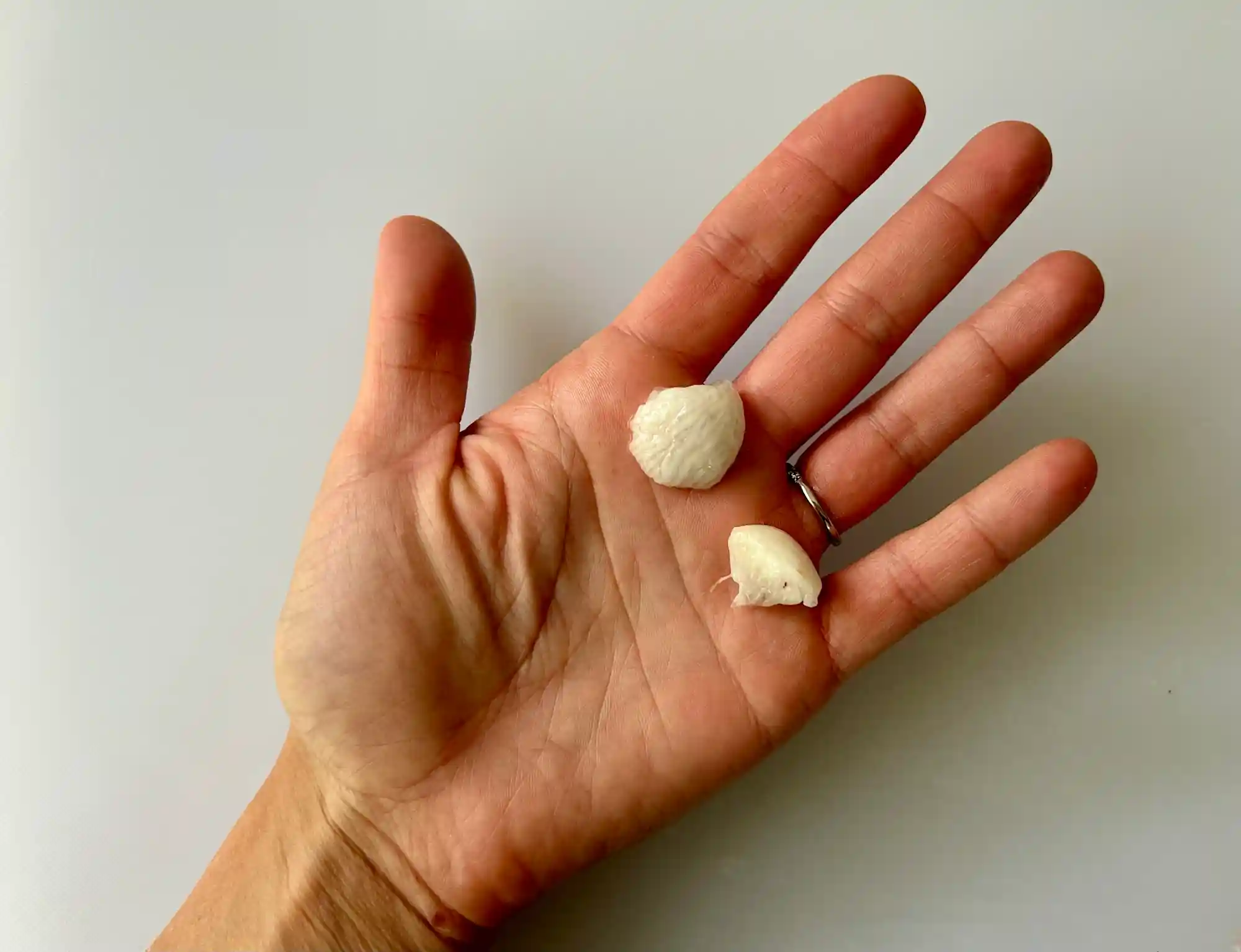
At this age, many toddlers are ready to eat a whole section of mangosteen, even if it has a seed inside. The child should have molars and lots of practice with chewable foods, as well as the ability to chew food thoroughly before swallowing, take accurate-sized bites, and follow instructions. If the child seems ready, you can start by explaining that there is a seed inside that takes a lot of chewing, then modeling taking bites of your own section of mangosteen and demonstrating how you take a bite and chew very thoroughly with your back teeth to break down both the fruit and seed. If you’d like, you can start by holding a section of mangosteen and letting the child take a bite as you hold onto the other end. Consider offering just a section or two of mangosteen at a time to help the child pace themselves.
Videos
Is mangosteen a choking hazard for babies?
Yes. Mangosteen segments are small, tapered, slippery and can contain hard seeds inside, which are qualities that pose an increased risk of choking. To reduce the risk, prepare and serve mangosteen in an age-appropriate way as described in the How to Serve section. As always, make sure to create a safe eating environment and stay within reach of baby during meals.
Learn the signs of choking and more about choking first aid in our free guides, Infant Rescue and Toddler Rescue.
Is mangosteen a common allergen?
No, mangosteen is not a common allergen.
Individuals with Oral Allergy Syndrome (also known as pollen food allergy syndrome), and particularly those with sensitivities to birch pollen may be sensitive to mangosteen. Oral Allergy Syndrome typically results in short-lived itching, tingling, or burning in the mouth and is unlikely to result in a dangerous reaction.
Is mangosteen healthy for babies?
Yes. Mangosteen is rich in folate, fiber, antioxidants, and unique plant compounds called xanthones. Folate helps with synthesizing DNA and preventing anemia, fiber nourishes baby’s developing gut microbiome and digestion, antioxidants build up the body’s resilience against stressors, and xanthones offer anti-inflammatory properties.
When can babies drink mangosteen juice?
Small amounts of mangosteen juice may be shared as a drink after 12 months of age. That said, it can be beneficial to wait for when a child is older to regularly share juice and other sugary drinks. Research suggests that regular intake of juice and other sweet drinks tends to increase the risk of dental cavities and take up space in the belly, which may decrease a child’s motivation to eat other foods at mealtime and may negatively affect the child’s growth over time. However, occasional servings of juice after one year of age generally isn’t a cause for concern. Learn more about serving juice to babies and toddlers.
Nuestro equipo
Escrito por

Dr. Sakina Bajowala
Pediatra general y alergóloga/inmunóloga

Kary Rappaport
Terapeuta ocupacional pediátrica(o), especialista en alimentación y deglución, y consultora de lactancia certificada por la junta internacional

Kim Grenawitzke
Terapeuta ocupacional pediátrica(o), especialista en alimentación y deglución, y consultora de lactancia certificada por la junta internacional

Venus Kalami
Nutricionista y dietista pediátrico(a) registrada
Consejos de expertos directo a tu bandeja de entrada
¡Suscríbete y recibe correos semanales con recetas, consejos y más!




Copyright © 2026 • Solid Starts Inc