


Acceda a la base de datos First Foods® en Solid Starts App.
Leer másLamb Shank
Carne
Sugerencia de edades
6 meses
Alto contenido de hierro
Sí
Alérgeno común
No
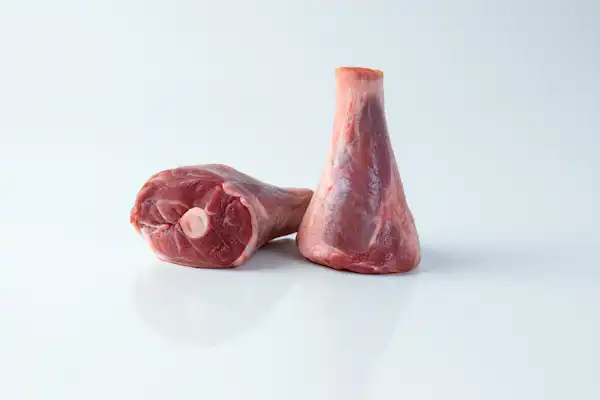
When can babies have lamb shank?
Lamb shank, when well-cooked, may be introduced as soon as baby is ready to start solids, which is generally around 6 months of age.
Lambs are the young of domesticated sheep, which have long been raised for both their wool and red meat. Lamb shank is a cut of meat that comes from the lower part of the leg and benefits from long cooking to make it tender. Across cultures, lamb shank is featured in braised dishes such as tagines from North Africa, kleftiko in Greece, and stews throughout South Asia. Its rich flavor and tender texture after slow cooking make the cut a favorite in many diverse cuisines.
How do you serve lamb shank to babies?
Cada bebé se desarrolla a su propio ritmo, y las sugerencias que ofrecemos sobre cómo cortar o preparar determinados alimentos son generalizaciones para una amplia audiencia.
6 months old +:
Serve a whole bone-in lamb shank with any loose chunks of meat and fat removed, or offer a thick strip of braised lamb shank about the size of two adult fingers pressed together. At this age, baby will mostly just suck and gnaw on the shank or strip of meat. If offering a whole bone-in shank, trimming a bit more of the meat from the bone can help baby better manage the piece of food by giving them a longer piece of bone to hold. If baby succeeds in biting off a big piece of the meat, take a deep breath, stay calm, and give the child a chance to work with the food. In most cases, if the piece of food is too big, baby will spit it out or the gag reflex will help thrust it forward and out of the mouth. If the child needs assistance getting the piece of food out of the mouth, put your hand beneath their chin to indicate they can spit out the food. Alternatively, you can finely shred tender pieces of lamb shank and mix the shreds into scoopable food like mashed potatoes.
9 months old +:
Serve thin shreds of well-cooked, tender lamb shank either on their own or as part of a meal. If baby is not quite ready to pick up smaller pieces of food, continue to offer bone-in lamb shank for baby to munch and teethe on. Serving or dipping pieces of lamb in a sauce can aid swallowing. If a big piece of meat breaks off in the mouth, coach the child to spit the food out by dramatically sticking out your own tongue and saying “ah” repeatedly.
12 months old +:
Serve long shreds or thin strips of braised lamb shank, or bite-sized shreds dipped in sauce to keep the meat tender, either on their own or as part of a meal. Avoid chunks or cubes of meat, as these continue to pose a high risk of choking.
Is lamb shank a choking hazard for babies?
Yes. Lamb can be firm and challenging to chew, which are qualities that increase the risk of choking. To reduce the risk, refrain from cutting lamb into chunks or cubes and prepare and serve it in an age-appropriate way as described in the How to Serve section. Also, be sure not to overcook lamb, as this causes it to be dry and more challenging to chew and move backwards to swallow. As always, create a safe eating environment and stay within reach of baby during meals.
Learn the signs of choking and more about choking first aid in our free guides, Infant Rescue and Toddler Rescue.
¿Es el cordero un alérgeno común?
No. El cordero no es un alergeno alimentario común, aunque alergias a la carne de cordero sí se han reportado. Cocinar la carne disminuye el riesgo de desarrollar una reacción alérgica al cordero. Adicionalmente, algunas mordidas de ciertas garrapatas (principalmente las garrapatas Lone Star, que se encuentran en la superficie continental de los Estados Unidos, pero también otras garrapatas alrededor del mundo), están asociadas con el desarrollo de una alergia a la galactosa alpha-1 galactosa-3 (también conocida como “alpha gal”), la cual es un azúcar que se presenta en la carne de los mamíferos no primates. Esto resulta en una reacción alérgica retardada, entre 3 y 8 horas después de consumir cualquier carne roja, incluyendo la carne de cordero. Algunos individuos con la alergia alpha gal también desarrollan una reacción a las pequeñas cantidades de azúcar presentes en los productos lácteos, en la gelatina o en los tejidos de los órganos (como el hígado) de los mamíferos.
Algunos individuos con alergia a la carne de cordero también presentan sensibilidad por contacto con lana o lanolina (substancia grasa obtenida del cordero), pero la mayoría de los individuos con sensibilidad a la lana o lanolina pueden consumir carne de cordero sin sufrir ninguna reacción.
Como lo harías al introducir cualquier alimento nuevo, comienza ofreciendo una pequeña cantidad en las primeras porciones. Si no hay reacción adversa, aumenta gradualmente la cantidad durante las próximas comidas.
Is lamb shank healthy for babies?
Yes. Lamb is rich in protein and fat, in addition to iron, choline, selenium, zinc, and vitamins B6 and B12. Together, these nutrients support growth, brain development, energy to play and explore, healthy red blood cells, taste perception, immune health, hormone function, metabolic processes, and more. Babies need increasing amounts of iron starting at the 6-month mark, when their reserves become depleted, and lamb offers a great source of dietary iron at this stage of baby’s life.
Why is lamb shank best slow-cooked?
Because it comes from the leg, lamb shank has more connective tissue and needs long, slow cooking to become tender.
Nuestro equipo
Escrito por

Dr. Rachel Ruiz
Pediatra general y gastroenteróloga pediátrica

Dr. Sakina Bajowala
Pediatra general y alergóloga/inmunóloga

Kim Grenawitzke
Terapeuta ocupacional pediátrica(o), especialista en alimentación y deglución, y consultora de lactancia certificada por la junta internacional

Venus Kalami
Nutricionista y dietista pediátrico(a) registrada
Consejos de expertos directo a tu bandeja de entrada
¡Suscríbete y recibe correos semanales con recetas, consejos y más!




Copyright © 2026 • Solid Starts Inc