


Acceda a la base de datos First Foods® en Solid Starts App.
Leer másFiddlehead Fern
Vegetal
Sugerencia de edades
6 meses
Alto contenido de hierro
No
Alérgeno común
No
Warning
Never serve uncooked (raw) or undercooked fiddlehead ferns, as these have been associated with illness. Symptoms can include abdominal pain, nausea, vomiting, diarrhea, and headaches beginning anywhere from 30 minutes to 12 hours after ingestion. Boil fiddlehead ferns for 15 minutes or steam for at least 10 minutes to remove the toxin, and be sure to discard the water used to cook the ferns.
When can babies have fiddlehead ferns?
Fiddlehead ferns, when boiled or steamed to reduce the risk of illness, may be introduced as soon as baby is ready to start solids, which is generally around 6 months of age. Only serve the fiddleheads from ostrich ferns, not from other species, which can be toxic.
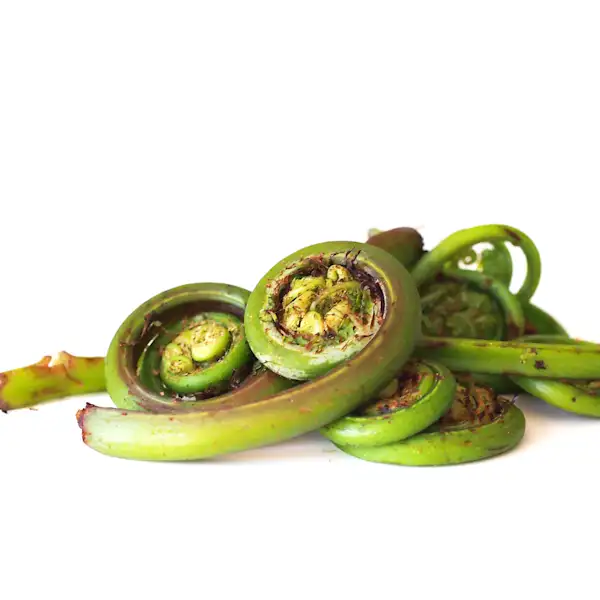
Various edible species of fern are enjoyed all over the world, including in parts of North America, where the fiddleheads of ostrich ferns show up in markets and dishes for a brief window in the spring. The name fiddlehead in English comes from the part of this fern that is commonly eaten, the tightly coiled shoot of young fern that resembles the head of a violin or fiddle. Fiddlehead ferns offer fresh, vegetable flavor to egg dishes, stir fries, stews and more, and after their short season has passed, can be frozen or pickled for future meals.
How do you serve fiddlehead fern to babies?
Cada bebé se desarrolla a su propio ritmo, y las sugerencias que ofrecemos sobre cómo cortar o preparar determinados alimentos son generalizaciones para una amplia audiencia.

6 months old +:
Offer a large fiddlehead (at least the size of baby’s palm) on its own, cooked until soft and mashable. Alternatively, share dishes like mashed potatoes, pasta, or stew with chopped, cooked fiddleheads.
To cook fiddleheads to make them safe for consumption, remove any remaining brown papery husk on the fiddlehead, rinse in cool water, then boil for around 15 minutes or steam for 10-12 minutes. Discard the cooking water after. From there, you can serve the fiddleheads in an age-appropriate way, or you can cook them however you like to eat them: sauteed, stir-fried, in a stew, etc.
9 months old +:
Serve soft, cooked fiddleheads of any size, larger ones for practice taking bites or smaller pieces of cooked fiddleheads for baby to pick up with their developing pincer grasp (where the thumb and pointer finger meet). Offer them on their own or as part of a shared meal like frittata, pasta, or stews.
To cook fiddleheads to make them safe for consumption, remove any remaining brown papery husk on the fiddlehead, rinse in cool water, then boil for around 15 minutes or steam for 10-12 minutes. Discard the cooking water after. From there, you can serve the fiddleheads in an age-appropriate way, or you can cook them however you like to eat them: sauteed, stir-fried, in a stew, etc.
12 months old +:
Offer cooked, soft fiddleheads as desired, as part of pasta dishes, frittatas and other egg dishes, stir fries, or stews. Let the child use their fingers or offer an age-appropriate utensil with the meal–small fiddleheads can make for a great size and texture for utensil practice. Just don’t be surprised if the child opts for their fingers, or switches back and forth; consistent and accurate utensil use often comes after the second birthday.
To cook fiddleheads to make them safe for consumption, remove any remaining brown papery husk on the fiddlehead, rinse in cool water, then boil for around 15 minutes or steam for 10-12 minutes. Discard the cooking water after. From there, you can serve the fiddleheads in an age-appropriate way, or you can cook them however you like to eat them: sauteed, stir-fried, in a stew, etc.
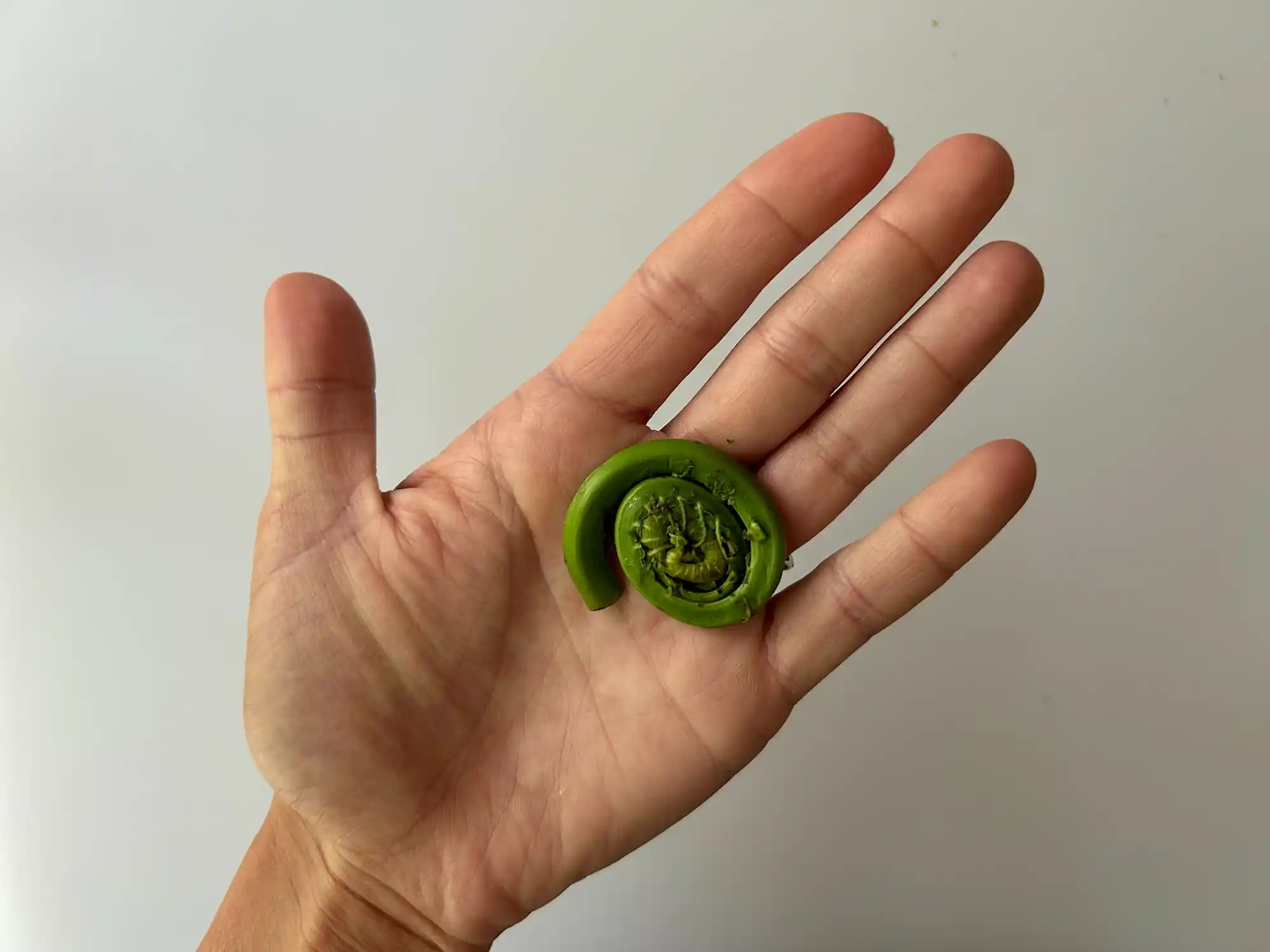
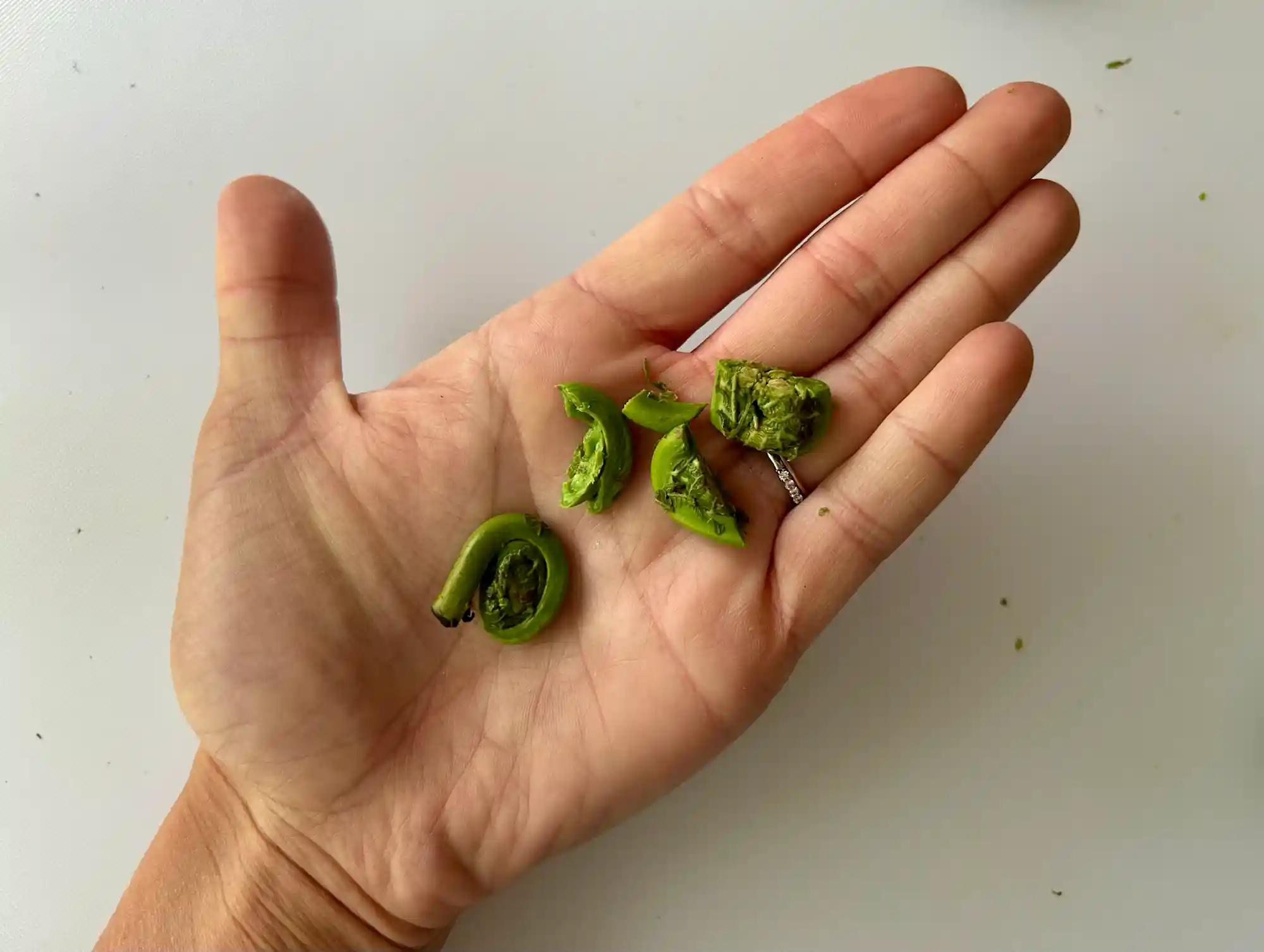
How to prepare fiddlehead ferns for babies 6 months +
Videos
Are fiddlehead ferns a choking hazard for babies?
No. As long as the fiddleheads have been cooked thoroughly to reduce the risk of illness, they should be soft and mashable and present a low risk when safely prepared for a child’s age and developmental ability. To reduce the risk, make sure fiddleheads are fully-cooked and prepare and serve them in an age-appropriate way as described in the How to Serve section. As always, make sure to create a safe eating environment and stay within reach of baby during meals.
Learn the signs of choking and more about choking first aid in our free guides, Infant Rescue and Toddler Rescue.
Are fiddlehead ferns a common allergen?
No. Fiddlehead ferns are not a common food allergen. That said, consuming raw or undercooked fiddlehead ferns can cause food poisoning due to a toxin in the shoots.
Are fiddlehead ferns healthy for babies?
Yes. Fiddlehead ferns contain plenty of important nutrients, including vitamin A, iron, calcium, potassium, vitamin C, fiber, and more. These nutrients support healthy vision, blood health, bone density, electrolyte balance, iron absorption, and digestive functioning. Plus, fiddlehead ferns are rich in antioxidants and phenolic compounds to support bodily resilience.
Make sure the fiddleheads are from the ostrich fern, and avoid foxglove or bracken ferns, which can be toxic. Never serve uncooked (raw) or undercooked fiddlehead ferns, which have been associated with illness. Symptoms can include abdominal pain, nausea, vomiting, diarrhea, and headaches beginning anywhere from 30 minutes to 12 hours after ingestion. Boil fiddlehead ferns for 15 minutes or steam for at least 10 minutes to remove the toxin, even before cooking them as part of a recipe. Be sure to discard the water used to cook the ferns.
¿Qué hago si mi bebé no quiere comer?
Termina la comida y ofrécele una toma de pecho o biberón. Nunca presiones a un/a bebé o a un/a niño/a para que coma; a largo plazo esto sólo empeorará el rechazo a los alimentos. Los bebés rechazan la comida por diferentes motivos, como la dentición, una enfermedad, demasiado cansancio, o falta de energía o interés en aprender una nueva habilidad. Para obtener más información sobre por qué el/la bebé puede negarse a comer, consulta nuestra guía Cómo responder al rechazo de los alimentos en los bebés.
¿Cuáles son las señales de que mi bebé está listo/a para comenzar sólidos?
Las señales incluyen poder sentarse con mínimo apoyo, mantener la cabeza erguida y poder alcanzar y agarrar un objeto y llevárselo a la boca con éxito mientras está sentado/a. El/la bebé también debe mostrar interés en comer y en observar comer a sus cuidadores. Para ejemplos visuales de bebés que están listos y que no, visita nuestro artículo sobre señales de preparación.
Nuestro equipo
Escrito por

Dr. Rachel Ruiz
Pediatra general y gastroenteróloga pediátrica

Dr. Sakina Bajowala
Pediatra general y alergóloga/inmunóloga

Kim Grenawitzke
Terapeuta ocupacional pediátrica(o), especialista en alimentación y deglución, y consultora de lactancia certificada por la junta internacional

Venus Kalami
Nutricionista y dietista pediátrico(a) registrada
Consejos de expertos directo a tu bandeja de entrada
¡Suscríbete y recibe correos semanales con recetas, consejos y más!




Copyright © 2026 • Solid Starts Inc