
Canela
Hierba/Especia
- Edad sugerida
- 6 meses
- Rico en hierro
- No
- Alérgeno común
- No
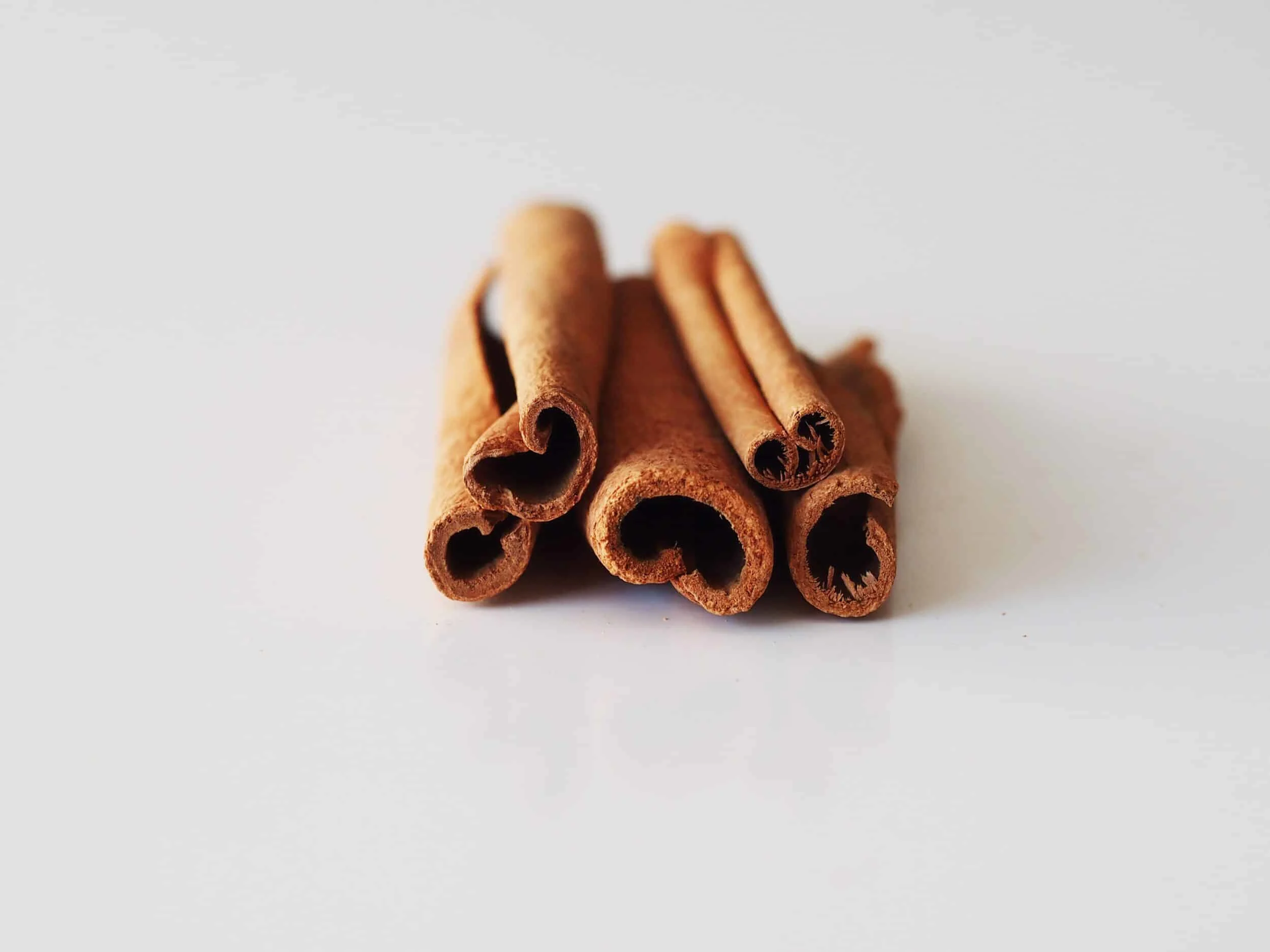
¿Cuándo pueden los bebés comer canela?
La canela se puede introducir tan pronto como tu bebé esté listo para comenzar con los alimentos sólidos, lo cual generalmente ocurre alrededor de los 6 meses de edad. Ten en cuenta que a veces la canela puede causar un sarpullido de contacto inofensivo en la piel que toca, como cerca de la boca de tu bebé.
La canela proviene de un árbol tropical de hoja perenne cuya corteza y hojas se usan para hacer aceite esencial y especia. Como todas las plantas, existen diferentes variedades con aroma, sabor y textura distintivos. La canela de Ceilán —nombrada según el término que los colonizadores usaban para la isla de Sri Lanka, el hogar nativo de la planta— tiene un sabor delicado y más dulce que la canela cassia, un grupo de variedades de aroma intenso (también llamadas canela Korintje y canela de Saigón) provenientes de árboles que todavía crecen de forma silvestre en China, Indonesia, Vietnam y otros países.
¿Cómo se sirve la canela a los bebés?
Cada bebé se desarrolla a su propio ritmo, y las sugerencias que ofrecemos sobre cómo cortar o preparar determinados alimentos son generalizaciones para una amplia audiencia.
6 meses +:
Espolvorea canela finamente molida sobre frutas o verduras bien cocidas, mézclala en cereales tibios o arroz con coco, o incorpórala en adobos o salsas. También puedes dar sabor a los platillos agregando ramas de canela enteras durante el proceso de cocción; solo asegúrate de retirar las ramas de canela antes de servir.
12 meses +:
Usa canela finamente molida en las recetas que desees, desde verduras al curry, hasta salsas jerk picantes, keema sustancioso y pho vegetariano. También puedes dar sabor a los platillos agregando ramas de canela enteras durante el proceso de cocción; solo asegúrate de retirar las ramas de canela antes de servir.
¿Es la canela un riesgo de atragantamiento para los bebés?
No. Tanto las ramas de canela enteras como la canela finamente molida presentan un riesgo bajo cuando se preparan de forma segura para la edad y la capacidad de desarrollo de tu bebé, aunque, en teoría, cualquier persona podría atragantarse con cualquier alimento. Para reducir el riesgo, prepara y sirve la canela de una manera adecuada para la edad, como se describe en la sección Cómo servir. Como siempre, crea un entorno seguro para comer y mantente al alcance de tu bebé durante las comidas.
Conoce las señales de atragantamiento y más sobre los primeros auxilios para el atragantamiento en nuestras guías gratuitas, Rescate para bebés y Rescate para niños(as) pequeños(as).
¿Es la canela un alérgeno común?
No. La alergia a la canela es poco común aunque individuos con asma pueden ser sensibles a la canela si se inhala.[1] Una ocurrencia más común es que la canela cause una irritación inofensiva cuando entre en contacto con la piel.[2] Esta erupción por contacto es más una irritación que una reacción alérgica.
Como lo harías al introducir cualquier alimento nuevo, comienza ofreciendo una pequeña cantidad en las primeras porciones. Si no hay reacción adversa, aumenta gradualmente la cantidad durante las próximas comidas.
¿Es segura la canela para los bebés?
Sí, la canela se reconoce generalmente como segura en las cantidades que normalmente se usan al cocinar.[3] Dado que la investigación sobre su seguridad es limitada, evita los suplementos de canela y los aceites esenciales como remedios caseros para tu bebé.
¿Es saludable la canela para los bebés?
Sí. Aunque la canela no suele consumirse en grandes cantidades, ofrece una pequeña cantidad de una variedad de vitaminas y minerales, además de diversos compuestos vegetales beneficiosos, incluyendo el cinamaldehído y varios polifenoles. La investigación también sugiere que la canela puede ofrecer propiedades antiinflamatorias, antimicrobianas y antioxidantes que apoyan la salud y el bienestar general de tu bebé. [4] [5] [6]

Material de referencia
Grant-Alfieri, A., Schaechter, J., Lipshultz, S. E. (2013). Ingesting and aspirating dry cinnamon by children and adolescents: the "cinnamon challenge". Pediatrics, 131(5), 833–835. DOI:10.1542/peds.2012-3418. Retrieved October 19, 2020
American Academy of Allergy Asthma & Immunology. Can Spices Cause an Allergic Reaction? Retrieved October 19, 2020
U.S. Food & Drug Administration. (2023). Substances generally recognized as safe.
Start solids with confidence
- Guided Introduction to 100+ Foods
- Smart Tools to Simplify Mealtime
- Food Allergen 101
- 300+ Meal Ideas
- First Foods® Database

Start solids with confidence
- Guided Introduction to 100+ Foods
- Smart Tools to Simplify Mealtime
- Food Allergen 101
- 300+ Meal Ideas
- First Foods® Database
Consejos de expertos directo en tu correo
Suscríbete para recibir consejos semanales, recetas y más.