


Acceda a la base de datos First Foods® en Solid Starts App.
Leer másBroccolini
Vegetal
Sugerencia de edades
6 meses
Alto contenido de hierro
No
Alérgeno común
No
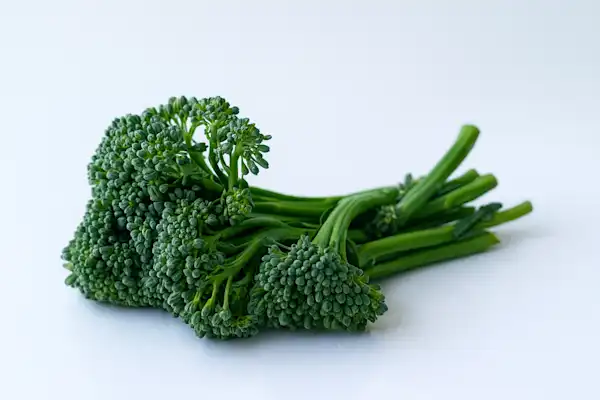
When can babies have broccolini?
Broccolini may be introduced as soon as baby is ready to start solids, which is generally around 6 months of age.
Broccolini, sometimes called “baby broccoli,” is not actually an immature version of broccoli—it’s a hybrid of broccoli and Chinese broccoli (gai lan), developed in Japan in the 1990s. It has long, slender stalks and small florets, with a slightly sweeter and milder flavor than broccoli. Broccolini is now widely used in cuisines around the world and is especially popular roasted, sautéed, or steamed.
How do you serve broccolini to babies?
Cada bebé se desarrolla a su propio ritmo, y las sugerencias que ofrecemos sobre cómo cortar o preparar determinados alimentos son generalizaciones para una amplia audiencia.
6 months old +:
Offer a whole stalk of broccolini that has been cooked until soft for baby to grab and munch on. The long stalk offers a natural handle for baby to hold, but you can cut it a bit shorter if the broccolini gets floppy. If desired, you can further reduce choking risk by cutting the stalk in half lengthwise so that it is no longer round. Alternatively, mash or finely chop cooked, soft broccolini and mix into a scoopable food like mashed potato or finger foods like a veggie burger.
9 months old +:
Serve bite-sized pieces of cooked, soft broccolini, halved lengthwise to reduce choking risk, for baby to pick up with their developing pincer grasp, where the thumb and first finger meet. You can also continue to serve whole cooked stalks of broccolini for practice biting and tearing, or finely chop and mix into another food.
12 months old +:
This is a great time to work with utensils, pre-loaded with bite-sized pieces of cooked broccolini as needed. As the child develops their tearing and chewing skills, you can decrease the amount of time you are cooking the broccolini a bit, if desired. Follow the child’s ability (and your gut instinct) and serve broccolini however the family enjoys it.
Videos
Is broccolini a choking hazard for babies?
Yes, raw or undercooked broccolini is firm and hard to chew, qualities that increase the risk of choking. To reduce the risk, prepare and serve broccolini in an age-appropriate way as described in the How to Serve section. As always, create a safe eating environment and stay within reach of baby during meals.
Learn the signs of choking and more about choking first aid in our free guides, Infant Rescue and Toddler Rescue.
Is broccolini a common allergen?
No, broccolini is not a common allergen. However, reactions to broccoli, broccolini’s close cousin, have been reported. Broccolini is part of the cruciferous vegetable family, and individuals who are allergic or sensitive to other members of the cruciferous family, such as mustard greens and broccoli, may be sensitive to broccolini as well.
Individuals with Oral Allergy Syndrome (also known as pollen food allergy syndrome), and in particular, those with sensitivities to mugwort pollen, may also be sensitive to cruciferous vegetables, like broccolini. Oral Allergy Syndrome typically results in short-lived itching, tingling, or burning in the mouth and is unlikely to result in a dangerous reaction. Cooking broccolini can help minimize or even eliminate the reaction.
Is broccolini healthy for babies?
Yes. Broccolini is rich in fiber, vitamins A, B6, C, and K, as well as folate, zinc, and plant-based omega 3 fatty acids (ALA). Plus, it also offers a significant amount of iron, calcium, and lutein and zeaxanthin. These nutrients work to support baby’s nervous system, brain development, vision, immunity, blood clotting, bone health, and much more. Broccolini also contains antioxidants to help support the body’s resilience and plant compounds, like glucosinolates, that may have anti-cancer properties.
Broccolini is rich in vitamin K, an important nutrient for blood clotting that can interact with certain medications. Check with your doctor if your child is on any medications before offering broccolini regularly.
Do I need to worry about the nitrates in broccolini?
No. Feel free to offer vegetables that contain nitrates (beets, broccolini, carrots, lettuce, spinach, and squash, to name a few) as part of a variety of foods in the diet. Nitrates are naturally-occurring compounds which, if consumed in excess, may negatively affect oxygen levels in the blood. That said, babies who are allowed to self-feed typically do not consume excessive amounts of solid food because they need lots of practice to learn how to eat it. Nitrates in vegetables are generally not a cause for concern, and the benefits of introducing these vegetables as part of a balanced diet typically outweigh the unlikely risk of excessive consumption.
Nuestro equipo
Escrito por

Dr. Sakina Bajowala
Pediatra general y alergóloga/inmunóloga

Kim Grenawitzke
Terapeuta ocupacional pediátrica(o), especialista en alimentación y deglución, y consultora de lactancia certificada por la junta internacional

Venus Kalami
Nutricionista y dietista pediátrico(a) registrada
Consejos de expertos directo a tu bandeja de entrada
¡Suscríbete y recibe correos semanales con recetas, consejos y más!




Copyright © 2026 • Solid Starts Inc