
Broccoli Rabe (Rapini)
Verdura
- Edad sugerida
- 6 meses
- Rico en hierro
- No
- Alérgeno común
- No
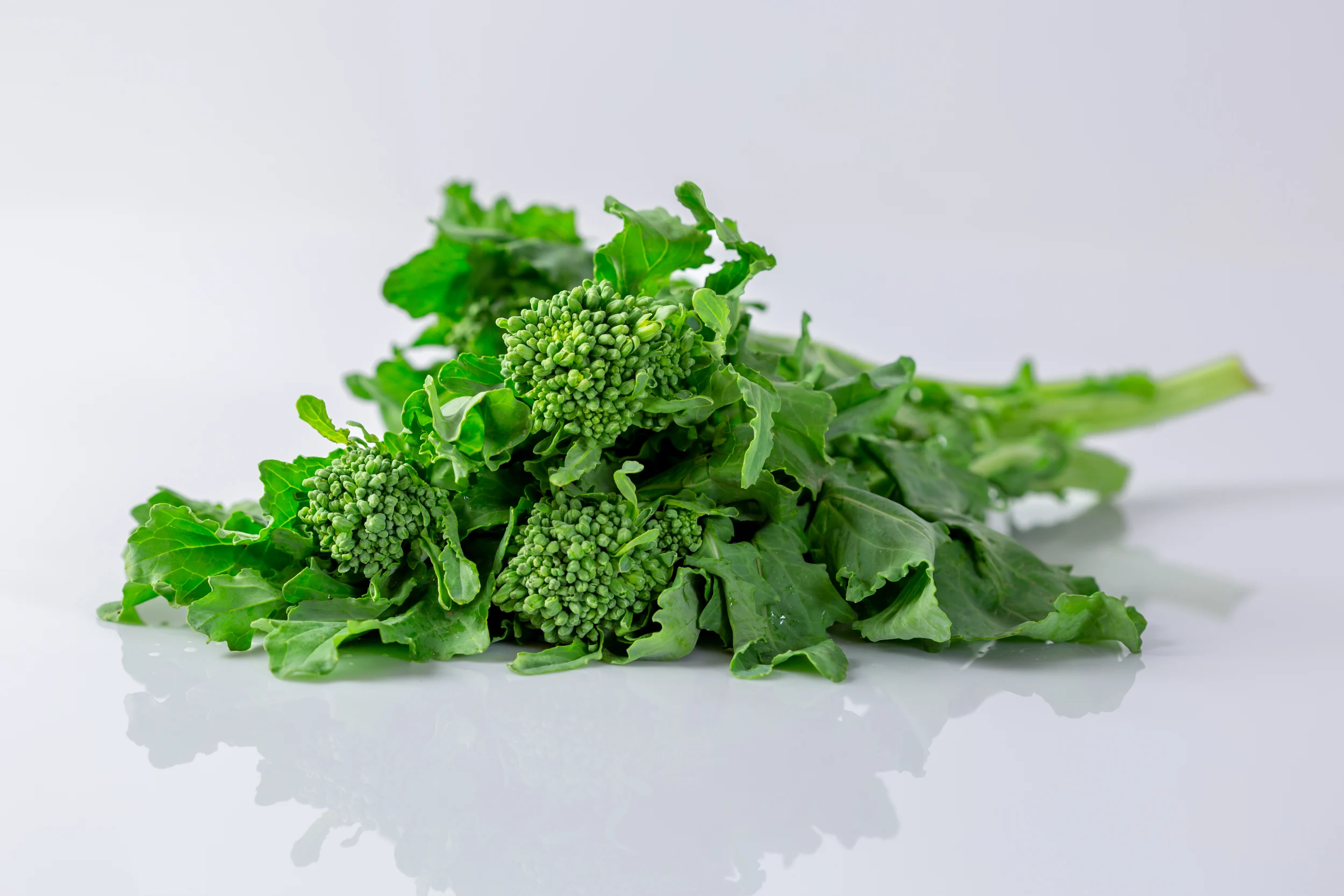
When can babies have broccoli rabe?
Broccoli rabe may be introduced as soon as baby is ready to start solids, which is generally around 6 months of age.
Broccoli rabe, also known as broccoli raab, broccoletti, rapini, or ruvo kale, is actually more closely related to turnips and bok choy than to broccoli. The vegetable has deep cultural roots in Mediterranean cooking, especially in southern Italy. Portuguese kitchens also make frequent use of broccoli rabe, where it appears in soups, stews, and as a simple side dish. Through migration and trade, broccoli rabe spread across Europe and beyond, eventually becoming a common ingredient in East Asian cuisines as well.
How do you serve broccoli rabe to babies?
Cada bebé se desarrolla a su propio ritmo, y las sugerencias que ofrecemos sobre cómo cortar o preparar determinados alimentos son generalizaciones para una amplia audiencia.
6 months old +:
Offer long pieces of cooked broccoli rabe stalk for baby to hold and munch on–the stem makes a natural food teether that helps baby practice chewing skills. If desired, you can further reduce choking risk by cutting the stalk in half lengthwise so that it is no longer round. It’s okay to leave the florets and leafy parts on the stem for baby to explore, but they’ll get floppy when cooked and may be challenging for baby to work with, so it’s fine to cut or tear them off the stem as well. If you have large broccoli rabe stalks with thick skins, peel the skin before cooking, but if the skin is thin and easy to pierce, it’s fine to leave it on. Alternatively, mash or finely chop cooked, soft broccoli rabe and mix into a scoopable food like mashed potato or finger foods like egg strips.
9 months old +:
Serve bite-sized pieces of cooked, soft broccoli rabe, halved lengthwise to reduce choking risk, for baby to pick up with their developing pincer grasp, where the thumb and first finger meet. You can also continue to serve long pieces of cooked broccoli rabe stalk for practice biting and tearing, or finely chop and incorporate into pasta dishes, frittatas, or casseroles. If you have large broccoli rabe stalks with thick skins, peel the skin before cooking, but if the skin is thin and easy to pierce, it’s fine to leave it on.
12 months old +:
This is a great time to work with utensils, pre-loaded with bite-sized pieces of cooked broccoli rabe as needed. As the child develops their tearing and chewing skills, you can decrease the amount of time you are cooking the broccoli rabe a bit, if desired. Follow the child’s ability and serve broccoli rabe how the family enjoys it.
Videos
Is broccoli rabe a choking hazard for babies?
Yes, raw or undercooked broccoli rabe is firm and hard to chew, qualities that increase the risk of choking. To reduce the risk, prepare and serve broccoli rabe in an age-appropriate way as described in the How to Serve section. As always, create a safe eating environment and stay within reach of baby during meals.
Learn the signs of choking and more about choking first aid in our free guides, Infant Rescue and Toddler Rescue.
Is broccoli rabe a common allergen?
No, broccoli rabe is not a common allergen. However, allergies to broccoli rabe’s close relative, broccoli, have been reported.[1] Broccoli rabe is part of the cruciferous vegetable family, and individuals who are allergic or sensitive to other members of the cruciferous family, such as mustard greens and broccoli, may be sensitive to broccoli rabe as well.[2][3]
Individuals with Oral Allergy Syndrome (also known as pollen food allergy syndrome), and in particular, those with sensitivities to mugwort pollen, may also be sensitive to cruciferous vegetables, like broccoli rabe.[4] Oral Allergy Syndrome typically results in short-lived itching, tingling, or burning in the mouth and is unlikely to result in a dangerous reaction. Cooking broccoli rabe can help minimize or even eliminate the reaction.[4][5]
Is broccoli rabe healthy for babies?
Yes. Broccoli rabe is rich in fiber, vitamins A, B6, C, and K, as well as folate, zinc, and plant-based omega 3 fatty acids (ALA). Plus, it offers some iron, calcium, and lutein and zeaxanthin. These nutrients work to support baby’s nervous system, brain development, vision, immunity, blood clotting, bone health, and much more. It is also rich in antioxidants to help support the body’s resilience and plant compounds, like glucosinolates, that may have anti-cancer properties.[6]
Broccoli rabe is rich in vitamin K, an important nutrient for blood clotting that can interact with certain medications. Check with your doctor if your child is on any medications before offering broccoli rabe regularly.
Are the nitrates/nitrites in broccoli rabe safe for babies and toddlers?
Yes. You may have heard that certain vegetables (like broccoli rabe, kale, beets, spinach, and squash to name a few) contain nitrates – naturally occurring compounds which, if consumed in large amounts, may negatively affect oxygen levels in blood. Babies—particularly babies younger than 3 months of age and/or those with health concerns—may be more susceptible to the effects of nitrates. Organizations such as the American Academy of Pediatrics and the European Food Safety Authority view nitrates in vegetables as generally not a concern for most healthy children and that the benefits of eating vegetables as part of a varied diet typically outweighs the risks of excess nitrate exposure from consuming certain vegetables.
Excess nitrate exposure can be reduced by avoiding well water (which can be high in nitrates) and homemade purees made with higher nitrate vegetables that are stored for >24 hours and commercial purees not consumed within 24 hours of opening. Pureeing certain vegetables can activate nitrite-producing compounds, which increase a food’s nitrite content concentration over time. If you have questions about nitrates, nitrites, vegetables, and baby, talk with baby’s healthcare provider for guidance.
Material de referencia
Start solids with confidence
- Guided Introduction to 100+ Foods
- Smart Tools to Simplify Mealtime
- Food Allergen 101
- 300+ Meal Ideas
- First Foods® Database
Start solids with confidence
- Guided Introduction to 100+ Foods
- Smart Tools to Simplify Mealtime
- Food Allergen 101
- 300+ Meal Ideas
- First Foods® Database
Consejos de expertos directo en tu correo
Suscríbete para recibir consejos semanales, recetas y más.