


Acceda a la base de datos First Foods® en Solid Starts App.
Leer másBamboo
Vegetal
Sugerencia de edades
6 meses
Alto contenido de hierro
No
Alérgeno común
No

When can babies have bamboo?
Bamboo, when cooked and peeled, may be introduced as soon as baby is ready to start solids, which is generally around 6 months of age.
There are many species of bamboo native to diverse regions throughout Asia, where the plant has long been a source of food, building material, and more. The mature plant is too tough and woody to eat, but the young, tender shoots are a popular vegetable that are eaten fresh or preserved in cooked, dried, and pickled styles.
How do you serve bamboo to babies?
Cada bebé se desarrolla a su propio ritmo, y las sugerencias que ofrecemos sobre cómo cortar o preparar determinados alimentos son generalizaciones para una amplia audiencia.
6 months old +:
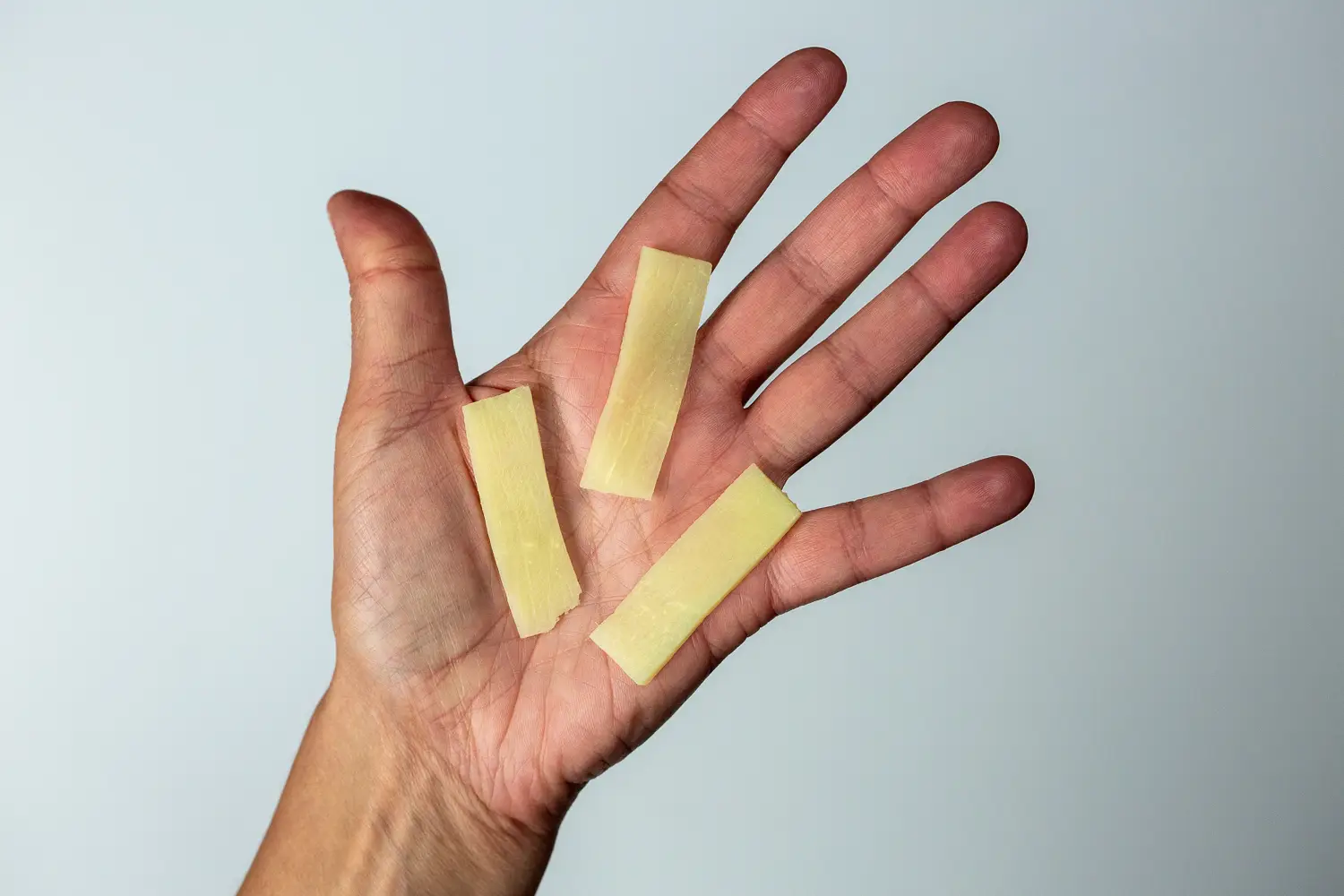
Offer peeled, cooked bamboo that has been pulled into thin shreds for baby to scoop with their hands. If you’d like to serve canned, sliced bamboo shoots, finely chop and add the chopped pieces to a scoopable food such as congee, noodles, or rice. Hold off on whole bamboo shoots, bamboo shoot tips, and coin-shaped slices of bamboo, as these shapes pose a high choking risk.
9 months old +:
Serve flat, bite-sized pieces of peeled, cooked bamboo shoot or small canned strips of bamboo for baby to practice picking up with their developing pincer grasp. Alternatively, continue offering long shreds of cooked bamboo shoot for biting and tearing practice. Avoid cutting bamboo shoots into rounds or coin-shaped slices, as these shapes pose a high choking risk.
12 months old +:
Offer thin bite-sized pieces of peeled, cooked bamboo shoot for the child to pick up with their fingers or with a utensil, as well as longer thin strips of cooked bamboo for biting and tearing practice.
Videos
Is bamboo a choking hazard for babies?
Yes. Bamboo is cylindrical in shape and the texture tends to be firm and springy, which are qualities that can increase the risk of choking. To reduce the risk, prepare and serve bamboo in an age-appropriate way. As always, make sure you create a safe eating environment and stay within an arm’s reach of baby during meals. For more information on choking, visit our section on gagging and choking and familiarize yourself with the list of common choking hazards.
Is bamboo a common allergen?
No. Bamboo shoots are not a common food allergen. That said, allergic reactions to bamboo shoots have been reported.
Canned and dried bamboo shoots are occasionally preserved with sulfites, which can cause respiratory difficulty or hives in individuals with sulfite sensitivity.
As you would when introducing any new food, start by offering a small quantity for the first few servings. If there is no adverse reaction, gradually increase the quantity over future meals.
Is bamboo healthy for babies?
Yes, when cooked. Avoid serving raw bamboo, as the plant contains natural toxins that must be broken down through the cooking process in order to be safe for consumption. Preserved bamboo shoots have already been cooked as part of the canning or preservation process.
Bamboo shoots are a great source of vitamin B6, which plays a role in over 100 functions in the body, as well as fiber, zinc, potassium, and other micronutrients. Together, these nutrients support the gut microbiome, growth and development, electrolyte balance, heart health, and more.
Preserved bamboo products are sometimes high in sodium. If you are looking to reduce sodium, choose low-sodium products and/or rinse the preserved bamboo under running water to help reduce sodium content.
¿Cuáles son algunos ejemplos de alimentos con los que puedo comenzar?
Hay muchos alimentos que pueden ser excelentes opciones. Busca alimentos que permitan que el/la bebé se alimente solo/a fácilmente, que tengan bajo riesgo de ahogamiento y que ofrezcan los nutrientes que los bebés necesitan, como el hierro. Algunos de nuestros primeros alimentos favoritos incluyen brócoli al vapor, avena, y semilla de mango.
¿Cómo puedo calmar mis nervios al comenzar la alimentación complementaria?
Empápate del tema y practica las maniobras de rescate. Los padres y cuidadores que ven los videos de ahogamiento y rescate infantil en nuestro Pase completo de primeros alimentos a menudo comparten que se sienten mucho más seguros.
Nuestro equipo
Escrito por

Dr. Rachel Ruiz
Pediatra general y gastroenteróloga pediátrica

Dr. Sakina Bajowala
Pediatra general y alergóloga/inmunóloga

Kim Grenawitzke
Terapeuta ocupacional pediátrica(o), especialista en alimentación y deglución, y consultora de lactancia certificada por la junta internacional

Venus Kalami
Nutricionista y dietista pediátrico(a) registrada
Consejos de expertos directo a tu bandeja de entrada
¡Suscríbete y recibe correos semanales con recetas, consejos y más!




Copyright © 2026 • Solid Starts Inc