


Acceda a la base de datos First Foods® en Solid Starts App.
Leer másBaby Corn
Grano
Sugerencia de edades
6 meses
Alto contenido de hierro
No
Alérgeno común
No
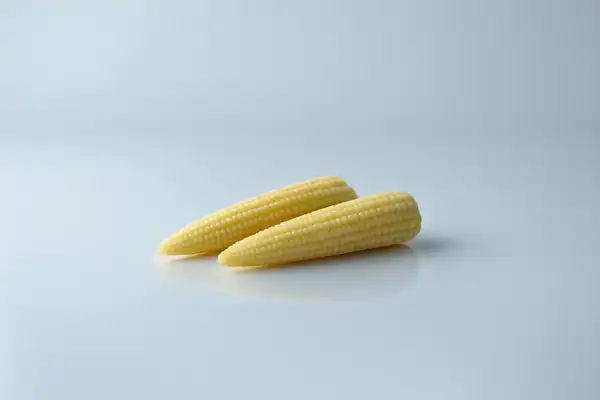
When can babies have baby corn?
Baby corn may be introduced as soon as baby is ready to start solids, which is generally around 6 months old.
Corn is an ancient grain with origins in Central and South America, where it evolved from a wild grass called teosinte. Baby corn is harvested before the kernels mature, when the ear is very small and tender. It’s widely used in East and Southeast Asian cuisines, especially in stir-fries, curries, noodle dishes, and soups. Baby corn is prized for its mild sweetness, delicate crunch, and ability to absorb flavors from sauces and seasonings, as well as its convenience–it's now widely available in canned form.
How do you serve baby corn to babies?
Cada bebé se desarrolla a su propio ritmo, y las sugerencias que ofrecemos sobre cómo cortar o preparar determinados alimentos son generalizaciones para una amplia audiencia.
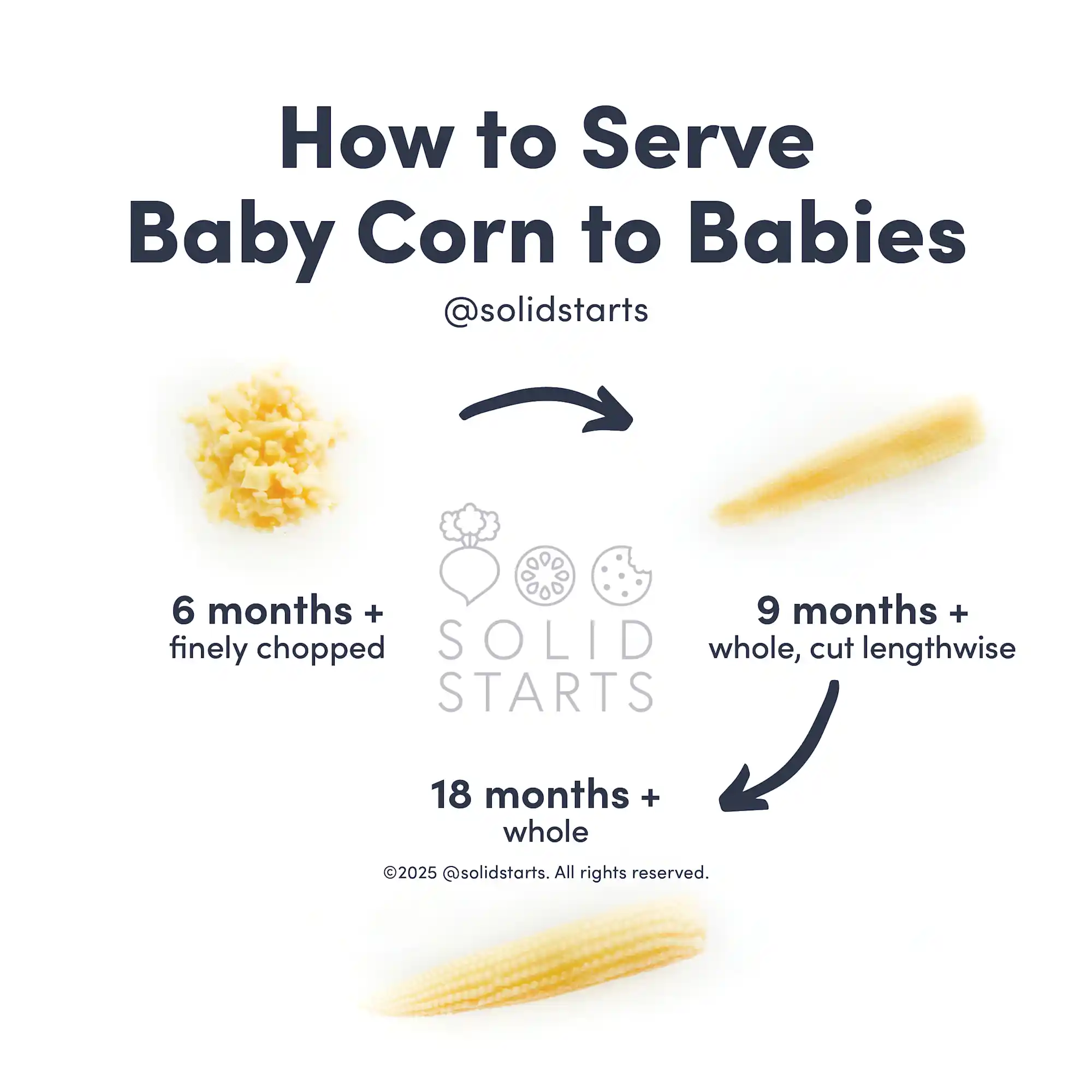
6 months old +:
Finely chop or mash cooked baby corn and mix it into scoopable foods or shared dishes like soup, stew, or rice. Avoid offering whole baby corn or cutting baby corn into coin shapes, as these pose an increased choking risk.
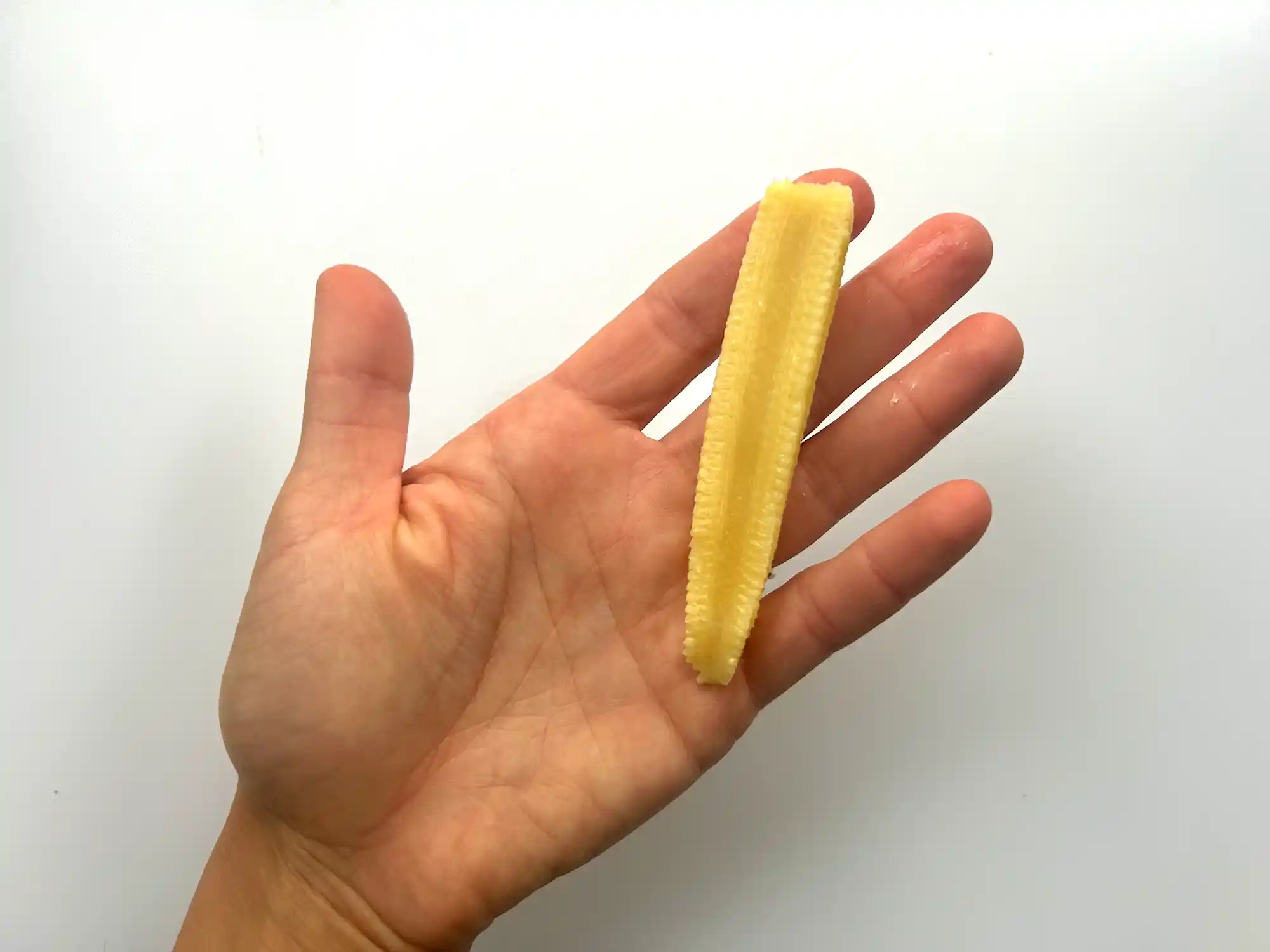
9 months old +:
Offer a long piece of cooked baby corn that has been cut in half lengthwise to reduce choking risk. Let baby practice taking bites from the corn; it’s okay if they spit out more corn than they consume as they learn to chew the challenging texture. Alternatively, continue to finely chop or mash pieces of cooked baby corn and mix into scoopable foods and shared dishes. Avoid offering whole baby corn or cutting baby corn into coin shapes, as these pose an inreased choking risk.
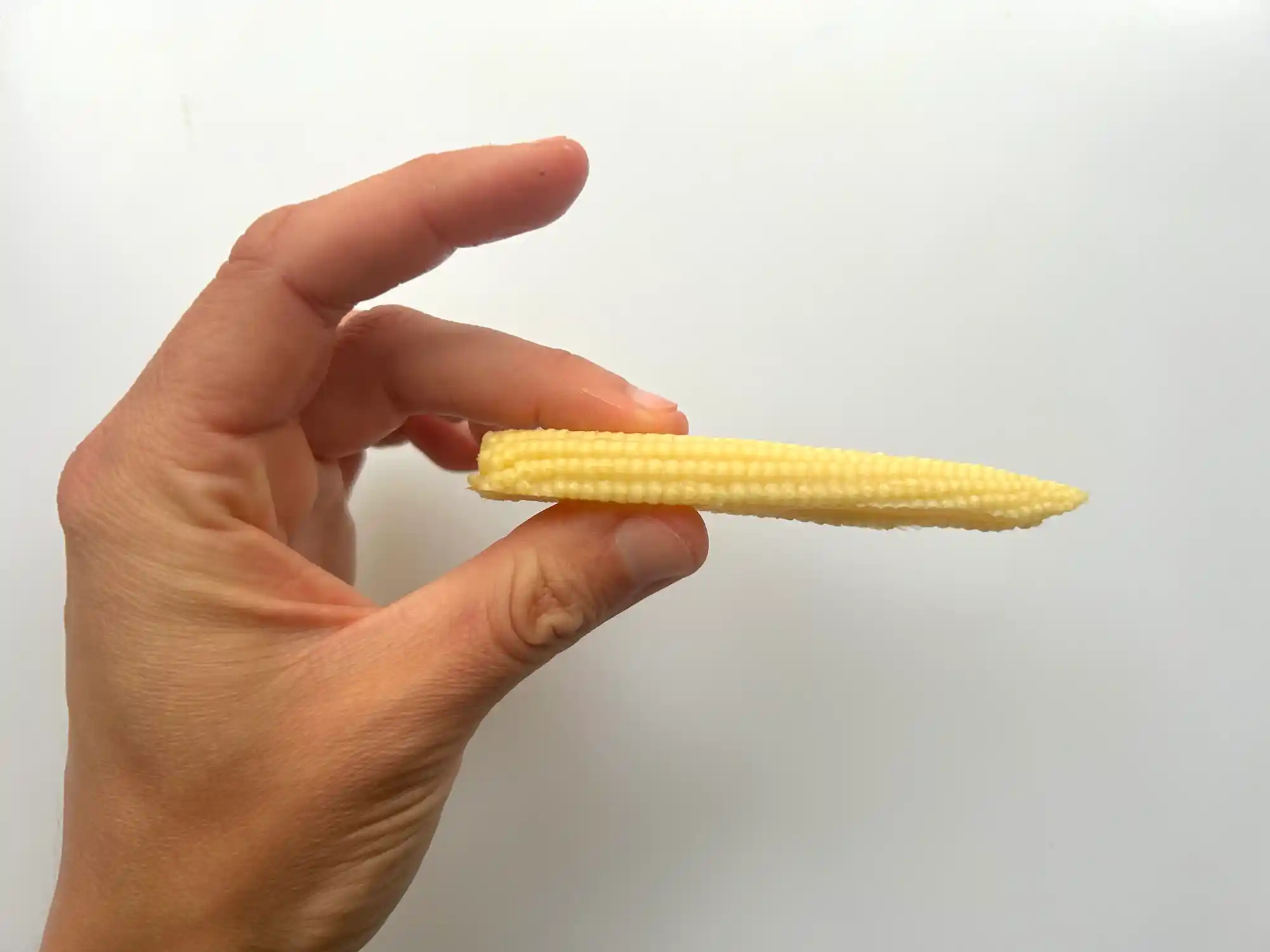
18 months old +:
At this age, if the child has mature eating skills (chewing foods well, taking accurate sized bites, not shoveling food in the mouth, spitting out foods that are too challenging), they can likely handle whole cooked baby corn, served on its own or as part of a meal.
Is baby corn a choking hazard for babies?
Yes. Baby corn is small, firm, and cylindrical, which are qualities that pose an increased risk of choking. To reduce the risk, prepare and serve baby corn in an age-appropriate way as described in the How to Serve section. As always, create a safe eating environment and stay within reach of baby during meals.
Learn the signs of choking and more about choking first aid in our free guides, Infant Rescue and Toddler Rescue.
¿Es el maíz un alérgeno común?
No. La alergias al maíz son poco comunes pero si se han reportado, con síntomas desde síntomas de alergia oral de corta duración hasta anafilaxia. Algunos individuos con alergia a proteínas transportadoras de lípidos o quitinasa pueden también ser alérgicos al maíz. El maíz es conocido por generar reacciones cruzadas a otros granos de cereal como el arroz, trigo o cebada. Sin embargo, la mayor parte de los individuos con alergia al maíz pueden consumir otros cereales y viceversa.
Como lo harías al introducir cualquier alimento nuevo, comienza ofreciendo una pequeña cantidad en las primeras porciones. Si no hay reacción adversa, aumenta gradualmente la cantidad durante las próximas comidas.
Is baby corn healthy for babies?
Yes. Baby corn offers fiber and a bit of protein, as well as choline, folate, potassium, zinc, and vision-supporting antioxidants lutein and zeaxanthin. Together, these nutrients support baby’s digestive health, and growth and development. They also help to support neurodevelopment, electrolyte balance, taste perception, vision, metabolic processes, immunity, and iron absorption. Because baby corn is picked before it matures, it is lower in carbohydrates than regular sweet corn.
Can babies have canned baby corn?
Yes. Babies can have canned baby corn in an age-appropriate way as soon as they are developmentally ready for solid food. While canned baby corn can be high in sodium, the amount of sodium that babies eat tends to be low as they learn the skills to feed themselves. If you’d like to reduce the sodium in canned baby corn, you can drain and thoroughly rinse it before serving.
Is baby corn the same as regular corn?
They come from the same plant, but baby corn is harvested early, before kernels mature, giving it a different taste and texture.
Consejos de expertos directo a tu bandeja de entrada
¡Suscríbete y recibe correos semanales con recetas, consejos y más!




Copyright © 2026 • Solid Starts Inc