5 Month Feeding Schedule
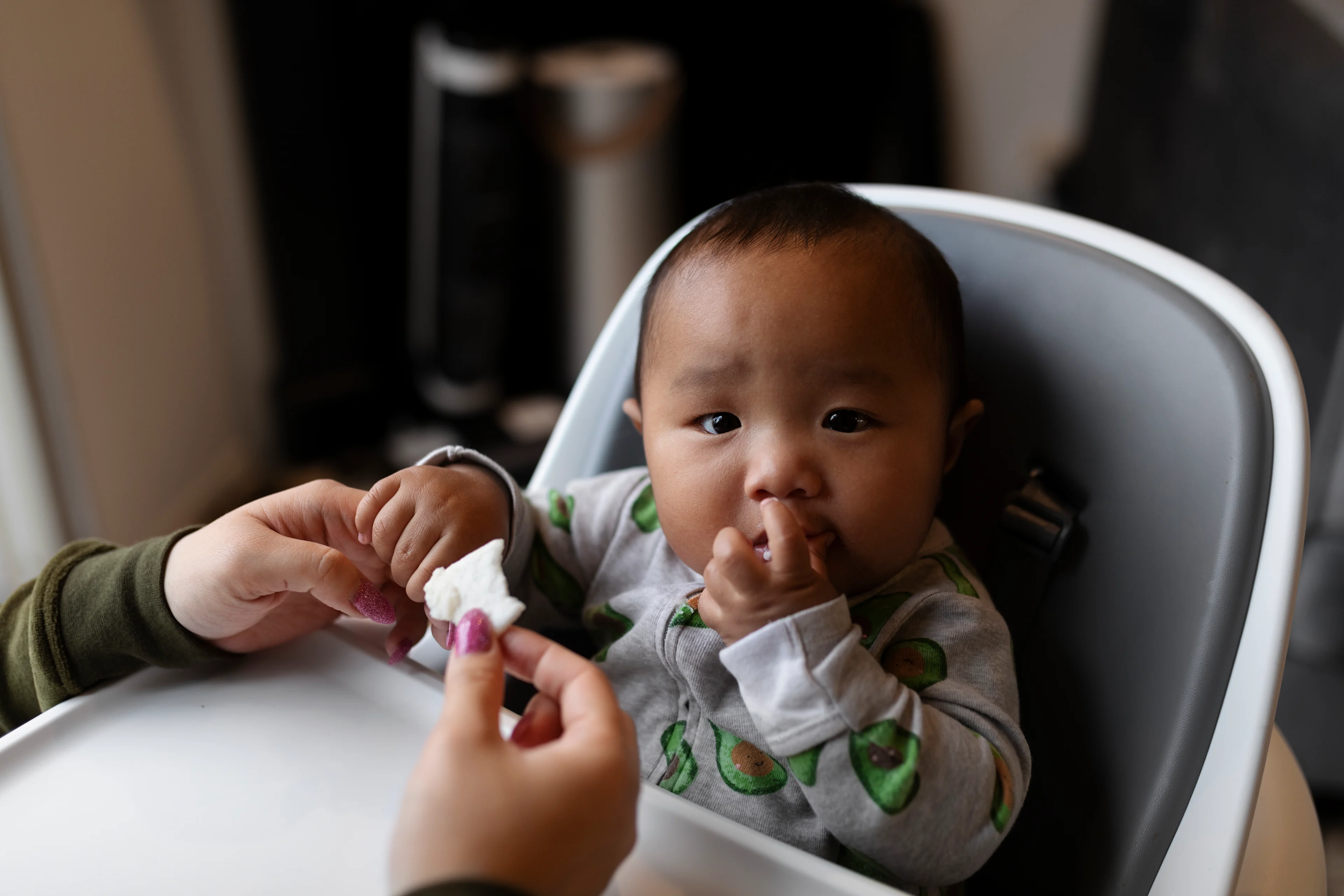
At 5 months of age, babies are still drinking the same amount of breast milk and formula, but they are becoming more efficient and likely feeding at predictable times from day to day. Now is a great time to gently guide baby toward drinking more during the daytime, which can lead to longer stretches of uninterrupted sleep at night.
What to Expect at 5 Months
At this age, babies are typically settled into a daily feeding routine and communicate to their caregivers that they are hungry or full through their actions. If your schedule still feels random, it’s okay: keep feeding on-demand and offer the breast or bottle when baby shows signs they are hungry. This gradually builds a predictable feeding schedule.
➔ Baby eats breast milk, formula, or a combination.
➔ Baby typically eats 22 to 34 fl oz (650 to 950 mL) per day.
➔ This is a common time for a growth spurt and increased breastmilk and formula intake.
➔ Baby feeds every 3 hours, but it varies. Watch for hunger, not the clock.
➔ Baby typically feeds overnight at least once, but some babies do not.
➔ Feeds become shorter as baby becomes more efficient at drinking.
➔ Baby may eat more at each feed with longer stretches between feeds.
➔ Baby may get and show signs they're not interested, then want to feed again sooner than they normally would.
➔ Baby stays awake for around 2 hours at a time and naps 3 times per day.
➔ Sleep disruptions (at naptime and overnight) remain common.
Some families offer pureed foods around this age, however, the leading medical institutions recommend exclusive breastfeeding and/or formula feeding until 6 months of age, and waiting to start solids until baby shows that they are developmentally ready.
If baby is exclusively breastfed
Introducing bottles at this age may be more challenging, as baby's sucking reflex is starting to fade. If you are struggling, a lactation consultant or feeding therapist can help. Our tips for are here.
★ Remember
You cannot force a baby to take in more than they want, or push them to eat more often or larger amounts than they want. Continue feeding on-demand and following baby’s lead, which gradually leads to a predictable feeding schedule.
Sample Feeding Routine
Use this schedule as a starting point and adapt in a way that works for you and baby. It is okay if your baby’s routine differs. You can trust that your plan is working as long as baby is regularly peeing and pooping, and baby is growing with themselves as their own benchmark. As always, discuss your plan with your medical provider as questions come up.
How much should baby eat at 5 months of age?
A 5-month-old baby typically consumes 22 to 34 fl oz (650 to 950 mL) of breast milk or formula over 24 hours, and daily feeding routines vary from baby to baby.
Most families feed around every 3 hours during the daytime and at least once overnight.
Some feed more frequently and other families have longer stretches between feedings.
Some consume enough during the day to need one nighttime feed or none.
Some continue to feed overnight, especially when distracted during daytime feeds.
All of these scenarios are normal. It is also normal for consumption to vary from one day to the next, especially when they are ill or tired.
Signs Baby is Eating Enough
✔ Content and alert
They're regularly alert and playful.
✔ Producing wet diapers
They make several wet diapers daily.
✔ Energetic
They are ready to explore most days.
✔ Growing steadily
They are growing along their curve.
There is no “right” answer to how much a baby needs to grow and thrive. As long as they are growing and following their unique curve, trust that baby is eating to meet their nutritional needs. Speak with your medical provider if you are concerned about baby’s intake or weight gain.
Keep in mind that nursing and bottle feeding offer more than nutrition; some babies remain latched for long periods of time for soothing. This is normal, and it is usually nothing to worry about as long as baby is happy and steadily growing.
Baby Feeding Tips 5 Months
Build a routine.
Babies tend to settle into a predictable routine when they are fed on-demand. When baby shows signs of wanting breast milk or formula, offer it. When they show signs they are done, stop the meal. It’s also completely OK if you do not focus on routine (if this works for you)!
Take burp breaks.
About halfway through feeding, pause and let them burp. This way, baby can get out any swallowed air, which decreases the chance baby will be uncomfortable and gassy.
Pace bottle feeding.
Let baby feed for 5 minutes or so, and then gently remove the bottle and let them suck on your finger or a pacifier, then return to the bottle. This mimics the flow of breastfeeding, aids in digestion, and allows baby to better listen to their belly.
Feed more during the day.
Try to breast or bottle feed more frequently through the day. For some babies this helps get longer stretches between meals at night (and more consistent sleep)!
Feed to sleep?
Feeding to sleep is a very common practice, as babies naturally get drowsy when feeding. It’s also common for families to want to dissociate feeding and sleep. This is a personal decision, and there isn’t strong evidence to suggest that one method is better than the other. Do what works best for you.
Keep baby engaged.
A 5-month-old baby often gets during daytime feedings. There are so many fun things to see! Help them stay focused by making eye contact, talk to them, or even wear a necklace for them to look at or gently hold while they are feeding. Some babies do better feeding in a quiet, dim room when it is available.
Should my 5-month-old baby be eating solid food?
Generally, no. While there is not enough research to back up the idea that there are developmental advantages to starting solids before baby is ready, there are benefits when it comes to allergy prevention for babies at high risk of food allergy. For these babies, can help prevent allergies from developing later on. That said, most families do not need to start solids before baby is developmentally ready, and for most babies this happens around 6 months of age.
However, some babies show of developmental a little earlier, and for these babies, there is no need to wait.
What do I need to do to prepare for solid food?
Most babies start solids around 6 months of age, but it’s not too early to start preparing for the transition. Activities to get ready include:
Floor Time
Let baby play on their back, side, and tummy for playtime. Hang toys above baby’s head to encourage arm and hand movements.
Practice Grasping
Give them lots of opportunities to hold items, drop them, and attempt to retrieve them again. Let them bring items to their mouth and explore them.
Eat Nearby
Let baby watch you and your family eat. They can sit on your lap or in a swing or supported seat near you. At this age, babies start to learn what food is and how it works by watching you.
Oral Hygiene
Before bedtime, gently brush baby’s gums or teeth with an age-appropriate soft-bristled toothbrush, or a wet washcloth on your finger (even if teeth have not popped) to get baby comfortable with the feeling and routine.
Check out more to prepare for solids.
Prepare Yourself
Take an .
Get to know to determine which feels right for you.
Start thinking about and other equipment you might want to use.
Written By
K. Grenawitzke, OTD, OTR/L, SCFES, IBCLC. Pediatric Feeding/Swallowing Specialist.
K. Rappaport, OTR/L, MS, SCFES, IBCLC. Pediatric Feeding/Swallowing Specialist
R. Ruiz, MD, FAAP, CLC. Pediatric Gastroenterologist.
V. Kalami, MNSP, RD, CSP. Pediatric Dietitian/Nutritionist.
M. Suarez, MS, OTR/L, SWC, CLEC. Pediatric Feeding/Swallowing Specialist.
Start solids with confidence
- Guided Introduction to 100+ Foods
- Smart Tools to Simplify Mealtime
- Food Allergen 101
- 300+ Meal Ideas
- First Foods® Database

Start solids with confidence
- Guided Introduction to 100+ Foods
- Smart Tools to Simplify Mealtime
- Food Allergen 101
- 300+ Meal Ideas
- First Foods® Database