
6 Months Feeding Schedule
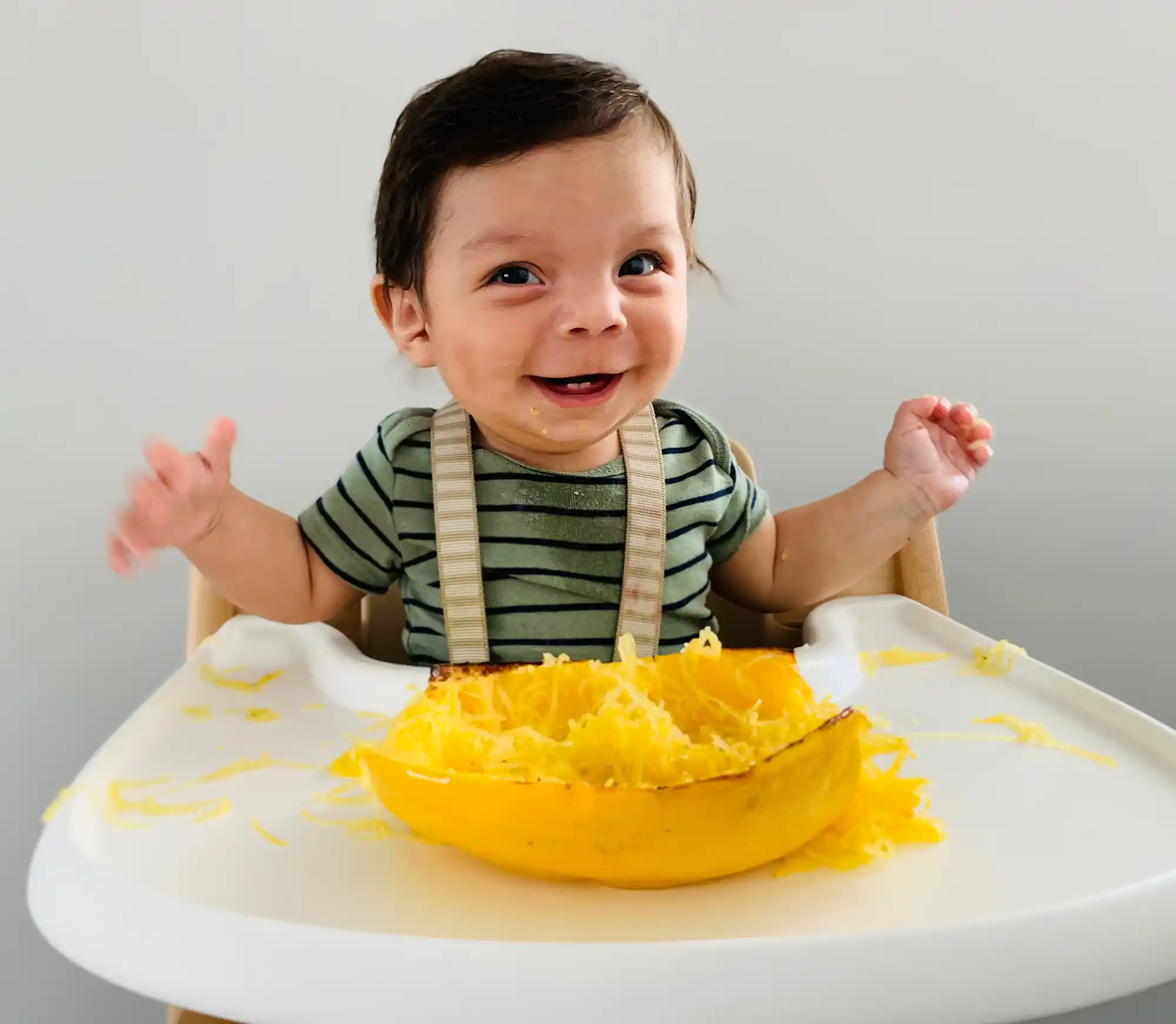
What to Expect at 6 Months
➔ Many babies are showing signs of readiness that they're ready to start solids.
➔ Once baby is ready, solid food is offered once a day.
➔ Cup drinking begins! Offer 1 to 2 fl oz (30 to 60 ml) with solid food.
➔ Nutrition mostly comes from breast milk, formula, or a combination.
➔ Baby typically drinks 24 to 34 fl oz (710 to 946 mL) of breast milk and formula per day.
➔ Baby feeds on demand, typically every 3 hours or so, but it varies. Watch for hunger, not the clock.
➔ Baby stays awake for around 2 to 2.5 hours at a time and most nap 3 times per day.
➔ Baby may or may not want to nurse or bottlefeed overnight.
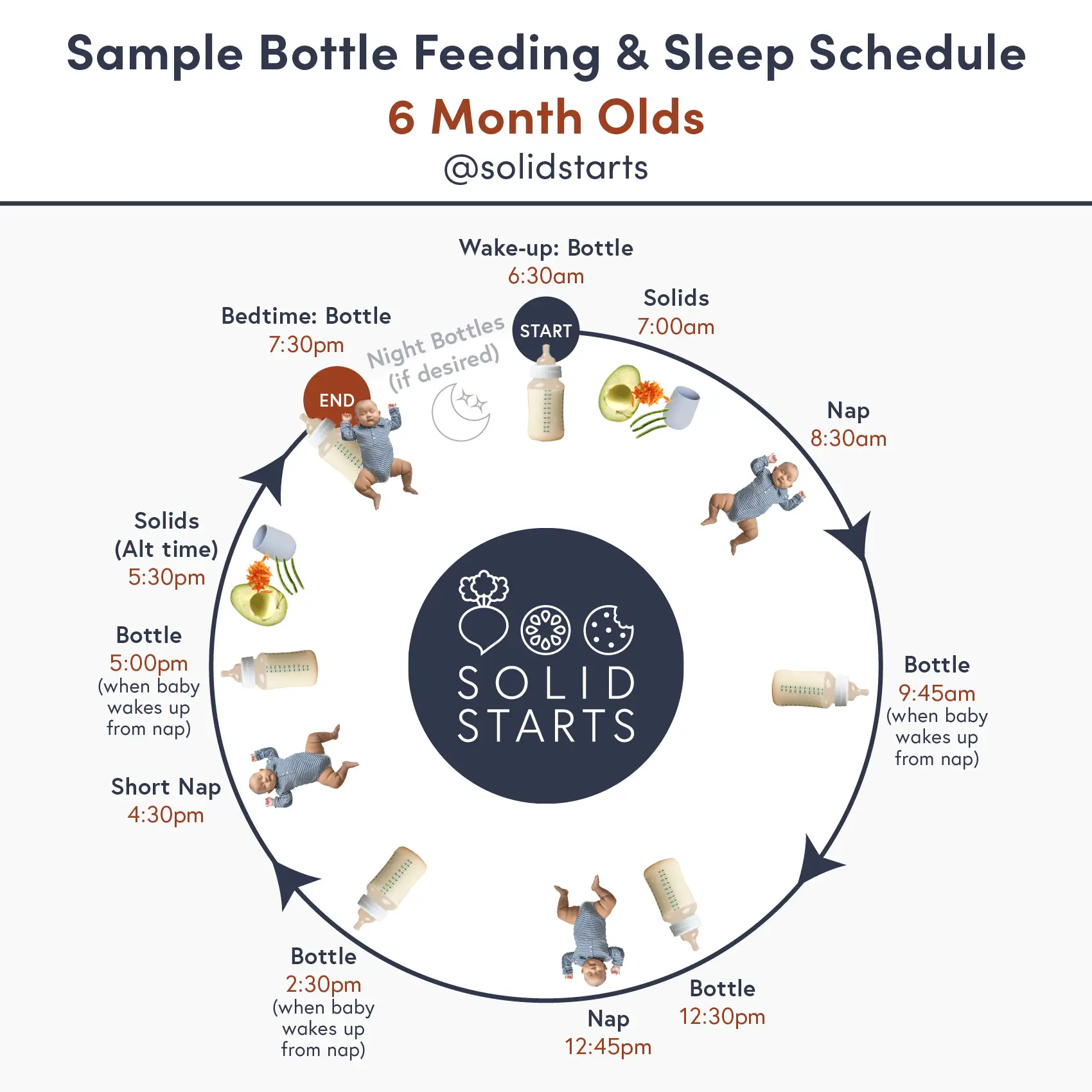
Sample Feeding Routine
Use this schedule as a starting point and adapt in a way that works for you and baby. It is okay if your baby’s routine differs. You can trust that your plan is working as long as baby is regularly peeing and pooping, and baby is growing with themselves as their own benchmark. If you breastfeed on demand, try to offer solid food around 30 minutes after nursing. As always, discuss your plan with your medical provider as questions come up.
How much solid food should baby eat at 6 months of age?
Start small. Your baby does not need a full plate of food but a small amount of food that they can practice picking up and bringing to their mouth.
For example, a solid food meal can start with:
1 to 3 large pieces, like a mango pit or potato wedges
A small scoop of mashed food: ½ cup is plenty for practice
Try not to restrict portion size, but rather, follow their lead: when they show signs they want more, offer more. When they show signs they’re done, end mealtime.
There is no need to track how much solid food is consumed or stress over the nutrients. Breast milk and formula provide the majority of nutrition while your baby learns how to bite, chew, and eat solid food. This transition takes lots of practice and time, and it is normal for baby to not consume much (if any!) solid food as they figure out how it works.
★ Remember
You cannot force your baby to take in more than they want, or push them to eat more often or larger amounts than they want. Continue offering breast milk and formula on-demand for nutrition, offer solid food once a day for practice, and follow their lead.
Signs Baby is Eating Enough
✔ Content and alert
They're regularly alert and playful.
✔ Producing wet diapers
They make several wet diapers daily.
✔ Energetic
They are ready to explore most days.
✔ Growing steadily
They are growing along their curve.
There is no “right” answer to how much a baby needs to grow and thrive. As long as they are growing and following their unique curve, trust that baby is eating to meet their nutritional needs. Speak with your doctor if you are concerned about your baby’s intake or weight gain.
Baby Feeding Tips 6 Months
Once a day is plenty.
Offering solid food once a day is more than enough at first. If your baby is so interested that they are ready to explore solid food twice a day, go for it but it is not necessary.
Stay flexible.
Solid food does not need to happen at the same time each day. For example, you can offer breakfast on weekdays and lunch or dinner on weekends. It’s also okay to skip solid food and focus on breast milk or formula, such as when you are traveling or when your baby is sick or too tired.
Breast milk or formula first.
Offer solid food about 30 minutes after breast milk or formula. This way, your baby is happy, rested, and not too hungry. They need to be ready to learn when solid food is offered, and if they are very hungry, they can easily become frustrated, upset, or overwhelmed with solid food. Their body is telling them that they want to eat, but they are still learning what solid food is and how to actually eat it.
Start with a small portion.
The word “meal” may sound like your baby gets a full plate of food, but that is not needed. Start with enough for your baby to explore with their hands, such as a couple of big pieces or food or a small scoop of mashed or pureed food. There is no need to restrict their portion size. Just follow their lead: when they show signs they want more, offer more. When they show signs they’re done, end mealtime.
You may need to "top-off" the solid food meal with more breast milk or formula if they are hungry, and that’s okay. To build eating skills, babies need time and practice, and it’s normal for them to eat very little at first.
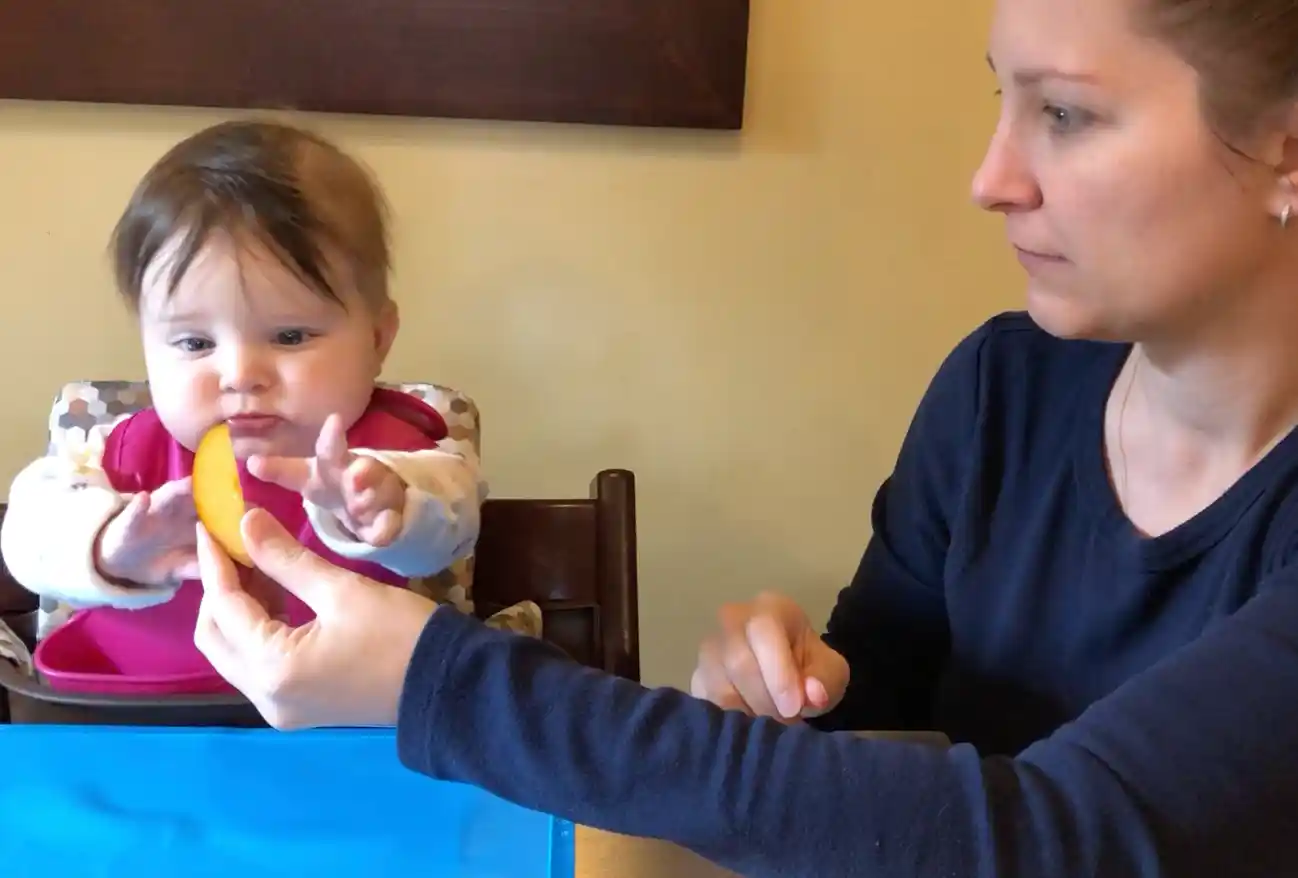
Let baby control the spoon.
Beth, 6 months old, and her mother practice responsive spoon feeding.
Babies who are spoon-fed by an adult may consume a lot early on, but they may have fewer opportunities to build the skills they need to bite, chew, and feed themselves. Let them hold the spoon and practice bringing it to their mouth to build these skills. If you like, you can dip the spoon in food then pass it in the air so they can grab it from you.
Gagging is normal.
Ronan, 7 months old, gags on a blueberry, spits up some, and keeps on eating.
All babies gag as they start solids, whether they begin with purees or finger food. With consistent opportunities to practice eating a variety of textures, babies gag less over time.
The gagging reflex exists to protect your baby. It keeps food near the front of the mouth and helps prevent choking. It can be scary to watch, especially the first time it happens, so to help put your mind at ease, learn how to spot the difference between gagging and choking and check out our infant rescue course so you feel prepared.
If your baby consistently gags, try spacing out the time between breast milk or formula and solid food. More digestion of breast milk of formula can help prevent babies with a sensitive gag reflex from vomiting when a gag happens. Mango pit, corn on the cob, and other food teethers can also be helpful tools to decrease the sensitivity of the gag reflex.
Focus on variety.
Offer a variety of foods each week, particularly iron rich foods such as meat, poultry, seafood, beans, nuts, and seeds. Around 6 of age, babies are highly driven to put anything and everything in their mouths. This makes it an ideal time to introduce them to a variety of flavors and textures, which pays off in two ways:
➔ they develop chewing skills to break down different foods
➔ they learn to tolerate new textures and flavors
Consistency is key: babies who have lots of exposure to a variety of food over time eat a wider range of foods as toddlers. They’re also more likely to eat the foods the rest of their family eats, and less likely to show signs of selective eating in toddlerhood. Use our First Foods® database to see how to safely prepare any food in the world for your baby.
Introduce allergens.
We strongly recommend being proactive with introducing food allergens like egg and peanut early on in a baby’s journey with solid foods. The evidence is clear: the early introduction of (and regular exposure to) a common food allergen can help prevent an allergy to that food from developing.
Start cup drinking.

Babies can start practicing with cups as soon as they are ready to start solids. We recommend alternating between an open cup and a straw cup to teach the different skills: sipping from an open cup and sucking through a straw. Offer a small amount of water, such as 1 to 2 fl oz (30 to 60 mL), alongside solid food. You can also offer breast milk or formula, but beware of spills.
It is not too early to start introducing baby to the practice of drinking from a cup. Either an open cup or a straw cup is fine, but start to offer small amounts of liquid, and stick to breast milk, formula, or water. If you are offering water, offer less than 2 oz (60 ml) at each meal, with no more than 4 fl oz (120 ml) per day, unless otherwise advised by your pediatrician. Learn Cup Drinking.
Manage the mess.
Touching, squishing, smearing, and playing with food inevitably leads to a mess and unfortunately, some food waste, too. This is another reason to keep portions small at the start of mealtime—and to use tactics to minimize the mess like laying a splat mat (or a large trash bag) on the floor below their high chair. Try to resist any urge to wipe your baby’s face and hands as they dig in. At this age, babies need to explore food at their own pace to build the skills to eventually eat it. Cleaning as they eat can distract them and lead to negative associations with mealtimes.
Prioritize oral hygiene.
Before bedtime, gently brush baby’s gums or teeth with an age-appropriate soft-bristled toothbrush, or a wet washcloth on your finger (even if teeth have not popped) to get baby comfortable with the feeling and routine.
Written By
K. Grenawitzke, OTD, OTR/L, SCFES, IBCLC. Pediatric Feeding/Swallowing Specialist.
K. Rappaport, OTR/L, MS, SCFES, IBCLC. Pediatric Feeding/Swallowing Specialist
R. Ruiz, MD, FAAP, CLC. Pediatric Gastroenterologist.
V. Kalami, MNSP, RD, CSP. Pediatric Dietitian/Nutritionist.
M. Suarez, MS, OTR/L, SWC, CLEC. Pediatric Feeding/Swallowing Specialist.
Ready to get started?
Download the app to start your journey.
Expert Tips Delivered to Your Inbox
Sign up for weekly tips, recipes and more.




Copyright © 2026 • Solid Starts Inc