
Pretzel (Hard)
Prepared
- Age Suggestion
- 12 months
- Iron-Rich
- No
- Common Allergen
- Yes
Warning
Make sure to serve pretzels in an age-appropriate way; hard pretzels in particular are named as a common choking hazard for babies and toddlers.[1]
When can babies have hard pretzels?
Hard, crunchy pretzels may be served after a child’s first birthday, due to their increased choking risk. At that age, offer in moderation due to high sodium levels, and make sure to serve pretzels in an age-appropriate way; hard pretzels in particular are named as a common choking hazard for babies and toddlers.[1]
Pretzels have roots in European baking traditions, particularly in German-speaking regions, where they are known as Breze. Hard pretzels originated in Europe and were later popularized in the United States as a shelf-stable snack. Unlike soft pretzels, hard pretzels are baked until dry and crisp, giving them a long shelf life and firm texture, and served either on their own or with dips.
How do you serve hard pretzels to babies and kids?
Every baby develops on their own timeline, and the suggestions on how to cut or prepare particular foods are generalizations for a broad audience.
6 to 11 months old:
Avoid hard pretzels due to choking risk and high sodium levels. It’s fine to share a meal on occasion that includes finely ground pretzels used as a breading on chicken, fish, etc., as long as the breading isn’t too firm or crunchy.
12 months old +:
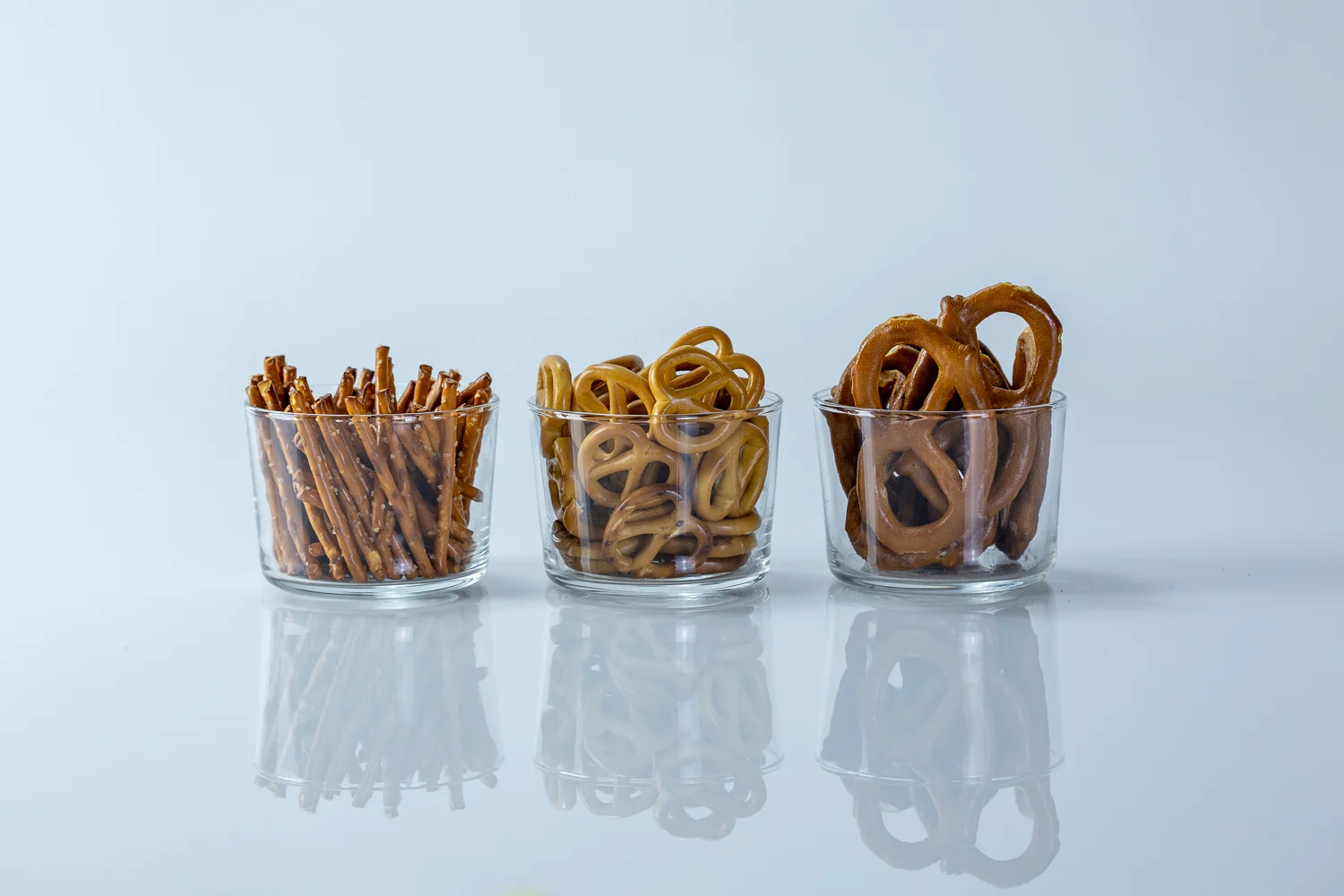
If you feel confident in the child’s ability to take bites and not overstuff their mouth, you can serve thin hard pretzel sticks on occasion. When serving hard pretzels, keep the sticks long (not broken into smaller sections) to reduce the choking risk. Taking bites of a larger piece of food better prepares the brain for thorough chewing and swallowing, rather than shoveling smaller pieces of food into the mouth. Make sure the child is seated in a safe eating environment, as eating while playing, running, laughing etc. greatly increases choking risk.
18 months old +:
At this age, you can serve thin hard pretzels in sticks, twists, and other shapes in moderation due to high sodium levels. When serving hard pretzels, keep them whole to encourage the child to take bites and make sure the child is seated in a safe eating environment, as eating while playing, running, laughing etc. greatly increases choking risk.
3 years old +:
Offer thin pretzel sticks, loops, and other shapes in moderation due to high sodium levels. At this age, you can also start offering thicker hard pretzel sticks and hard pretzel nuggets, including those stuffed with ingredients like peanut butter. When serving hard pretzels, keep them whole to encourage the child to take bites and make sure the child is seated in a safe eating environment, as eating while playing, running, laughing etc. greatly increases choking risk.
Are pretzels a choking hazard for babies?
Yes. Hard pretzels are crunchy, sharp, and challenging to chew, which are qualities that pose an increased risk of choking. To reduce the risk, prepare and serve pretzels in an age-appropriate way as described in How to Serve. As always, make sure to create a safe eating environment and stay within reach of a child during meals.
Learn the signs of choking and more about choking first aid in our free guides, Infant Rescue and Toddler Rescue
Do pretzels contain common allergens?
Yes. Pretzels are commonly made with wheat or similar grains, and may contain other common allergens such as dairy, soy, egg, and others. Read the label carefully before serving. Prior to sharing pretzels with baby, it is important to introduce common food allergens on their own and rule them out as allergens before serving them together in a prepared food. This way, you’ll be able to identify which allergen is responsible if baby has a reaction. Then, when you are ready to offer pretzels, you will be confident that they have already safely eaten any common food allergens in the food.
Are hard pretzels safe for babies?
No. Because they are crunchy and very firm, hard pretzels are not safe to share with babies. Wait to serve hard pretzels of any shape until toddlerhood and a child has more experience with eating challenging foods.
Reference Material
Centers for Disease Control and Prevention. (2020). Choking Hazards. Retrieved May 21, 2020.
Start solids with confidence
- Guided Introduction to 100+ Foods
- Smart Tools to Simplify Mealtime
- Food Allergen 101
- 300+ Meal Ideas
- First Foods® Database
Start solids with confidence
- Guided Introduction to 100+ Foods
- Smart Tools to Simplify Mealtime
- Food Allergen 101
- 300+ Meal Ideas
- First Foods® Database
Expert Tips Delivered to Your Inbox
Sign up for weekly tips, recipes and more.