
Peas (Garden)
Legume
- Age Suggestion
- 6 months
- Iron-Rich
- Yes
- Common Allergen
- No
Warning
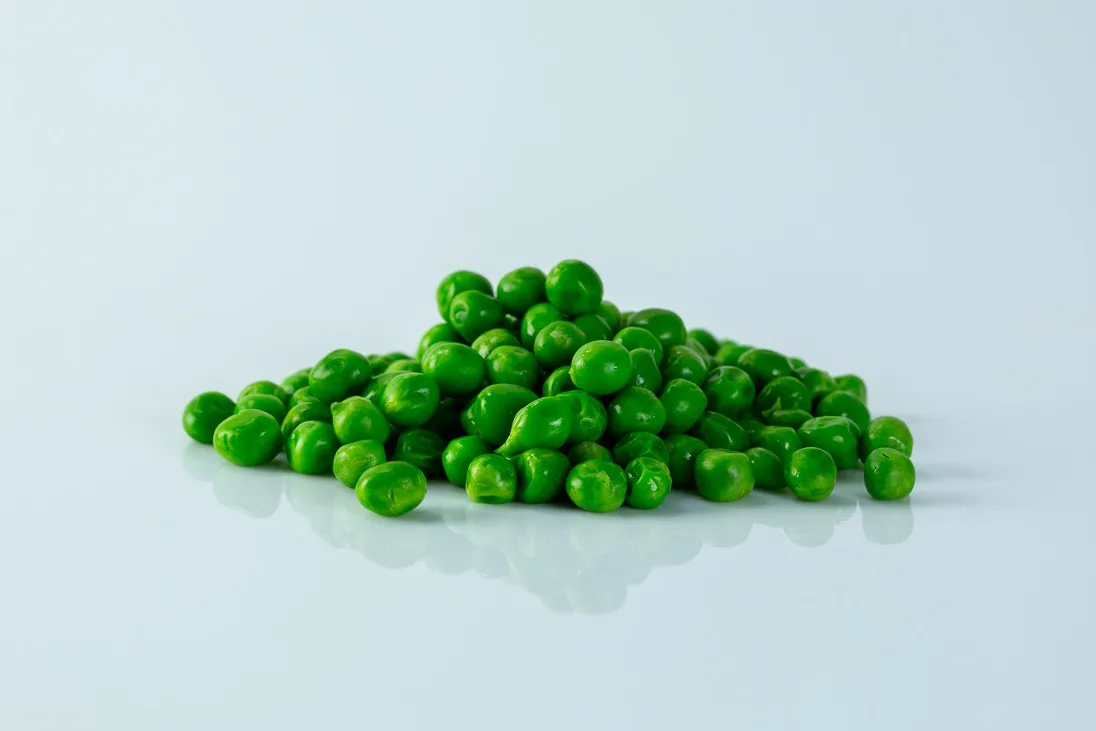
Whole, loose peas are a potential choking hazard, so keep reading to learn how to serve them safely.
When can babies have peas?
Peas may be introduced as soon as baby is ready to start solids, which is generally around 6 months of age.
Part of the diverse legume plant family that also includes soybeans and peanuts, peas were first cultivated in the fertile lands that connect Africa, Asia, and Europe thousands of years ago. Fresh peas have a short shelf life, but the invention of industrial canning and the ability to flash-freeze produce have made garden peas widely accessible.
How do you serve peas to babies?
Every baby develops on their own timeline, and the suggestions on how to cut or prepare particular foods are generalizations for a broad audience.
6 months old +:
Blend cooked peas into a smooth spread and serve on top of teething rusks, strips of toast, or on their own for hand-scooping. You can also share family meals with cooked peas in them; simply flatten the peas with the back of a fork before serving to baby.
9 months old +:
Flatten peas with the back of a fork and serve as a finger food to help baby practice their developing pincer grasp. Consider serving the peas directly on the tray or table (as opposed to a bowl or lipped plate) to lower the choking risk, as this reduces the likelihood that baby will shovel several peas into their mouth at once.
12 months old +:
At this age, there is no need to flatten cooked peas and you can serve them whole as long as you feel comfortable that the toddler can handle them safely in the mouth. Try serving peas on their own as a finger food and, as the child’s skills develop, encourage fork practice by spearing peas.
Are peas a choking hazard for babies?
Yes. Peas are small, round, and sometimes firm, qualities that increase the risk of choking. To reduce the risk, prepare and serve peas in an age-appropriate way. As always, make sure you create a safe eating environment and stay within an arm’s reach of baby during meals.
Learn the signs of choking and gagging and more about choking first aid in our free guides, Infant Rescue and Toddler Rescue.
Are peas a common allergen?
No. Peas are not a common allergen, although the prevalence of allergies to peas has been increasingly reported over the years with the rise in popularity of pea products and many hidden sources of peas, such as in processed plant-based foods.[1] [2] Emerging research also suggests that certain individuals with favism, also known as glucose-6-phosphate dehydrogenase (G6PD) deficiency, may have their condition triggered by peas.[3]
Pea allergies have been reported in some patients with allergies to other legumes, particularly chickpeas and lentils. However, being allergic to one type of legume does not necessarily mean that an individual will be allergic to all others, although the risk of having more than one legume allergy can increase.[4] Fortunately, most individuals with peanut or soy allergy (both common food allergens) are able to tolerate other legumes, such as peas, just fine.[5] That said, there are reports of patients with peanut allergy experiencing reactions to processed food products containing large amounts of concentrated pea protein (known as pea protein isolate)– even if they tolerate whole peas without issue.[6] If baby has a known peanut allergy, foods containing pea protein isolate should be introduced with caution.
Peas and other pea products are a known trigger of food protein-induced enterocolitis syndrome, also known as FPIES. FPIES is a rare and delayed allergy to food protein which causes the sudden onset of repetitive vomiting and diarrhea to begin a few hours after ingestion of the food trigger. Left untreated, the reaction can result in significant dehydration.[7] [8] Fortunately, most cases resolve completely by early childhood.
Individuals with allergies to birch tree pollen and/or Oral Allergy Syndrome (also called pollen food allergy syndrome) may be sensitive to legumes, such as peas.[9] [10] [11] Oral Allergy Syndrome typically results in short-lived itching, tingling, or burning in the mouth and is unlikely to result in a dangerous reaction. Cooking or canning peas can help minimize and even eliminate the reaction.[12] [9]
As you would when introducing any new food, start by offering a small quantity for the first few servings. If there is no adverse reaction, gradually increase the quantity over future meals.
Are peas healthy for babies?
Yes. Peas are an excellent source of carbohydrates, fiber, and protein to provide energy to play and explore, support baby’s gut microbiome, and fuel growth and development. They are also high in folate, vitamin B6, and zinc which collectively support neurodevelopment, healthy metabolism, immune function, and taste perception. While peas are not as high in iron as other members of the legume family, they are still a very good source of this essential nutrient. Lastly, peas are rich in antioxidants, which help support the body’s resilience against stressors.
Can babies have frozen peas?
Can babies have canned peas?
Yes. Canned peas are a widely available, shelf-stable option. Consider opting for canned peas with minimal or no added salt, if available, since baby’s sodium needs are low at this age. If not available, know that regular canned peas are fine as part of a varied diet.
Are peas hard to digest for babies?
No. Peas contain fiber and other food components that produce gas, which is sometimes mistakenly perceived as peas being hard to digest. Certain elements of peas are naturally resistant to digestion, but these indigestible fibers help feed friendly gut bacteria and support baby’s development of a diverse and healthy microbiome. Introducing high-fiber foods like peas gradually and regularly in baby’s diet as tolerated can help to minimize digestive discomfort.
Can babies have pea protein milk?
Yes, as an ingredient in solid food, but wait until after the first birthday to regularly offer pea protein milk as a drink so it does not displace breast milk or formula, which offer important nutrition that baby needs to grow and thrive.
Reference Material
Abrams, E. M., & Gerstner, T. V. (2015). Allergy to cooked, but not raw, peas: a case series and review. Allergy, asthma, and clinical immunology : official journal of the Canadian Society of Allergy and Clinical Immunology, 11(1), 10. DOI: 10.1186/s13223-015-0077-x
Hagag, A. A., Badraia, I. M., Elfarargy, M. S., Abd Elmageed, M. M., & Abo-Ali, E. A. (2018). Study of Glucose-6-Phosphate Dehydrogenase Deficiency: 5 Years Retrospective Egyptian Study. Endocrine, metabolic & immune disorders drug targets, 18(2), 155–162. DOI: 10.2174/1871530317666171003160350
Start solids with confidence
- Guided Introduction to 100+ Foods
- Smart Tools to Simplify Mealtime
- Food Allergen 101
- 300+ Meal Ideas
- First Foods® Database
Start solids with confidence
- Guided Introduction to 100+ Foods
- Smart Tools to Simplify Mealtime
- Food Allergen 101
- 300+ Meal Ideas
- First Foods® Database
Expert Tips Delivered to Your Inbox
Sign up for weekly tips, recipes and more.