


Access our First Foods® Database in the Solid Starts App.
Learn moreKombucha
Age Suggestion
4 years
Iron-Rich
No
Common Allergen
No
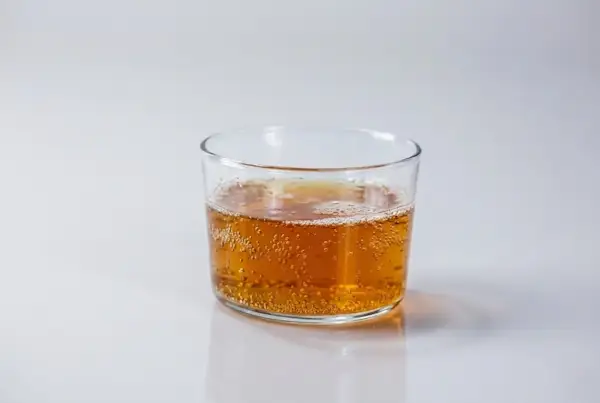
When can babies have kombucha?
Kombucha is best served in moderation after 4 years of age. While sharing a sip of store-bought kombucha here and there is generally fine, wait to share kombucha until a child is older due to its alcohol and caffeine content.
Kombucha is a fermented tea made by adding a symbiotic culture of bacteria and yeast (often known by the acronym SCOBY) to sweetened tea. The fermentation process produces organic acids, carbonation, and trace amounts of caffeine and alcohol. Kombucha is believed to have originated in East Asia thousands of years ago and later spread to Russia and Eastern Europe before gaining global popularity in recent decades.
How do you serve kombucha to babies and kids?
Every baby develops on their own timeline, and the suggestions on how to cut or prepare particular foods are generalizations for a broad audience.
6 months old +:
Avoid due to varied amounts of alcohol, caffeine, and carbonation that can fill up baby’s tummy in place of solid foods. If you’d like to share a sip, an occasional taste from an open cup of store-bought kombucha is okay, but avoid sharing homemade kombucha due to foodborne illness risk.
4 years old +:
At this age, if desired, you can offer small amounts of store-bought kombucha. Ideally, opt for kombucha with lower amounts of caffeine (often green-tea based) and lower amounts of sugar. Continue to avoid sharing homemade kombucha due to foodborne illness risk.
Is kombucha a choking hazard for children?
No. Kombucha presents a low risk when safely prepared for a child’s age and developmental ability, though, in theory, an individual could choke on any food. To reduce the risk, ensure the child is seated and supervised while drinking. As always, make sure to create a safe eating environment and stay within reach during meals.
Learn the signs of choking and more about choking first aid in our free guides, Infant Rescue and Toddler Rescue.
Is kombucha a common allergen?
No. Kombucha is not a common cause of allergic reactions, although reactions have been reported. Added flavorings and juices in kombucha may also provoke allergic reactions in individuals with sensitivities to those specific added ingredients, so read the label before serving.
In many cases, the inherent carbonation of kombucha can lead to digestive discomfort that can be mistaken for an allergic reaction, such as bloating, gassiness, increased burping, potential reflux, and early satiety. Children can be more susceptible to these symptoms compared to adults.
Note that kombucha is acidic, and exposure to the acid may cause a harmless contact rash on the skin it touches, such as around the mouth. The rash usually dissipates after a short time or after a gentle cleanse. Barrier ointments (such as pure petroleum jelly or a plant-based oil/wax combination) can be applied to the face before mealtime to help protect the skin from acidic foods. Additionally, the acid in kombucha can be irritating to the digestive tract if consumed in large quantities.
Is kombucha safe for babies?
While a sip of store-bought kombucha here and there is typically fine, kombucha should not be shared regularly with babies and toddlers, as it can have trace amounts of alcohol and caffeine and is highly carbonated and can fill up baby’s tummy in place of solid foods. In addition, homemade kombucha carries an increased risk of foodborne illness and is not safe to share with babies and toddlers.
Is there alcohol in kombucha?
Yes, but the amount of alcohol can vary. Store-bought kombuchas are highly regulated to not exceed more than 0.5% trace amount of alcohol. The trace amounts of alcohol in typical store-bought kombuchas are generally not of concern for older children and when consumed in moderation, as small amounts of trace alcohol do naturally occur in many common foods like bread, yogurt, fermented vegetables, and even fruit juice.
In homemade kombucha, however, the amount of alcohol can vary widely and is difficult to control in the fermentation process. There are also “hard”, deliberately alcoholic kombuchas which should be completely avoided for all babies and children.
Can babies have homemade kombucha?
No. Homemade kombucha carries a high risk for foodborne illness, including contamination with mold, harmful bacteria, and production of toxins, and has been associated with fatal cases of illness in adults. It is also challenging to control the development of alcohol content in home-brewed kombucha, meaning that some home batches could easily exceed safe limits.
How much sugar is in kombucha?
Kombucha has varying amounts of sugar, which is an essential ingredient in feeding the SCOBY and starting fermentation when kombucha is made. In the fermentation process, much of the sugar is actually used up, leaving only residual amounts in the resulting kombucha. That said, juice or other sweeteners are often added to kombucha after fermentation. If you share kombucha regularly with an older child, aim to select products with less sugar. Regular and especially excessive consumption of sweet beverages may reduce the diversity of foods and nutrients consumed and increase the risk of dental cavities.
Will kombucha keep you awake?
Because kombucha is typically made from tea, it does contain varying amounts of caffeine, which can contribute to wakefulness. That said, the amount of caffeine depends on the type of tea used and the way the kombucha was made. Among the caffeinated teas, green teas have the least, while black, white, and oolong teas, as well as matcha have the most.
Interestingly, it’s thought that the fermentation in the kombucha-making process helps reduce the caffeine content of teas.
Our Team
Written by

Dr. Sakina Bajowala
Pediatrician & pediatric allergist/immunologist

Kim Grenawitzke
Pediatric occupational therapist, feeding & swallowing specialist, international board-certified lactation consultant

Venus Kalami
Pediatric registered dietitian & nutritionist
Get 10% Off
Sign up to save and get weekly tips, recipes and more.




Copyright © 2026 • Solid Starts Inc