
English Muffin
Grain
- Age Suggestion
- 6 months
- Iron-Rich
- No
- Common Allergen
- Yes
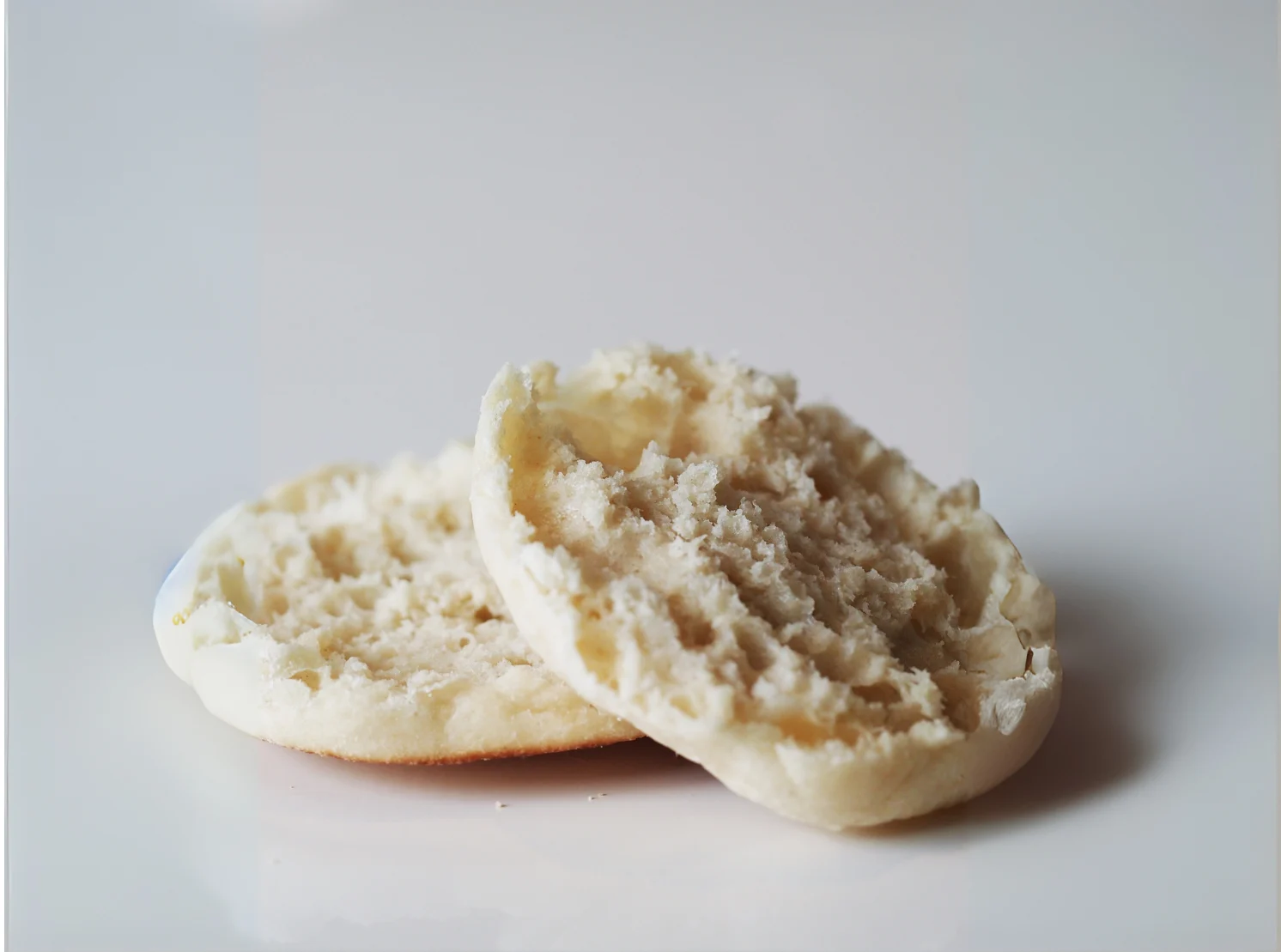
When can babies have english muffins?
English muffins may be introduced as soon as baby is ready to start solids, which is generally around 6 months of age. Note that english muffins are typically made with wheat and may contain other common allergens, so take care when introducing.
English muffins originated in the United Kingdom and became a breakfast staple in the United States in the early 20th century. Unlike traditional American muffins, english muffins are griddle-cooked and split in half before toasting, leaving their soft, bready interior and textured nooks and crannies exposed. They’re used in popular dishes like eggs Benedict and are often topped with butter, jam, or egg.
How do you serve english muffins to babies?
Every baby develops on their own timeline, and the suggestions on how to cut or prepare particular foods are generalizations for a broad audience.
6 months old +:
Offer a toasted english muffin half or cut it into thin strips for baby to hold and munch on. Toasting the english muffin until the edges are light brown makes the food more resistive and less gummy once baby starts munching on the food. Adding a thin, soft spread such as butter, mashed avocado, or yogurt can also make the english muffin easier to manage in the mouth.
9 months old +:
As baby develops their pincer grasp, the ability to pick up smaller objects with their thumb and first finger, you can serve toasted english muffin in bite-sized pieces, thin strips, or as a whole half. Adding a thin, soft spread such as mashed beans, cream cheese, or hummus can make the english muffin easier to manage in the mouth.
12 months old +:
At this age, you can try offering english muffin untoasted or toasted, as desired. Serve as a whole half, bite-sized pieces or in strips. Feel free to offer with a small amount of water or milk in an open cup to wash down any sticky bits of food the child may be struggling with.
18 months old +:
Feel free to offer english muffin sandwiches with soft fillings like cooked egg, mashed avocado, or peanut butter and jelly. Cutting the sandwich in half can make it easier for toddlers to manage and hold together, although it is still very normal at this age for children to take the sandwich apart and eat the pieces separately. Alternatively, you can continue offering an english muffin half topped as desired.
Are english muffins a choking hazard for babies?
Yes. Like other kinds of bread, english muffins can be difficult to chew and may become gummy in baby’s mouth, qualities that increase the risk of choking. To reduce the risk, prepare and serve english muffins in an age-appropriate way as described in the How to Serve section. As always, create a safe eating environment and stay within reach of baby during meals.
Learn the signs of choking and more about choking first aid in our free guides, Infant Rescue and Toddler Rescue.
Do english muffins contain common allergens?
Yes. English muffins are typically made from wheat and often contain other common allergens such as milk, soy, or eggs. Prior to sharing english muffins with baby, it is important to introduce common food allergens on their own and rule out an allergy before serving them together in a prepared food like english muffins. Then, when you are ready to share it, you will be confident the child has already safely eaten any common allergens in the food.
Are english muffins healthy for babies?
Yes. English muffins offer plenty of carbohydrates plus some fiber and protein, too. Nutrition varies widely depending on the type, with some offering more nutrients than others: some are whole grain, some are made with sourdough or sprouted grains, and others are fortified with added vitamins and minerals such as folate and iron.
Does baby need a high chair?
While a high chair can help create a safe eating environment, there are alternative ways for baby to eat safely, such as holding the child on your lap or sitting together on the floor. For more information, see our article on high chairs.
What utensils do I need to get started?
None! Put solid food directly on baby’s tray, plate, or bowl, then let baby explore with their hands. If you like, keep a baby spoon or fork nearby to help familiarize the child with utensils, but the skills to use them are not expected until early toddlerhood.
Start solids with confidence
- Guided Introduction to 100+ Foods
- Smart Tools to Simplify Mealtime
- Food Allergen 101
- 300+ Meal Ideas
- First Foods® Database
Start solids with confidence
- Guided Introduction to 100+ Foods
- Smart Tools to Simplify Mealtime
- Food Allergen 101
- 300+ Meal Ideas
- First Foods® Database
Expert Tips Delivered to Your Inbox
Sign up for weekly tips, recipes and more.