


Acceda a la base de datos First Foods® en Solid Starts App.
Leer másAlgas
Vegetal
Sugerencia de edades
6 meses
Alto contenido de hierro
No
Alérgeno común
No
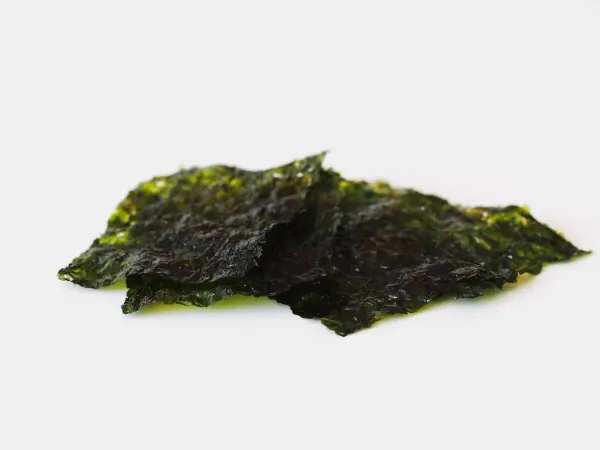
When can babies have nori?
Nori may be introduced to babies as soon as they are ready to start solids, which is generally around 6 months of age. Serve in moderation, as nori is rich in iodine, which can cause illness when consumed in excess. Avoid seaweed powders or supplements for baby, as these products can have excessive amounts of iodine.
Nori is a type of edible seaweed also known as laver, traditionally cultivated and enjoyed in East Asia for centuries. It is especially associated with Japanese cuisine, where it is used to wrap sushi, rice balls (onigiri), or served toasted as a snack. Seaweed has long been valued for its mineral content, umami flavor, and role in food preservation, and today nori is eaten worldwide as part of both traditional and modern dishes.
How do you serve nori to babies?
Cada bebé se desarrolla a su propio ritmo, y las sugerencias que ofrecemos sobre cómo cortar o preparar determinados alimentos son generalizaciones para una amplia audiencia.
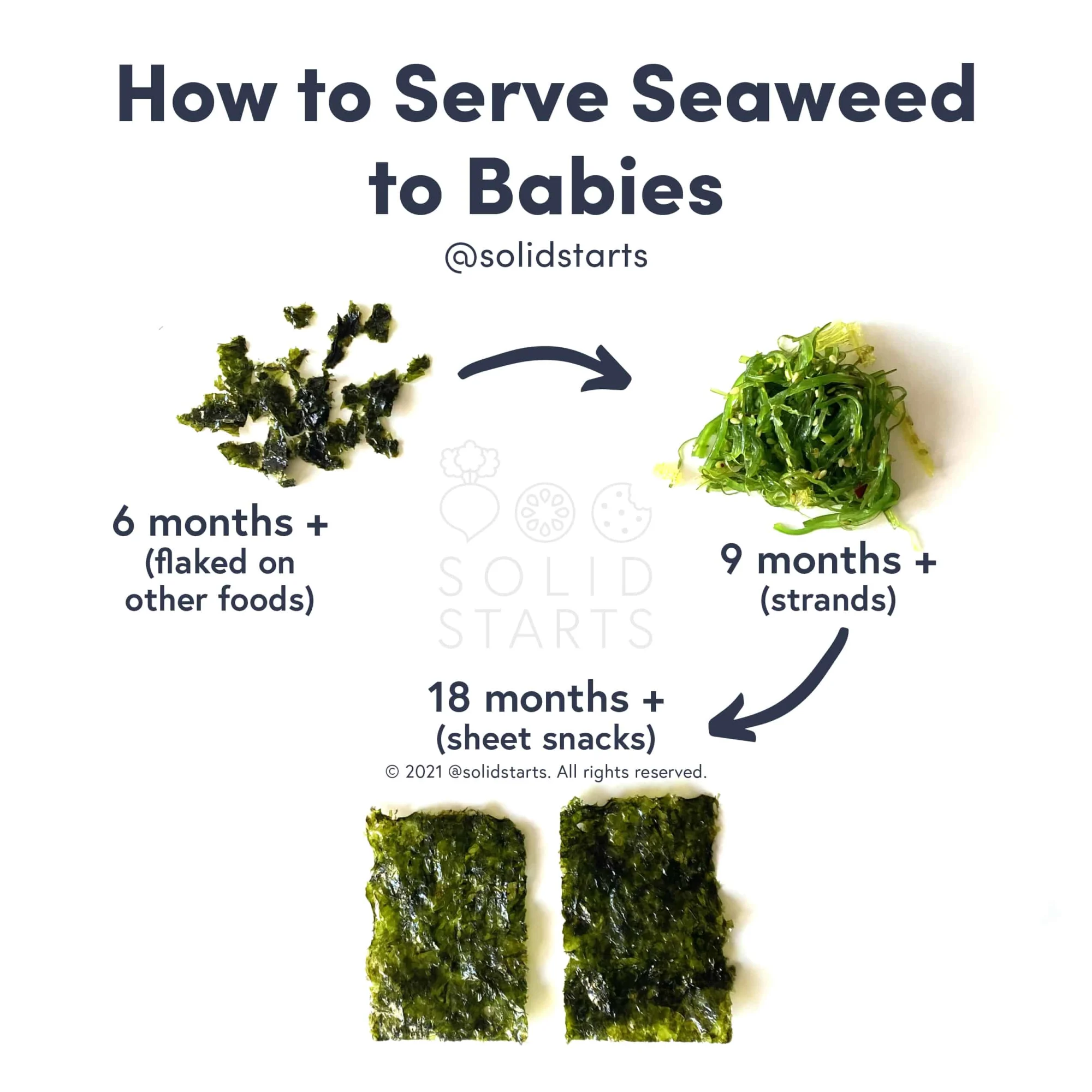
6 months old +:
Crush or finely chop dried sheets of nori into small flakes and stir into scoopable foods like mashed avocado, rice porridge, or into rice balls like onigiri, or sprinkle small amounts of crushed or finely chopped dried seaweed on age-appropriate pieces of food.
9 months old +:
Crush or finely chop dried sheets of nori and stir the pieces into scoopable foods or sprinkle small amounts on age-appropriate pieces of food. At this age, nori can also be cut or torn into small, bite-sized pieces and offered on its own or mixed into shared meals, like soups, stews, or rice dishes. Expect some harmless gagging, as pieces of dried seaweed can stick to the sides and roof of the mouth, and feel free to offer a small amount of water in an open cup to help wash down the food.
12 months old +:
Continue offering crushed, chopped, or bite-sized pieces of nori. At this age, toddlers may be ready for biting and tearing practice. If the child is consistently taking bites, chewing food thoroughly, and spitting out food when it is too challenging, you can try offering a whole sheet of dried nori on its own. Nori is crunchy when dry but becomes sticky when mixed with saliva, so expect some gagging, spitting, and mess as the child continues to learn to manage this complex texture.
18 months old +:
Offer sheets of nori as desired, either on their own, chopped and mixed into soups and stews, or in strips around sushi. At this age, toddlers often have the chewing experience and the molars needed to chew and manage the mixed textures of a whole, large piece of nori around rice. That said, you can continue to expect some spitting as the child practices.
Videos
Is nori a choking hazard for babies?
Yes. Dried and toasted seaweed sheets become sticky and gummy upon contact with saliva, qualities that can increase the risk of choking. To reduce the risk, prepare and serve nori in an age-appropriate way as described in the How to Serve section. As always, create a safe eating environment and stay within reach of baby during meals.
Learn the signs of choking and more about choking first aid in our free guides, Infant Rescue and Toddler Rescue.
Is nori a common allergen?
No, nori is not a common allergen. Furthermore, individuals who are allergic to fish or shellfish should be able to eat seaweed as long as there has been no cross-contamination with fish flesh. However, many processed edible seaweeds do contain sesame, a common food allergen, and may contain other common allergens like soy or wheat.
Is nori healthy for babies?
Yes, in moderation due to nori’s high levels of iodine. While iodine is essential for health, it can cause illness when consumed in excess, so consider serving nori in moderation as part of a varied diet. Nori offers a dash of protein, calcium, and potassium, as well as folate, iodine, vitamin A, and zinc. Together, these nutrients support bone density, electrolyte balance, growth and development, and hormone health. Nori also contains phytonutrients that help support immune function.
Avoid sharing seaweed powders or seaweed supplements with baby, as these products can have excessive amounts of iodine.
Is all seaweed safe for babies?
Not all types. Some, like kelp and kombu, are very high in iodine and can overwhelm a baby’s thyroid. Nori generally contains lower iodine levels and is safer to introduce in small amounts.
Nuestro equipo
Escrito por

Dr. Sakina Bajowala
Pediatra general y alergóloga/inmunóloga

Kim Grenawitzke
Terapeuta ocupacional pediátrica(o), especialista en alimentación y deglución, y consultora de lactancia certificada por la junta internacional

Venus Kalami
Nutricionista y dietista pediátrico(a) registrada
Consejos de expertos directo a tu bandeja de entrada
¡Suscríbete y recibe correos semanales con recetas, consejos y más!




Copyright © 2026 • Solid Starts Inc