


Acceda a la base de datos First Foods® en Solid Starts App.
Leer másDeli Meat
Carne
Sugerencia de edades
12 meses
Alto contenido de hierro
Sí
Alérgeno común
No
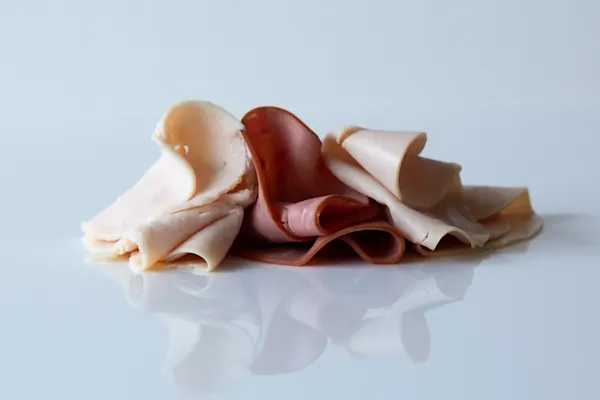
When can babies have deli meat or cold cuts?
Hold off on serving deli meat until at least after the child’s first birthday. Deli meat carries an increased risk of foodborne illness (which can affect babies more severely) and may also contain honey, which is associated with a risk of infant botulism for babies under 12 months of age.
Also known as cold cuts or lunch meat, deli meat gets its name from the German word delicatessen, establishments that sold “delicacies” like cured meats, cheeses, and much more. Today’s delis are often part retail and part restaurant, selling cured meats, cheeses, and other groceries as well as prepared foods that are ready to eat, like sandwiches, soups, and more. There are countless varieties of deli meat, from cured ham to olive loaf to roast beef and much more. Some are richly flavored with herbs and spices, and others are made from a combination of meats, like bologna or pepperoni.
How do you serve deli meat to babies?
Cada bebé se desarrolla a su propio ritmo, y las sugerencias que ofrecemos sobre cómo cortar o preparar determinados alimentos son generalizaciones para una amplia audiencia.
6 to 11 months old:
Consider waiting due to the risk of foodborne illness. If you do decide to share a taste with baby, heat up the deli meat until steaming first, which can reduce the risk of foodborne illness; just let it cool before offering to baby. Note that very thin slices of deli meat can cling to the tongue or roof of the mouth and cause some gagging, so these should be finely chopped and mixed into a soft, scoopable food. Avoid deli meat that contains honey due to the risk of infant botulism.
12 months old +:
Offer deli meat in flat strips or in small pieces, chopped or torn by hand. Remember that, even after the first birthday, deli meat is not without risk of foodborne illness, so consider the context of the individual child before offering. Heating up the deli meat until steaming can reduce the risk of foodborne illness; just let it cool before offering. Avoid serving cubes of meat due to choking risk.
18 months old +:
Offer thin strips of deli meat for practice taking bites, or bite-sized pieces torn from a thin strip, if desired. You can also roll a slice of deli meat into a stick shape and offer it to the child for them to hold and practice taking bites from. Feel free to offer a whole sandwich with deli meat in it or a sandwich cut in half and model how to hold it all together while taking bites. The child may follow your lead or they may take the sandwich apart and eat the pieces separately. Heating up the deli meat until steaming can reduce the risk of foodborne illness; just let it cool before offering.

Videos
Is deli meat a choking hazard for babies?
It can be. Thicker pieces of deli meat are firm and difficult to chew, which are qualities that increase the risk of choking. To reduce the risk, prepare and serve deli meat in an age-appropriate way as described in the How to Serve section. As always, create a safe eating environment and stay within reach of baby during meals.
Learn the signs of choking and more about choking first aid in our free guides, Infant Rescue and Toddler Rescue.
Is deli meat a common allergen?
No. Meats like ham, turkey, and beef are not common food allergens, although reactions to these meats have been reported. Certain tick bites (mainly the Lone Star tick in the continental United States, but other ticks in different parts of the world), are associated with the development of an allergy to galactose-alpha-1, 3-galactose (“alpha gal”), a sugar which is present in many red meats. This results in a delayed allergic reaction 3-8 hours after the consumption of red meat, such as ham or beef. Although rare, some individuals with cat allergies may also develop a cross-reactive allergy to pork products, a condition known as pork-cat syndrome.
Is deli meat okay for toddlers?
Generally, yes. That said, even after 12 months of age, deli meat is not without risk of foodborne illness, so consider the context of the individual child before serving. Deli meats have been implicated in a number of outbreaks of foodborne illness, namely Listeria, so whether or when to serve it is a personal decision for which you must calculate risk. In addition, deli meat is typically high in sodium, so if it is a food your family enjoys, aim to share it with children in moderation.
When can kids have sandwiches?
At around 18 months of age, you can offer a whole sandwich or a sandwich cut in half and model how to hold it all together while taking bites. Some children will be interested in holding a sandwich together at this age, but that said, it’s very normal for toddlers to take apart a sandwich to explore what’s inside and eat the different components separately. For children who are not used to eating food with mixed textures, supervise closely as they figure out how to manage the different textures in one bite.
Why is deli meat a foodborne illness risk?
Deli meat poses an increased risk of foodborne illness from bacteria like Listeria because of both the qualities of the food and how it is processed. Deli meat is high in moisture and is theoretically “ready to eat,” meaning it is often eaten without being cooked first, conditions that can encourage bacterial growth. In addition, deli meat is typically a highly-processed food, which creates lots of opportunities for contamination and spread of germs, such as the machines that slice deli meat, which are difficult to clean properly. Note that heating the meat until steaming can reduce the risk of foodborne illness; just let it cool before serving.
Nuestro equipo
Escrito por

Dr. Rachel Ruiz
Pediatra general y gastroenteróloga pediátrica

Dr. Sakina Bajowala
Pediatra general y alergóloga/inmunóloga

Kim Grenawitzke
Terapeuta ocupacional pediátrica(o), especialista en alimentación y deglución, y consultora de lactancia certificada por la junta internacional

Venus Kalami
Nutricionista y dietista pediátrico(a) registrada
Consejos de expertos directo a tu bandeja de entrada
¡Suscríbete y recibe correos semanales con recetas, consejos y más!




Copyright © 2026 • Solid Starts Inc