
Ackee
Fruta
- Edad sugerida
- 6 meses
- Rico en hierro
- No
- Alérgeno común
- No
Warning
Unripe ackee, as well as the seeds, pinkish-red membranes, and husks of both ripe and unripe fruit, contain toxic compounds called hypoglycins that can cause toxic hypoglycemia syndrome (also known as Jamaican vomiting sickness), a condition characterized by vomiting, low blood sugar levels, neurological issues, liver dysfunction, and in severe cases, death.[1] [2] [3] [4] [5] [6]
When can babies have ackee?
Ackee, as long as it is ripe and fully cooked to reduce the risk of illness, may be introduced as soon as baby is ready to start solids, which is generally around 6 months of age. Avoid unripe ackee due to the risk of severe illness, and consider opting for canned ackee to reduce the risk of illness from accidental exposure to the unripe fruit.[5]
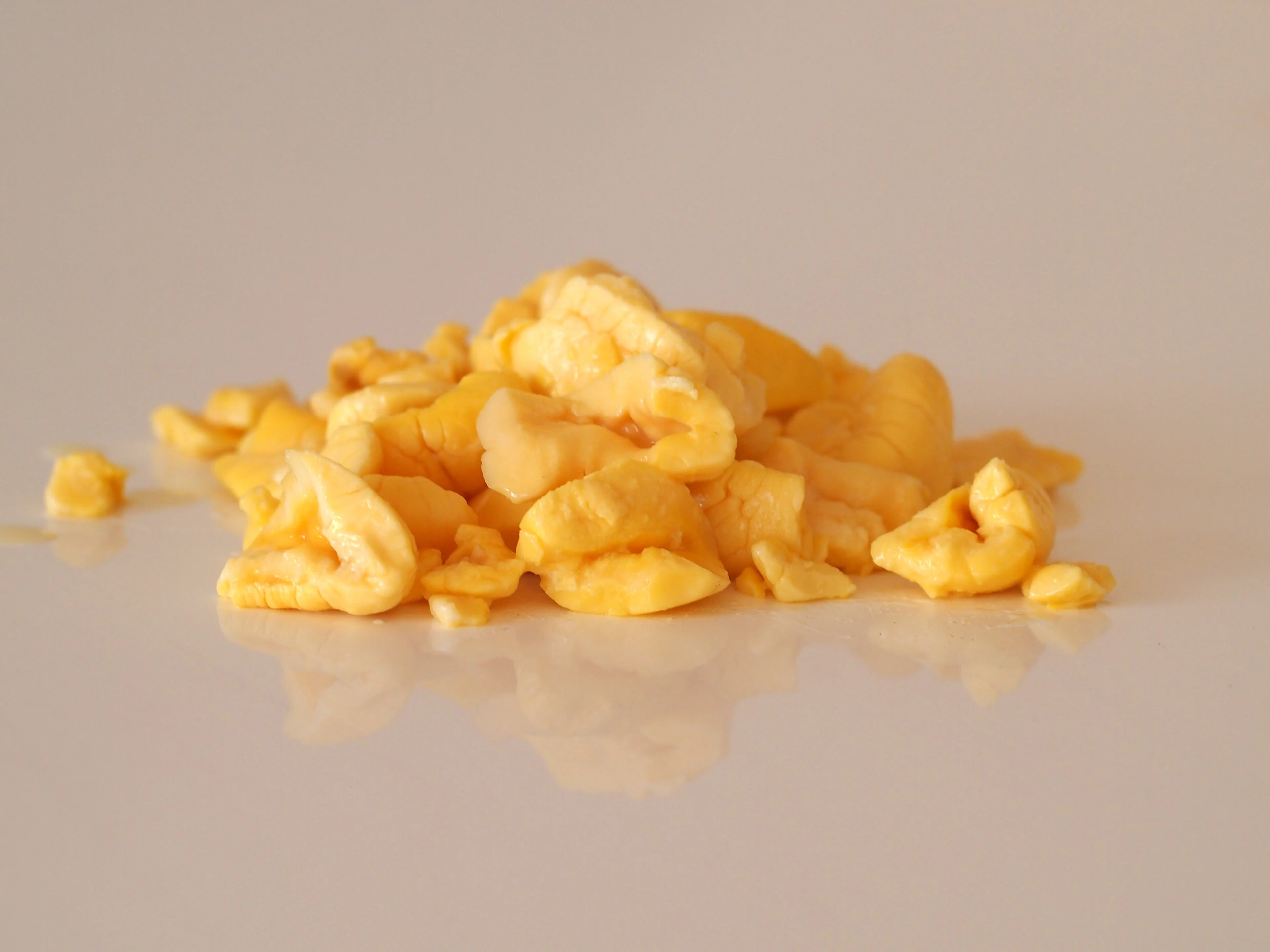
Ackee originated in West Africa and is popular throughout the West Indies, where the fruit was introduced by colonizers in the 18th century. Ackee is a cousin to lychee and longan, but its taste and texture are quite distinct from those sweet fruits. Cooked in meals like ackee and saltfish, the national dish of Jamaica, ackee has a consistency similar to scrambled egg, and a mild taste that readily takes on the flavors of the rest of the dish.
How do you serve ackee to babies?
Cada bebé se desarrolla a su propio ritmo, y las sugerencias que ofrecemos sobre cómo cortar o preparar determinados alimentos son generalizaciones para una amplia audiencia.
6 months old +:
Offer fully cooked, ripe ackee that has been mashed with the back of a fork to flatten it a bit for baby to pick up with their hands, or chopped and mixed into stews and other scoopable foods. Canned ackee has already been cooked as part of the canning process and doesn’t need to be fully cooked again – it can just be warmed up as part of cooking the rest of the meal.
9 months old +:
Serve fully cooked, ripe ackee in pieces for baby to pick up with their developing pincer grasp, where the thumb and first finger meet to pick up smaller pieces of food. Alternatively, you can continue to serve ackee that has been chopped and mixed into stews, stir fries, and scoopable foods. Canned ackee has already been cooked as part of the canning process and doesn’t need to be fully cooked again – it can just be warmed up as part of cooking the rest of the meal.
12 months old +:
Serve fully cooked, ripe ackee as desired, either on its own or as part of a mixed dish. Canned ackee has already been cooked as part of the canning process and doesn’t need to be fully cooked again – it can just be warmed up as part of cooking the rest of the meal.
Videos
Is ackee a choking hazard for babies?
Yes. Ackee can be slippery and springy, which are qualities that increase the risk of choking. It also contains a hard seed inside that poses a choking risk if not removed. To reduce the risk, prepare and serve ackee in an age-appropriate way as described in the How to Serve section. As always, create a safe eating environment and stay within reach of baby during meals.
Learn the signs of choking and more about choking first aid in our free guides, Infant Rescue and Toddler Rescue.
Is ackee a common allergen?
Is ackee safe for babies?
It can be. Ripe, fully cooked ackee is generally safe for babies when served in moderation, but the flesh from the unripe fruit, as well as the seeds, membranes, and husks, contain toxic compounds and are unsafe for consumption.[1] If cooking fresh ackee, boil until it turns bright yellow, then discard the water used for boiling.
Consider the safety of canned ackee in the context of where you live. Jamaica, a main producer and exporter of ackee, has regulations in place to try to ensure that canned ackee is safe. However, no food regulations are perfect and unripe ackee may still find its way into ackee products.[6] Regulations for importing canned ackee vary from country to country.[9] For example, the United States requires lower levels of the toxin hypoglycin A in canned ackee than regulations in Canada and Europe.
★ Tip: How can you tell if ackee is ripe? Ripe ackee skin is yellowish-red to red in color and the fruit’s skin splits open (sometimes described as “yawning” or “smiling”) to expose the large, black seeds inside. Unripe ackee skin is green to yellow, and the fruit has not yet opened to expose the inside.
Is ackee healthy for babies?
Yes. Ripe ackee is a good source of healthy fats and antioxidants, namely oleic acid, linoleic acid, and vitamin C, plus a heart-protective compound called squalene.[10] [9]It’s also a good source of protein for growth, fiber for gastrointestinal function, zinc and folate for growth and development, calcium for bone health, and some carotenoids, some of which convert to vitamin A to support skin, eye, and immune health.[11] [9]
Can babies have ackee and saltfish?
Yes. You can share ackee and saltfish with baby as soon as they are developmentally ready for solids. Just prepare the ingredients in an age-appropriate way, either by mashing the ackee with the back of a fork or chopping it to mix in with the other ingredients.
While saltfish is high in sodium, the amount of sodium that babies eat tends to be low as they learn the skills to feed themselves. Furthermore, sharing family meals, even if they contain salt, has its benefits: baby has opportunities to explore a wider variety of food, share their family food culture, and practice eating a variety of textures.[12] [13] [14] [15]
Material de referencia
Start solids with confidence
- Guided Introduction to 100+ Foods
- Smart Tools to Simplify Mealtime
- Food Allergen 101
- 300+ Meal Ideas
- First Foods® Database
Start solids with confidence
- Guided Introduction to 100+ Foods
- Smart Tools to Simplify Mealtime
- Food Allergen 101
- 300+ Meal Ideas
- First Foods® Database
Consejos de expertos directo en tu correo
Suscríbete para recibir consejos semanales, recetas y más.