Do solids help reflux?
Reflux impacts 1 in 2 babies in the United States. While it typically resolves itself between 12 to 18 months of age, you do not need to wait to start solids. Our pediatric pros explain how families can help babies with reflux as they begin exploring food.
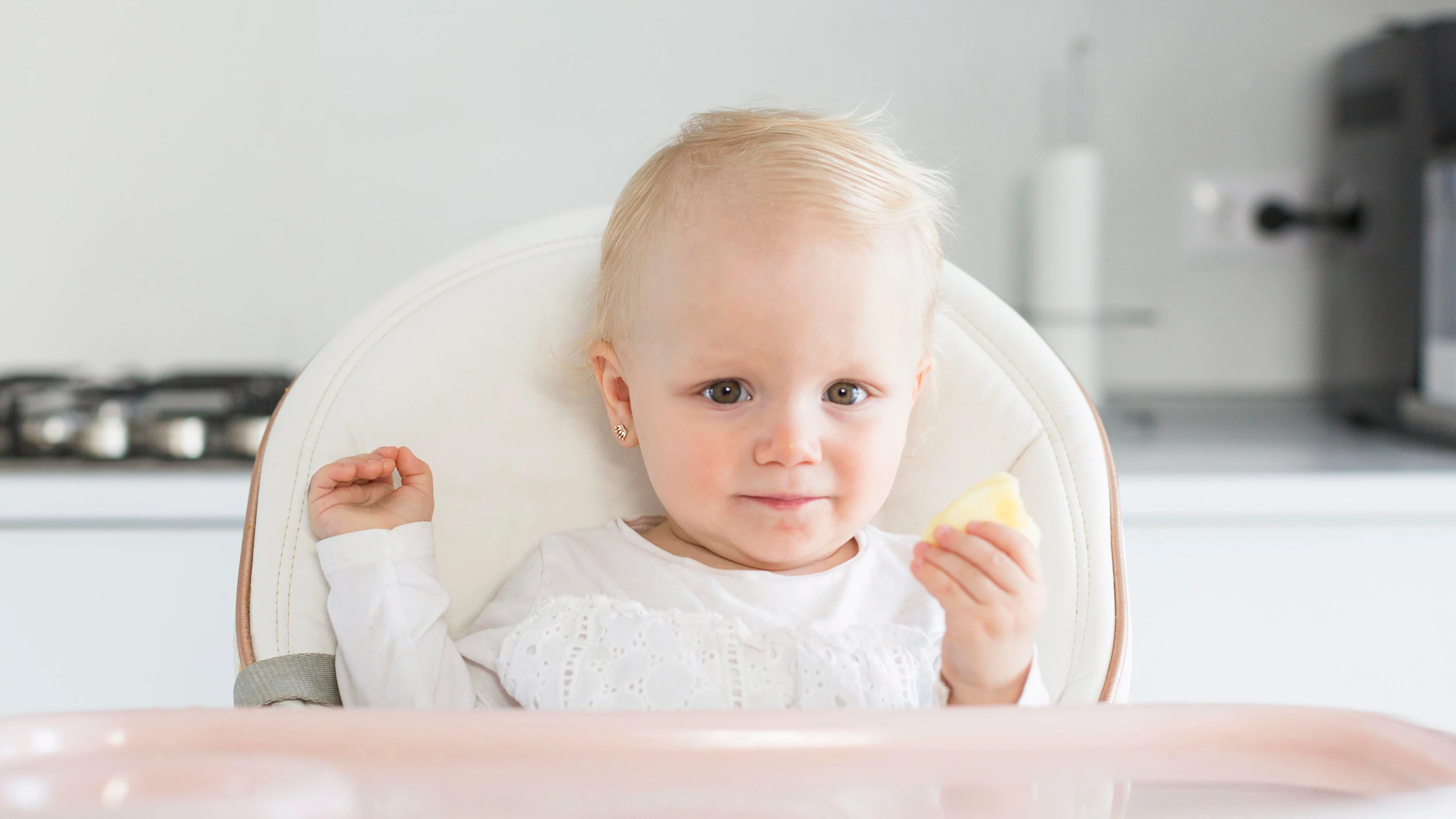
Reflux impacts 1 in 2 babies in the United States. While it typically resolves itself between 12 to 18 months of age, you do not need to wait to start solids. Our pediatric pros explain how families can help babies with reflux as they begin exploring real food.
How to Start Solids with Reflux
Most babies with reflux can start solids as soon as they show all of the signs that they are developmentally ready, which typically happens around 6 months of age. Here is your checklist to get started:
Download the Solid Starts App for help choosing first foods.
Learn how to set up a safe eating environment.
Understand the difference between gagging and choking.
Take an infant rescue course in case of emergencies.
Learn about safe food shapes and sizes.
Consider how solids fits in your feeding routine.
Check out our article Acid Reflux in Newborns and Babies for how to help younger babies with reflux.
Tips for Starting Solids with Reflux
Consider feeding times. Wait a little longer after nursing or bottlefeeding before offering solid food. This way, baby has more time to digest (and is less likely to spit up).
Try smaller, frequent feeds. Offer a little less breast milk or formula, and increase the frequency. This way, baby is less full (and less likely to throw up when exploring solids).
Allow baby to take the lead. Whether offering purees or finger foods, let baby decide to put food in the mouth, which can help avoid or soften feelings of discomfort with eating
Use food teethers. Regularly offer food teethers, which help a sensitive gag reflex and teach their brain how food feels in the mouth and when it is ready to be swallowed.
Go slow with gaggy foods. Wait a few weeks to offer sticky foods (avocado, banana) and foods that scatter in the mouth (rice), which often lead to gagging and spitting up.
Let baby watch you eat. Baby may connect eating with not feeling great, so show them (often!) how satisfying and fun eating can be. This helps encourage baby to explore.
Keep baby upright. Help baby sit upright for 30 minutes after feeding. Lying on their left side can also help. Offering the pacifier after feeding can also help.
Consider an extra burp. If baby seems uncomfortable at the table, take them out of the high chair and try to burp them. Some babies will burp and then return to happily exploring solids.
When to seek help
Contact your doctor if you observe any of the following symptoms:
baby is regularly struggling to drink or refusing food
baby is arching or crying during nursing or bottle feedings
baby is not gaining weight
baby has bloody or green/yellow vomit
baby is inconsolable when crying
baby has trouble breathing
baby is frequently coughing on their spit up, breast milk, or formula
baby will only eat when falling asleep or sleeping (dream feeding)
Written By
K. Rappaport, OTR/L, MS, SCFES, IBCLC. Pediatric Feeding/Swallowing Specialist
K. Grenawitzke, OTD, OTR/L, SCFES, IBCLC. Pediatric Feeding/Swallowing Specialist
V. Kalami, MNSP, RD, CSP. Pediatric Dietitian/Nutritionist
R. Ruiz, MD, FAAP, CLC. Pediatric Gastroenterologist
Frequently Asked Questions
Generally speaking, no, but other gastrointestinal changes that occur when starting solids can exacerbate reflux symptoms. For example, constipation is common when transitioning to solids as the gut gets used to new foods. Constipation can exacerbate reflux symptoms. Sometimes, gagging to the point of vomiting can be confused as reflux.
You may consider keeping a food diary to see if there is a specific food that may be aggravating baby’s symptoms, but the recommendation is to not exclude any foods unless your child has a confirmed allergy or sensitivity to it to ensure that baby can have a varied and nourishing diet.
Some pediatric healthcare providers may suggest starting solids early around 4 months of age to help with infant reflux; however, the research does not support this practice. About half of infants have reflux, and most babies tend to be “happy spitters” where no intervention is needed. Reflux tends to peak around 4 months of age and resolve on its own around 12 months of age as baby’s digestive anatomy becomes more mature.
There is no research-backed list of foods known to make reflux worse for all babies. Families commonly suspect some foods worsen reflux, including acidic, fatty, salty, or spicy foods and foods that make people gassy, such as beans. However, these reports are anecdotal. For many babies with reflux, it is not necessary to avoid or eliminate all foods that fall into these categories, but it may be helpful to track baby’s symptoms and the foods they are eating to discuss with your pediatrician.
Some people have heard they should cut out dairy or gluten in baby's diet, but unless baby has cow’s milk protein allergy or other food allergies, you do not need to avoid these foods. In fact, restrictive diets can be quite problematic for baby's nutritional needs and developing taste preferences, so elimination of food groups in an attempt to manage reflux symptoms is not advised for most babies and should be approached with close support from your doctor, and if possible a pediatric dietitian to assure each elimination is necessary.