Breastfeeding Latch Tips
A poor latch can cause nipple pain and limit milk supply — but it can often be fixed. Learn the signs of a shallow latch, simple strategies to improve it, and when to get support.

Key Points
A deep latch helps baby get enough milk and keeps you comfortable
A deep latch means baby takes in more than just the nipple. Their mouth should cover part of your areola, their lips should flare outward, and their chin should rest against your breast.
There are clear signs when their latch needs work
If your nipples feel like they are being bitten or pinched, baby’s latch likely needs work. Even if you have no pain, a poor latch may be to blame if baby typically appears hungry within 15 to 30 minutes after a feeding, or they are overly fussy and slow to gain weight.
Small changes can make the latch better
Start by adjusting your breastfeeding position to support the latch. Small adjustments can make a big difference, and a lactation consultant can help.
A deep latch helps baby get the milk they need from your breasts and tells your body to keep making milk. A shallow latch is often quite painful, and it can slow the flow of milk and reduce your milk supply over time.
Signs of a Poor Breastfeeding Latch
A poor latch appears shallow. Baby’s mouth covers only the nipple, and you can see most or all of the dark skin (the areola) around it. Even more important is how you feel. A poor latch hurts. It may feel like your nipple is being pinched or bitten. A poor latch can often mean baby is not gaining enough weight. If you notice any of these signs, connect with a lactation consultant for help.
Signs of a Poor Latch |
|---|
Nipple pain during or after feeds that does not go away |
Nipple looks flat or misshapen after feeds |
Clicking or smacking sounds while nursing |
Baby’s lips are tucked in instead of turned outward while feeding |
Baby’s cheeks appear sucked in instead of round and full |
Gaps between baby’s mouth and your breast |
Signs of a Weak Suck |
|---|
Baby gets tired quickly before finishing a full feed |
Baby does not swallow often during feeds |
Baby keeps slipping off the breast |
Feeds take a very long time and do not feel effective |
Baby wants to feed often but still seems hungry |
Slow or poor weight gain |
If breastfeeding feels really hard—whether it’s sore nipples, cracked nipples, engorgement, and/or baby is not growing well—focusing on the latch can make a big difference. A good latch is a deep latch, so try to get as much of your nipple and the dark skin around it into baby’s mouth as possible.
How to Get a Deeper Latch Breastfeeding
Try these small, evidence-based changes, which can often improve baby’s latch quickly.
Latch Tip | How It Works |
|---|---|
Bring baby to you, not breast to baby | Their ear, shoulder, and hip should form a straight line. Their belly should face your belly. This helps keep their body lined up and prevents a shallow latch. |
Support their head and neck | Let baby tip their head back just a little as they feed. This helps them open their mouth wider for a deeper latch. |
Use a few drops of breast milk | Hand express a few drops of breast milk and rub it around your nipple. This helps baby get ready to latch and encourages them to open their mouth. You can also drip a little milk on their lips to coax their mouth open. |
Shape your breast as they feed | Gently squeeze your breast the way you would hold a sandwich. This can help baby take in a bigger mouthful. |
Unlatch and try again if needed | It is okay to stop and re-latch if something feels off. A little soreness right when baby latches is normal. But sharp pain or pain that keeps going while they suck means it is time to try again. |
Try a different hold | Sometimes switching positions is all it takes. The cross-cradle hold and laid-back position often work well. |
When to Seek Support
If you are still having trouble and trying different ways to improve baby’s latch, it’s time to get some support. Consider reaching out to:
An international board certified lactation consultant (IBCLC)
Your pediatrician or family doctor
A nurse or midwife
A local or online breastfeeding support group
They can check how baby is latching, whether baby is getting enough milk, and whether anything in baby's mouth may be making feeding harder. From there, they can help you come up with a plan that works for you.
Frequently Asked Questions
When babies are born, they learn to “latch” their mouth to your breasts to feed. A good latch is deep, meaning baby takes in more than just the nipple. Some of the dark skin around your nipple is in their mouth, their lips flare out around it, and their chin rests against your breast as they suck and swallow. A deep latch helps baby get the nutrition they need and keeps feeding comfortable for you.
With newborns, try to latch as soon as baby shows signs of hunger, rather than wait until they are crying. Common signs of hunger include turning their head toward the breast, sucking on their fists, or smacking their lips.
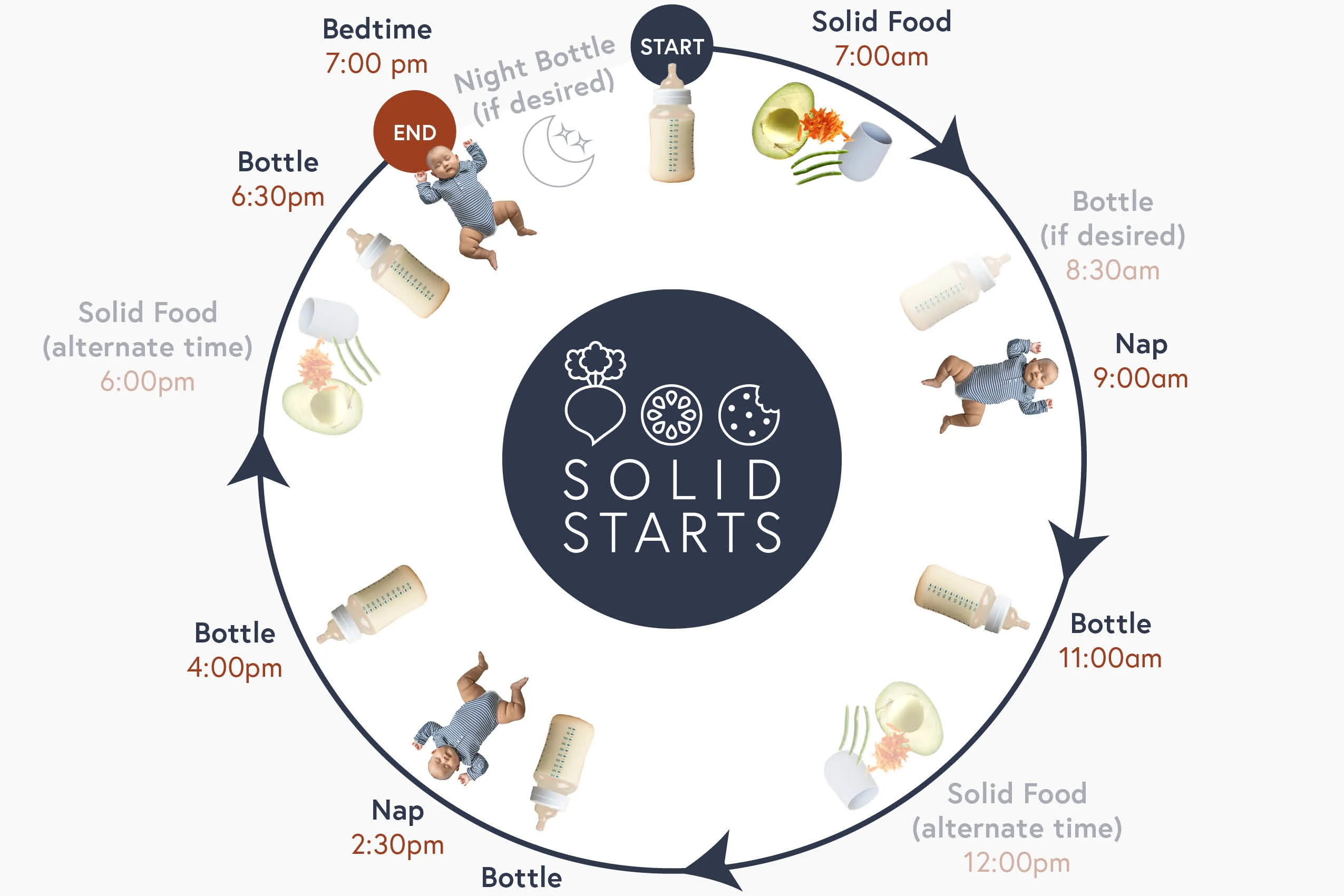
With older babies starting solids, keep latching as soon as they show signs of hunger. Breast milk (and formula) is still the main source of nutrition until they can eat a variety of solid food to fill the belly. As they get more experience with solid food, you can slowly add more time between nursing and mealtime. Check out our feeding schedules for detailed guidance.
Trust baby is getting enough milk when they regularly swallow often during feeds, have regular wet diapers, and are gaining weight steadily. A comfortable latch and softer breasts after nursing are also good signs. If baby often falls asleep while feeding and you think they are not getting enough milk, try unlatching them more often during the feed. This helps them stay awake and notice when they are still hungry.
No. A little soreness in the early days is normal, but ongoing pain is not. Pain is often a sign that the latch or your feeding position needs some adjustment.
A poor latch looks shallow. Their mouth covers only your nipple, and you can see most or all of the dark skin around it. But how it feels matters most. A poor latch hurts. If you notice these signs, contact a lactation consultant for support.
Yes. Your body makes more milk when more milk is removed. If baby is not latching deeply, they may not be removing milk well, and your body may start making less. To protect your milk supply, work on improving the latch as soon as you notice a problem rather than waiting to see if it gets better on its own.
Yes. A deep latch is key for baby to feed well without causing you pain. Latching to the breast—even when baby is not actively eating—also supports their growth and development in the first year.
There is no set time limit, unless your doctor or lactation consultant tells you otherwise. Watch for signs baby is full, like slowing down, pushing the breast away, turning their head, or falling asleep. Even when full, baby may want to stay at the breast, and that is okay. This is called comfort sucking, and it is good for their development. However, if your nipples are sore or cracked, you can try other ways to comfort them, like a pacifier or gentle rocking.
Yes, though it may take more time and some extra help to get back on track. Some tools that can help are a nipple shield or a supplemental nursing system. Both can be tricky to use, so it is a good idea to work with a lactation consultant before trying them. While you work on breastfeeding, you may need to give baby some bottle feeds with breast milk or formula. This does not mean you will never be able to breastfeed fully. Many parents get there with time and support.
If the latch is painful or baby is not gaining weight well, connect with your doctor and ask about clipping the tie. An ear, nose, and throat (ENT) doctor, a pediatric dentist, or a family doctor can help you decide if clipping is the right choice. If they recommend it, the procedure is usually done right in their office.
If clipping is not recommended—or if you choose not to do it—there are other things that can help.
Try a nipple shield: A nipple shield can reduce pain and allow baby to keep nursing even if the latch is shallow.
Try to hand expression: Gently pressing milk out of your breast while baby sucks can help baby get more milk. This can keep them awake, more engaged, and help empty your breast, which is good for your milk supply.
Try different feeding positions: Some find that certain positions work better for a baby with a tongue-tie. The laid-back position (where you recline and baby rests on your chest) uses gravity to help baby latch more deeply. It is worth trying a few positions to see what works best for you and your baby.