La leche de vaca y los bebés de 6 a 12 meses de edad
Cow’s milk (plus soy milk, almond milk, and other milk alternatives) are not recommended as drinks before one. The licensed pediatric professionals at Solid Starts explain why and how to navigate dairy before age one.

Puntos clave
Wait to offer cow’s milk as a drink
It’s okay to offer food containing cow’s milk as soon as baby is ready to start solids, but avoid offering milk as a drink until around the first birthday. A small sip is fine, but breast milk, formula, and water (after 6 months of age) are the only liquids baby should be drinking before age one.
Introduce food with milk early on
Cow’s milk is a common allergen, which should be introduced in food (like yogurt) around 6 months of age to help prevent an allergy from developing. While some babies may develop cow’s milk protein allergy (also known as CMPA), they usually outgrow it by their first birthday.
Drinking milk is optional after the first birthday
Breast milk and formula do not need to be swapped out for cow’s milk (or milk alternatives) at any time, even when you’re ready to wean your child. If you do want to offer milk to a toddler, serve it in a cup to help them build cup drinking skills (instead of sucking from a bottle).

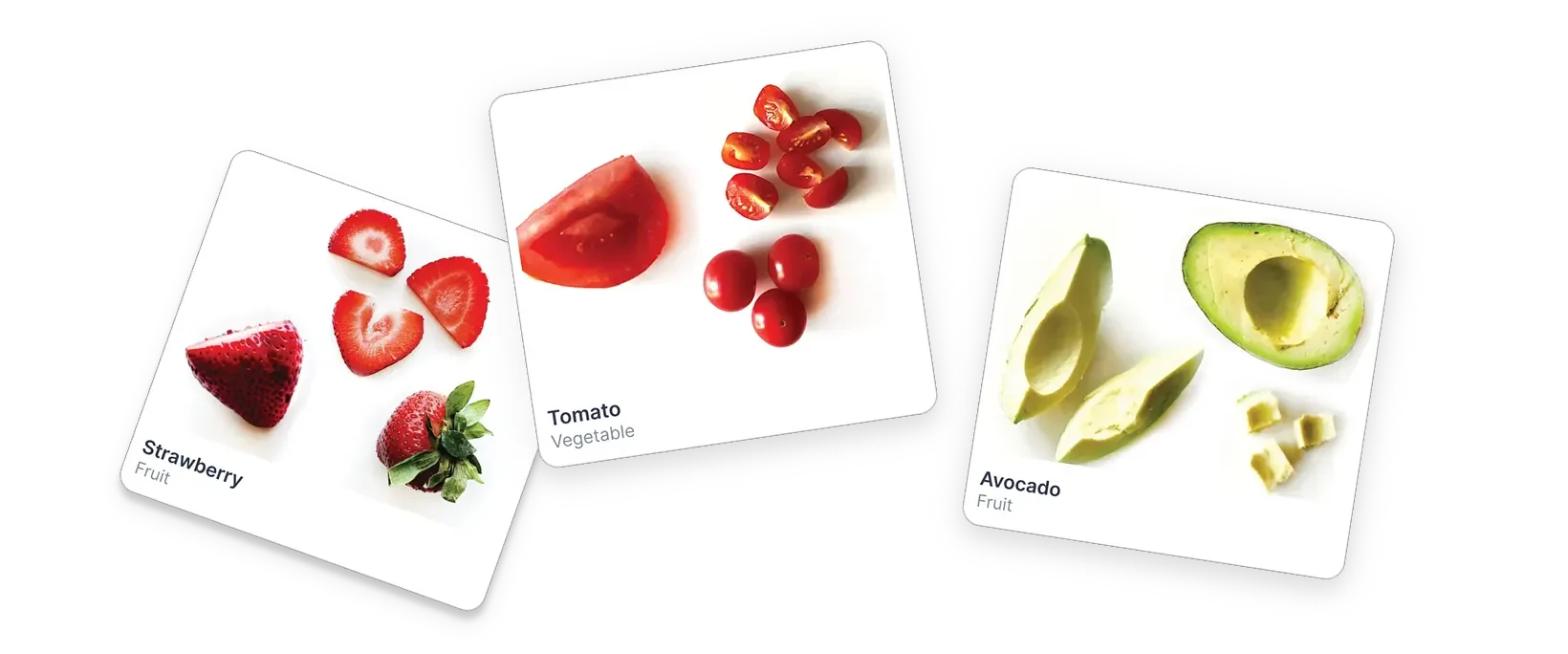
When to Introduce Cow’s Milk to Babies
Wait until around the first birthday to offer milk as a drink. Cow’s milk and milk alternatives like soy milk and nut milk may be introduced in food (such as porridge or yogurt) as soon as baby is ready to start solids, which is generally around 6 months of age, but avoid milk as a drink at this age. A small sip is fine, but drinking cow’s milk and milk alternatives takes away room in the belly from breast milk and formula, which are baby’s main sources of nutrition through the first year.
Before Age One
While drinking cow’s milk and milk alternatives is not recommended until around the first birthday, it’s important to introduce food containing milk (such as yogurt and cheese) when starting solids. Regularly serving food containing milk helps prevent allergies from developing. You can introduce food containing cow’s milk and milk alternatives from around 6 months of age, unless your doctor advises you to start earlier. Check out Tips for Introducing Allergens Before Baby Is Ready to Start Solids for more information.
Around the First Birthday
Around the first birthday, you can offer small sips of cow’s milk and milk alternatives as a drink, but it is not necessary. At this age, milk should be treated like a beverage for cup drinking practice (not a meal replacement) and baby can just as easily practice cup drinking with water. Use an open cup and start small: 1 to 2 fl oz (~30 to 60 mL) is plenty for cup drinking practice. Do not serve cow’s milk or milk alternatives in a bottle, as it can compromise dental health and displace nutrition from other food. Milk may be mixed into porridge and other foods, but when you want to offer a bottle, stick with breast milk or formula.
After the First Birthday
You can offer milk as a drink, but it is not necessary. Calcium can come from food, too. If you want to offer cow’s milk or milk alternatives as a drink, we recommend offering no more than 16 fluid ounces (480 mL) over the course of a day. This limit does not count foods containing cow’s milk or milk alternatives, like butter, cheese, and yogurt.
If they are thirsty for more, offer water as a drink to quench their thirst. Offering more milk on some days is fine, but regularly offering excessive amounts of milk can lead to a toddler filling up on milk, which decreases their motivation to eat solid foods and increases their risk of iron deficiency, poor appetite, constipation, and challenges with growth.[1] [2] Setting gentle boundaries on what food is and is not available guides toddlers away from filling up on one food in excess, and toward trying other foods offered.
Daily Cow’s Milk Limits for Babies & Toddlers
Age | Amounts | Tip |
|---|---|---|
0-3 months | none | Offer only breast milk and/or formula |
4-5 months | none | Avoid unless your doctor advises otherwise |
6-10 months | none | Okay to serve in food like cheese, porridge, yogurt |
11 months | 2 fluid ounces (60 mL) or less per day | Water is a great alternative for cup drinking practice |
12 -24 months | up to 16 fluid ounces (480 mL) per day | Quantity does not include food that contains milk |
2-5 years | up to 20 fluid ounces (600 mL) per day | Calcium can come from food, too |
Guidelines vary by country. Our guidelines do not apply to solid foods containing milk. Toddlers do not need to drink milk, but it is okay if you want to offer it.
These limits apply to plant-based milks like almond milk, oat milk, and soy milk.
It is worth noting that sometimes the American Academy of Pediatrics suggests offering up to 24 fluid ounces (720 mL) of milk per day after 12 months of age, but we encourage you to offer less.[3] This helps ensure their belly doesn’t fill up on milk and take away space from solid food that toddlers need for their health. In our experience as pediatric professionals and moms, young toddlers who drink more than 16 fl oz (480 mL) per day usually have less hunger for food, consume less variety of foods, and refuse food more often when it’s time to eat.
When to Transition to Cow’s Milk
It’s a common myth that cow’s milk needs to eventually replace breast milk and formula. In fact, breast milk and formula do not need to be swapped out for cow’s milk at any time, even when you’re ready to wean your child. Toddlers can transition to cow’s milk or another calcium-fortified milk alternative as a beverage, if needed, or you may choose not to serve milk at all. As long as a toddler has plenty of sources of protein, fat, and calcium (which is high in cheese, tofu, and yogurt), cow’s milk is not a requirement.
If you want to offer cow’s milk as a drink to a toddler, there are few ways to make this transition go smoothly.
How to Transition Toddlers to Drinking Cow’s Milk
Tip | How It Helps |
|---|---|
Transition slowly | Serving small amounts helps their digestive system get used to milk. |
Use a cup | This way, they can practice cup drinking and build this lifelong skill. |
Don't use a bottle | Reinforces that milk is not a meal replacement. |
Serve with food | Teaches that milk is a beverage, not a meal, and encourages baby to try other foods at mealtime. |
Be a role model | Pour a cup for you and a cup for your toddler, and drink from your cup alongside them. |
Babies with CMPA (Cow’s Milk Protein Allergy)
Cow's milk protein allergy (also called CMPA) can involve not only classic allergy symptoms (like rashes, swelling, and trouble breathing), but also gastrointestinal issues (such as blood in stool, delayed vomiting and diarrhea, and poor growth).
When a baby has CMPA, proteins in milk trigger their immune system to over-react, causing symptoms that can range from mild to severe. The most common symptoms in babies involve the skin and digestive systems, including vomiting, diarrhea, but other symptoms of an allergic reaction are possible. Symptoms of classic (IgE-mediated) milk allergy typically occur within minutes (but can happen up to 2 hours) after exposure to cow’s milk, while symptoms of delayed (non-IgE) milk allergy can take up to several hours to appear.
If your baby is diagnosed with cow's milk allergy, the first approach to treatment will be removal of milk from the diet. Your doctor may also prescribe emergency medications (adrenaline/epinephrine for IgE-mediated allergy or anti-nausea medication for FPIES). They can also point you toward formula and breast milk that won’t cause an allergic reaction, such as non-dairy or hypoallergenic infant formulas (extensively hydrolyzed, or amino acid-based formulas) and breast milk from a parent or donor on a milk-free (and sometimes soy-free) diet.
Babies with CMPA are also frequently advised to avoid solid foods containing cow’s milk at first, but many are able to eventually introduce foods containing extensively heated milk (such as a muffin that contains milk in the batter).
Work closely with your health care team to determine when to reintroduce cow’s milk to a baby with CMPA. Most babies will outgrow cow's milk allergy on their own by the first birthday, and many will be able to consume baked milk. For those children with persistent milk allergy, treatments are now available.


Types of Cow’s Milk Protein Allergy in Babies
Feature | IgE-mediated milk allergy | FPIAP (Food protein–induced allergic proctocolitis) | FPIES (Food protein–induced enterocolitis syndrome) |
|---|---|---|---|
Symptoms Show Up | Minutes–2 hours after eating (immediate) | Hours–days after eating (delayed) | 2-10 hours after eating (delayed) |
Typical Symptoms | Sudden itchy rash or swelling, stomach upset (like vomiting or diarrhea), or trouble breathing soon after eating milk | Random small amounts of blood/mucus in stool even though baby seems fine otherwise | Delayed repetitive vomiting and/or lethargy after milk, possible diarrhea |
Skin Symptoms | Hives, itching, flushing, swelling, worsening eczema in some cases | None | None |
Gastrointestinal Symptoms | Nausea, vomiting, abdominal pain; diarrhea can occur | Blood and/or mucus in stool, loose stools | With intermittent exposure: Repetitive, profuse but short-lived vomiting; diarrhea may follow; dehydration can occur
With regular/daily exposure: Reflux, persistent vomiting, chronic diarrhea, poor growth, dehydration, acidosis, |
Respiratory Symptoms | Wheeze, cough, throat tightness, hoarse cry, sneezing, congestion | Typically none | Typically none |
Other Symptoms | Dizziness, hypotension in severe cases | Typically none | Confusion, lethargy, pallor, limpness; low blood pressure |
Appearance | Reactions can range from mild to severe | Baby appears well, but may be irritable sometimes | Baby can appear very sick during a reaction or if milk is in the diet regularly, but fine once milk is eliminated |
Allergy Testing (skin/blood IgE) * | Often positive (supports diagnosis) | Negative (expected) | Negative (expected) |
Cross-Contact Risk | Can be sensitive to trace exposure (varies) | Usually dose-dependent; traces less likely to cause symptoms | Usually dose-dependent; traces less likely to cause symptoms |
Typical Management | Avoidance; epinephrine for severe reactions; re-evaluation and supervised reintroduction if allergy believed to be outgrown; biologics or desensitization for persistent allergy | Eliminate cow’s milk (and sometimes soy) protein (maternal elimination if breastfeeding and clearly linked, or hypoallergenic formula); monitor growth; attempt reintroduction by 1 year | Avoidance; emergency plan (often includes anti-nausea medication and rehydration plan); supervised reintroduction when appropriate (usually by 1 year of age for milk FPIES) |
* Allergy testing is only helpful for IgE-mediated allergy. Delayed milk allergy (FPIAP and FPIES) is not diagnosed with skin prick tests or bloodwork, but rather based on symptoms and baby's response to removal of milk from the diet.
Milk Alternatives for Babies with CMPA
There are plenty of safe milk alternatives to use in food for babies with CMPA, although there are some that should be avoided, at least at first. Babies with CMPA frequently cannot tolerate goat’s milk and milk from other ruminants (buffalo, sheep, yak). They should also avoid lactose-free cow’s milk, which contains the same proteins in cow’s milk that trigger allergic reactions in individuals with CMPA. Between 9 to 14% of babies with CMPA also react to soy protein, so doctors may recommend holding off on introducing formula containing soy milk for the first 6 months of life.[4] [5]
Cow's Milk Alternatives to Use in Food for Babies with CMPA
Usually Safe | Best to Avoid |
|---|---|
Tree nut milks (almond, cashew) * | Milk from ruminants (buffalo, goat, sheep, yak) |
Coconut milk | Lactose-free milk |
Hemp milk | Raw milk |
Oat milk | Soy milk (in formula before 6 months) |
Pea milk |
* Tree nuts are a common allergen. Only use in food after the tree nut in the milk has been safely introduced and food allergy has been ruled out.
Reintroducing Dairy to Babies with CMPA
Good news for families with cow’s milk allergy: CMPA usually resolves with time. Half of all babies with CMPA outgrow the allergy by their first birthday, and most outgrow it by age 6.[6] [7] Even among toddlers and older children with cow’s milk allergy, many are able to tolerate milk that has been fully baked into a cake or muffin.
If your baby has CMPA, talk to your doctor about your options, because the best strategy for safely reintroducing dairy depends on your individual circumstances. Families of babies with CMPA are typically able to reintroduce cow’s milk around the first birthday under the guidance of their healthcare team. However, some babies with FPIES and other delayed food allergies may be advised to wait or hold on reintroducing dairy (and possibly soy-based foods) until after the first birthday or later.
Ways to Reintroduce Dairy to Babies with Milk Allergy or Intolerance
Method | Tip for Parents |
|---|---|
IgE Blood Test | Can be ordered by your health care provider and must be interpreted carefully (false positive results are common, especially in babies with eczema) |
Allergy Skin Test | Performed at the allergy clinic and must be interpreted carefully (false positive results are common, especially in babies with eczema) |
In-Office Oral Challenge | Performed at the allergy clinic under medical supervision and involves feeding baby increasing doses of milk or a milk-containing food over the course of a few hours |
Dairy Ladder | Babies at lower risk of a severe reaction can pursue this stepwise approach to milk reintroduction at home |
A dairy ladder is one way to slowly reintroduce dairy products to a baby who has been avoiding milk due to allergy or intolerance, beginning from extensively heated milk baked into muffins or other food, and then progressing through partially baked milk in pancakes or waffles, baked cheese, boiled milk, unbaked dairy, and finally liquid milk.[8] Talk to your doctor before trying a dairy ladder. Reintroduction needs to be carefully planned with a pediatric medical provider as each baby is different and this method may not be safe for some babies with severe milk allergy.
Preguntas frecuentes
Yes—as a solid food, not as a drink. Baked goods that have milk as an ingredient, milk that is mixed into other foods such as porridge, or dairy products like butter, ghee, and yogurt made with cow’s milk may be introduced as soon as baby is ready to start solids, which is generally around 6 months of age.
Around the first birthday, you can offer small amounts (up to 2 fluid ounces or 60 mL) of milk in a cup for cup drinking practice each day. Treat milk as a beverage, not a meal.
When served as a drink, milk takes away space in the belly for other food, including breast milk and formula, which are the main sources of nutrition until baby has the skills to eat a variety of solid foods. When you want to offer a drink, stick with breast milk and formula before age one.
The suggestion is mainly intended for those who are not able to access breast milk or formula.[11] If families are facing barriers with access to breast milk or formula, cow’s milk may be a temporary alternative recommended by a doctor. Your doctor may also offer a referral to a pediatric dietitian, lactation consultant, and/or program that provides infant formula for free or at a reduced rate. See Infant Formula Shortage for more information.
The bottle is a strong visual cue associated with meals of breast milk and formula, and offering cow’s milk in a bottle can teach baby that milk is a full meal rather than just a beverage alongside a meal, because of this association. It can also lead to drinking more milk than baby needs, which increases their risk of iron deficiency, poor appetite, constipation, and challenges with growth. Finally, drinking milk from a bottle increases the risk of cavities, particularly when milk is sipped from a bottle throughout the day and when it is sucked from a bottle before bed.[12] Check out How to Wean from Breast or Bottle for more information.
Cow’s milk is a common food allergen, and milk alternatives often contain common allergens, like soy and tree nuts. Before you get started, assess your baby’s food allergy risk. As long as the risk is low, you can proceed with allergen introduction at home. Start with a small amount of yogurt, such as ¼ teaspoon. Alternatively, you can start by mixing a small amount of milk into mashed food that your baby has already tried, such as beans, porridge, or vegetables. Offer a taste, then watch closely. If there are no symptoms of an allergic reaction after a couple of hours, gradually work up to larger quantities served at mealtimes.
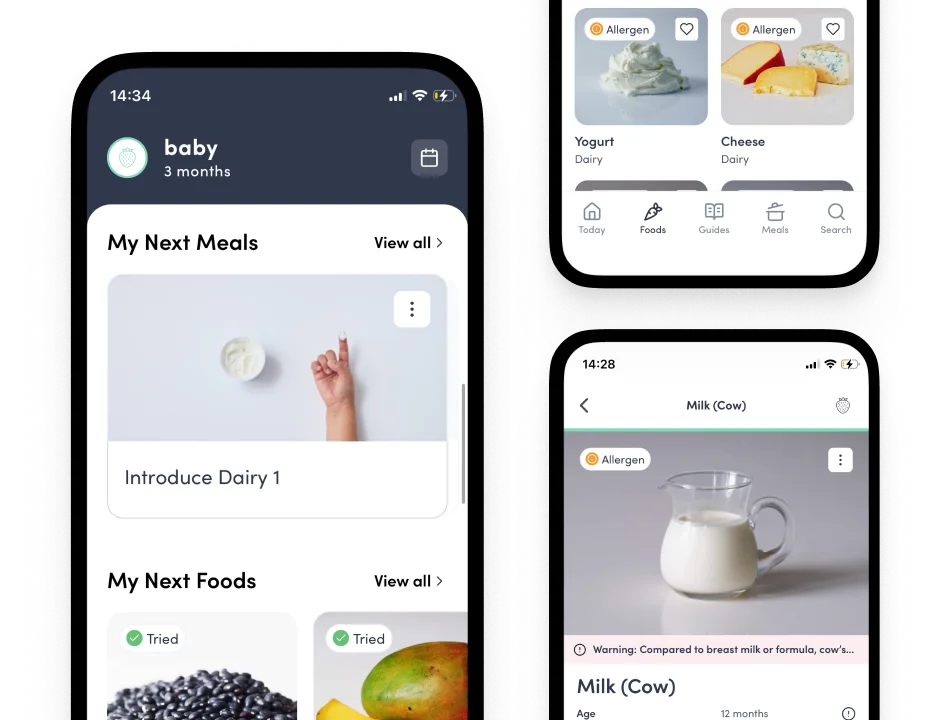
Yes. It is fine to mix cow’s milk into porridge, pancake batter, and other food for baby as long as milk has been safely introduced and food allergy has been ruled out. Download the Solid Starts App for step-by-step allergen introduction guidance, including quantities, schedules, and meal ideas to keep allergens in the diet once they are introduced.
When consumed in excess, yes. Consuming excessive amounts of cow’s milk and dairy products takes up space in the belly, which can result in lower consumption of foods that help promote regular digestion, such as fiber-rich beans, fruits, grains, and vegetables. Check out How to Relieve Infant Constipation for more guidance.
There is no age at which consuming raw milk is safe. Raw milk poses a high risk of foodborne illness, especially campylobacter, E. coli, and salmonella, which are harmful bacterial infections for babies, children, and adults alike, with more risk of severe symptoms in babies. Pasteurization—the process of heating a food to a certain temperature to kill bacteria—is fundamental to reducing the risk of foodborne illness and thus making food safer to eat.[14]
The most nutrient-dense options are fortified soy milk, fortified pea protein milk, and fortified oat milk. All are great choices for babies who are not allergic to cow’s milk. If baby has CMPA, offer oat milk or another safe milk substitute for babies with CMPA.
Yes, but it is extremely rare in children under age 4. While lactose intolerance tends to emerge around 4 years of age and beyond, onset can vary based on diet, health, and ethnic background. Temporary lactose intolerance can also develop after gastrointestinal illness. If you’re concerned that baby is lactose intolerant, connect with your doctor and know that there are many lactose-free dairy foods available.
A baby who consumes a standard formula containing cow’s milk is likely not allergic to cow’s milk. On the other hand, specialized formulas such as those that are extensively hydrolyzed or amino acid-based (elemental) do not expose babies to the allergenic proteins in cow’s milk because they are processed in a way that prevents the dairy proteins from provoking an immune response in most children. If your baby takes one of these specialized formulas, it would not be possible to rule out a milk allergy from exposure to the formula alone.
Some babies with cow’s milk allergy are sensitive to soy. In fact, 10 to 14% of young children with cow’s milk allergy also present with allergic reactions to soy.[15] [4] [5] This is more likely to be seen in babies under 6 months of age.[4] For this reason, many pediatricians recommend that babies with a known milk allergy preemptively avoid both cow’s milk and soy for the first 6 months of life, and they may recommend extensively hydrolyzed or elemental infant formula instead of soy formula during this time.
Yes, often. Cow’s milk allergy (also known as “cow’s milk protein allergy” or CMPA) often disappears with time. The majority of children outgrow it by 6 years of age, while many babies with milder symptoms of cow’s milk allergy are able to successfully reintroduce cow's milk as early as their first birthday with guidance from their doctors.[6] [7] [16] Even among toddlers and older children who are not yet able to drink cow’s milk, many are able to tolerate milk that has been fully baked into a cake or muffin. However, some children do have a more severe form of milk allergy that persists into adulthood.
Yes, milk is a known trigger of FPIES or food protein-induced enterocolitis syndrome. Thankfully, like other forms of milk allergy, FPIES which presents early in life is generally outgrown when the child has reached 3 to 5 years of age.[17]
The safest options are oat milk, pea milk, or nut milk (once the nut has been safely introduced). Lactose-free cow’s milk is not appropriate to use as a milk substitute when cooking food for a baby or toddler with cow’s milk allergy. In milk allergy, the whey and casein proteins trigger the allergic reaction, and lactose-free milk still contains these allergenic proteins.[18] You can also substitute breast milk for cow’s milk when cooking food for your baby.