


Acceda a la base de datos First Foods® en Solid Starts App.
Leer másThyme
Hierba/Especia
Sugerencia de edades
6 meses
Alto contenido de hierro
No
Alérgeno común
No
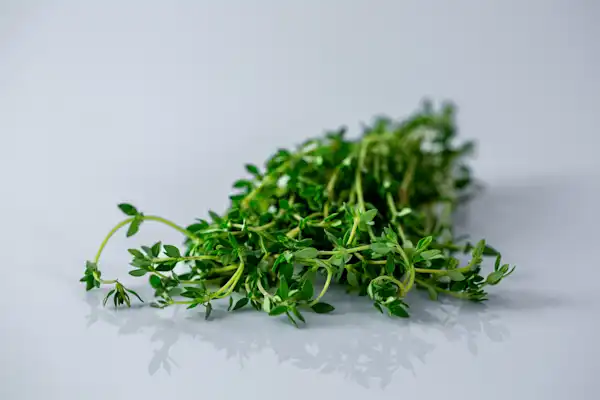
When can babies have thyme?
Thyme may be introduced as soon as baby is ready to start solids, which is generally around 6 months of age.
Thyme is an evergreen shrub from the lands around the Mediterranean Sea. Migration and trade introduced the herb around the globe, and today there are countless varieties to try. Some thyme grows high and bushy, while other varieties cover the ground with tiny pink, purple, or white flowers. Thyme’s flavor tends to be fresh and floral, with a distinctive aroma that is endlessly adaptable for meats, sauces, soups, stews, vegetables, and more.
How do you serve thyme to babies?
Cada bebé se desarrolla a su propio ritmo, y las sugerencias que ofrecemos sobre cómo cortar o preparar determinados alimentos son generalizaciones para una amplia audiencia.
6 months old +:
Finely chop fresh thyme and incorporate into age-appropriate dishes for baby, like a dressing for cooked vegetables or a sauce for meat. As long as the stem of the plant is soft, you can finely chop the stem along with the leaves. If the stem has gotten woody and tough, remove the leaves from the stem before preparing. Alternatively, use dried thyme or powdered thyme to flavor food.
12 months old +:
Use fresh, dried, or powdered thyme as you normally would in dishes, including whole fresh thyme leaves. If you’ve left a large, woody sprig of thyme in a dish to flavor it as it cooks, remember to remove it before serving to reduce the chance of discomfort or choking if it ends up in the toddler’s portion of the meal.
Videos
Is thyme a choking hazard for babies?
No. Thyme presents a low risk when safely prepared for a child’s age and developmental ability, though, in theory, an individual could choke on any food. To reduce the risk, prepare and serve thyme in an age-appropriate way as described in the How to Serve section. As always, make sure you create a safe eating environment and stay within an arm’s reach of baby during meals.
Learn the signs of choking and gagging and more about choking first aid in our free guides, Infant Rescue and Toddler Rescue.
Is thyme a common allergen?
No. Allergies to thyme are not common, but cases have been reported. If a child is sensitive to plants of the Lamiaceae family such as mint, oregano, basil, lavender, rosemary, sage, or marjoram, take care when introducing thyme, as these plants are closely related.
As you would when introducing any new food, start by offering a small quantity for the first few servings. If there is no adverse reaction, gradually increase the quantity over future meals.
Is thyme safe for babies?
Yes, thyme is generally recognized as safe in amounts typically used in cooking. Thyme essential oils should be avoided for baby, as their safety has not been sufficiently studied in children.
Is thyme healthy for babies?
Yes. Thyme offers small amounts of a variety of vitamins, minerals, and fiber. Thyme also contains a number of plant compounds like thymol and carvacrol, along with other phenols, flavonoids, and carotenoids, which may offer anti-inflammatory, antimicrobial, and antioxidant properties.
¿Debo comenzar ofreciendo purés?
Puedes hacerlo si lo deseas, pero desde un punto de vista del desarrollo, no es necesario comenzar con alimentos sin textura. A los bebés se les pueden servir versiones modificadas de lo que tú comes. Utiliza nuestra base de datos First Foods para descubrir cómo servir cualquier alimento de forma segura.
¿Cuántas comidas al día debe hacer un/a bebé?
Puede variar. En términos generales, la idea es traer al/a bebé a la mesa al menos una vez al día entre los 6 y 7 meses de edad, dos veces al día entre los 8 y 9 meses de edad y 3 veces al día a partir de los 10 meses de edad. Consulta nuestros ejemplos de horarios de alimentación para obtener más detalles.
Nuestro equipo
Escrito por

Dr. Sakina Bajowala
Pediatra general y alergóloga/inmunóloga

Kim Grenawitzke
Terapeuta ocupacional pediátrica(o), especialista en alimentación y deglución, y consultora de lactancia certificada por la junta internacional

Venus Kalami
Nutricionista y dietista pediátrico(a) registrada
Consejos de expertos directo a tu bandeja de entrada
¡Suscríbete y recibe correos semanales con recetas, consejos y más!




Copyright © 2026 • Solid Starts Inc