
Daikon
Vegetal
- Edad sugerida
- 6 months
- Rico en hierro
- No
- Alérgeno común
- No
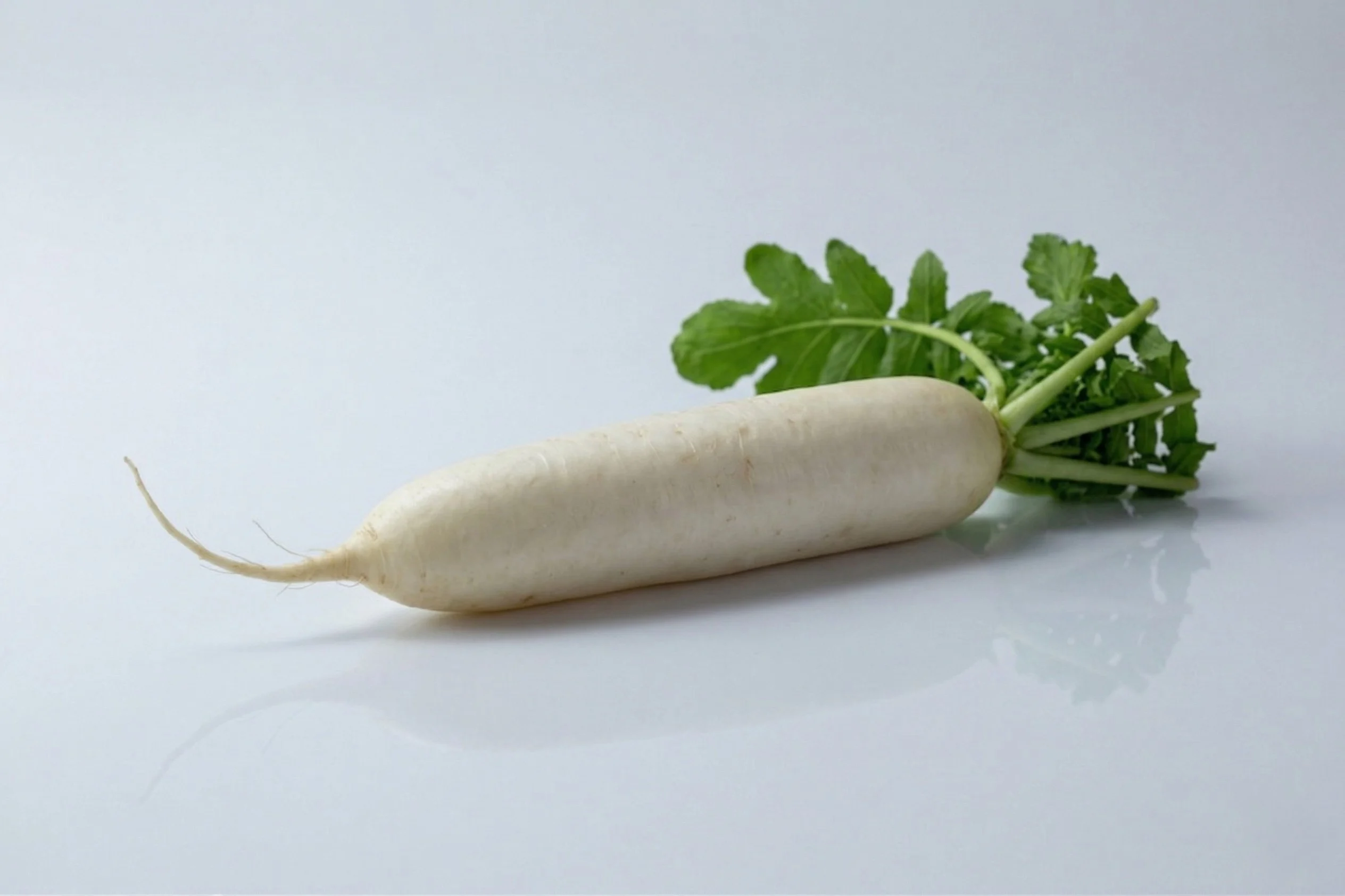
When can babies have daikon?
Daikon may be introduced as soon as baby is ready to start solids, which is generally around 6 months of age
Daikon, whose name means "big root" in Japanese, is a large, mild-flavored white radish in the Brassica family. Native to Asia, daikon has been cultivated for thousands of years and is one of the most widely eaten vegetables across East and Southeast Asia. It is a staple of Japanese, Korean, Chinese, Vietnamese, and Filipino cuisines, where it appears in a wide range of preparations: fermented as kkakdugi, a type of kimchi, simmered in soups and stews, braised in soy sauce, pickled, grated raw as a condiment, steamed in dumplings, shredded into salads, and more.
How do you serve daikon to babies?
Cada bebé se desarrolla a su propio ritmo, y las sugerencias que ofrecemos sobre cómo cortar o preparar determinados alimentos son generalizaciones para una amplia audiencia.
6 months old +:
Steam, simmer, or braise daikon until very soft and mashable. Serve the cooked daikon in large flat slices or wedges about the length and width of two adult fingers pressed together for baby to hold and munch on. Alternatively, mash the cooked daikon and serve in a bowl for baby to scoop with their hands. You can also serve large pieces of cooked, soft daikon in broths, soups, and stews.
9 months old +:
As baby develops a pincer grasp, where the thumb and first finger meet, you can start to offer soft, well-cooked daikon in smaller thin slices or bite-sized pieces. At this stage, you can also serve finely grated raw daikon for baby to experience its stronger, more peppery flavor, either served on its own or mixed into a sauce or other scoopable food. Continue to avoid serving chunks or sticks of raw or undercooked daikon due to increased choking risk.
12 months old +:
Offer thin slices of raw daikon on their own or grated raw daikon in dishes like oroshi. You can also continue to offer bite-sized pieces of cooked daikon and try serving alongside a fork to encourage utensil practice. If the child is not interested in using a utensil, don’t worry: using utensils can be exhausting for new eaters, and many children toggle back and forth between feeding themselves with their fingers and utensils. Consistent and accurate utensil use will come in due time, typically sometime after the second birthday.
Don't throw out the leaves. Daikon greens are edible and nutritious. If the greens are fresh and tender, they can be shared with baby starting at 6 months when finely chopped and cooked.
Use daikon to make a flavorful broth. Simmering daikon in water produces a mild broth that makes an excellent base for soups, rice cooking liquid, or thinning purees for baby.
Store daikon to maintain freshness. Remove the leaves before storing (they draw moisture from the root) and wrap the daikon root in a damp paper towel, then store in a bag or container in the refrigerator. Whole daikon keeps for 1–2 weeks; cut daikon should be used within 3–5 days.
Season cooked daikon generously for baby. Daikon's mild flavor makes it an excellent vehicle for strong flavors like ginger, miso, or sesame oil. There is no need to serve bland, unseasoned daikon. In fact, introducing bold flavors early supports a varied palate as the child grows.
Videos
Is daikon a choking hazard for babies?
Yes. Raw daikon is very firm and crunchy, qualities that pose an increased choking risk for babies and young children. To reduce the risk, prepare and serve daikon in an age-appropriate way as described in How to Serve. As always, create a safe eating environment and stay within reach of baby during meals.
Learn the signs of choking and more about choking first aid in our free guides, Infant Rescue and Toddler Rescue.
Is daikon a common allergen?
No. Allergies to daikon and other radishes are uncommon, but have been reported.[1] [2] [3] Radishes are part of the cruciferous vegetable family and individuals who are allergic or sensitive to other members of this plant family, such as mustard greens and broccoli, could theoretically be sensitive to radishes as well.[4] [5]
Individuals with Oral Allergy Syndrome (also known as pollen food allergy syndrome), and in particular those with sensitivities to mugwort pollen, may also be sensitive to cruciferous vegetables like daikon.[6] [7] Oral Allergy Syndrome typically results in short-lived itching, tingling, or burning in the mouth and is unlikely to result in a dangerous reaction. Cooking daikon can help minimize the reaction.[6] [8]
Is daikon healthy for babies?
Yes. Daikon offers fiber, fluid, calcium, and potassium, in addition to vitamins B6 and C. Plus, it contains a variety of antioxidants. In tandem, these nutrients work to support baby’s gut microbiome, hydration, bone health, electrolyte balance, metabolic processes, iron absorption, immunity, and more. Plus, it’s rich in antioxidants to help support bodily repair processes. Fermented forms of daikon also provide probiotics to further support digestive health.
Can babies eat pickled daikon?
Yes, pickled daikon like Japanese takuan (bright yellow pickled daikon) and Vietnamese đồ chua (pickled daikon and carrot) can be shared with babies in an age-appropriate way. Pieces of pickled daikon that are still firm and crunchy should be finely chopped and mixed into scoopable foods for babies to reduce the choking risk. Closer to 12 months of age, you can offer shredded pickled daikon or long thin slices for the child to practice taking bites from. Some pickled daikon is quite high in salt and/or sugar, so consider offering only a taste of these here and there.
Can babies eat daikon kimchi?
Yes, when prepared in an age-appropriate way. Cubes of firm daikon carry a greatly increased risk of choking due to their shape and texture, and the texture of fermented daikon can vary widely. If the daikon cubes in kkakdugi are still firm, finely chop them before sharing with baby. Wait to serve unmodified kkakdugi in crunchy cubes until a child has molars and substantial practice with challenging foods, often closer to age 2. Note that kimchi, including kkakdugi, may contain common allergens, such as fish and shellfish. Make sure any common allergens in the food have been safely introduced before sharing kimchi.
Material de referencia
Start solids with confidence
- Guided Introduction to 100+ Foods
- Smart Tools to Simplify Mealtime
- Food Allergen 101
- 300+ Meal Ideas
- First Foods® Database
Start solids with confidence
- Guided Introduction to 100+ Foods
- Smart Tools to Simplify Mealtime
- Food Allergen 101
- 300+ Meal Ideas
- First Foods® Database
Consejos de expertos directo en tu correo
Suscríbete para recibir consejos semanales, recetas y más.