TEST - Baby Feeding Routines 3 to 18 Months of Age
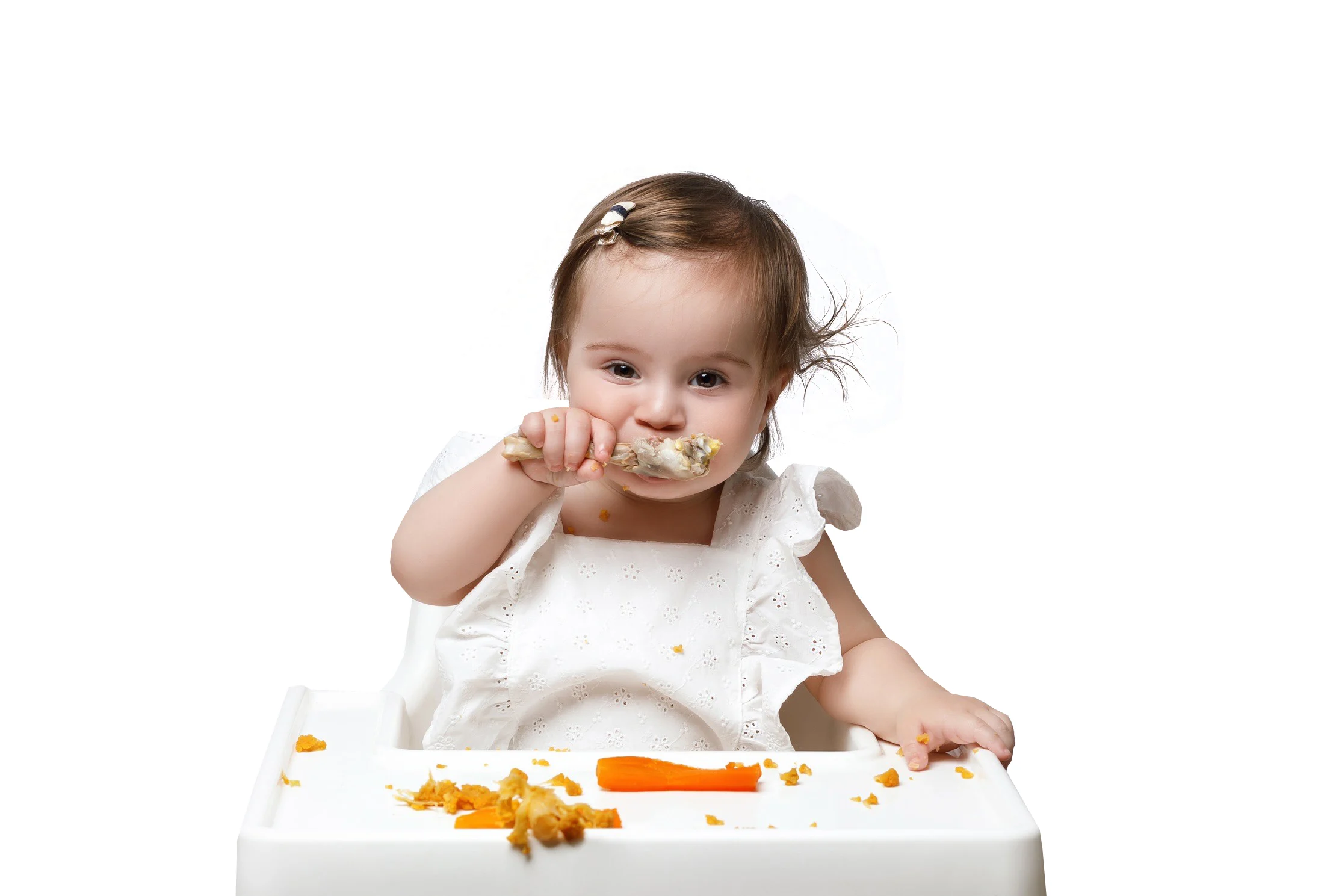
We are asked all the time: how much and how often should baby eat?
Below we explain how solid food works with responsive feeding, also known as feeding on demand. Select your baby’s developmental window for guidance, including a sample feeding schedule that you can adapt to meet the needs of baby and you.
Just starting solids? Be sure to download the Solid Starts App.
Frequently Asked Questions
Feeding Routines By Age
3 to 5 Months of Age
What to expect in this window
At this age, most babies are not ready to start solids, which generally happens around 6 months of age.
Baby likely wants to nurse or bottle-feed every 2 to 3 hours. Most babies feed between 8 and 12 times per day and consume around 22-32 ounces (~660-960 mL) of formula or breastmilk daily, give or take. It is normal for intake to slightly vary from one day to the next.
Baby likely stays awake for 1.5 to 2 hours at a time and naps 3 or 4 times per day.
Baby may nurse or bottle-feed at least once overnight.
It is not too early to start practicing oral hygiene. Before bedtime, gently brush baby’s gums or teeth with an infant toothbrush or soft cloth (even if teeth have not popped) to get baby comfortable with the feeling and routine.
Back to Feeding Routines By Age
6 to 7 Months of Age
What to expect in this window
Babies are ready to start solids during this window. As you begin, responsive feeding looks like this: nurse or bottle-feed when baby is hungry, and when it works for you and baby, offer solid food.
The time of day for solid food is flexible; pick anytime of day between 30 to 45 minutes after baby finishes consuming breast milk or formula. What’s important is that baby is happy, playful, and rested when they come to the table for solid food.
Baby likely wants to nurse or bottle-feed between 8 and 12 times per day and consume around 24-32 ounces (~720-960 mL) of formula or breastmilk daily, give or take. It is normal for intake to slightly vary from one day to the next..
Baby likely stays awake for 2 to 2.5 hours at a time and naps 3 times per day.
Some babies continue to breastfeed or bottle-feed overnight, while others do not. Both scenarios are normal.
Baby is ready to start practicing oral hygiene. Before bedtime, gently brush baby’s gums or teeth with an infant toothbrush or soft cloth (even if teeth have not popped) to get baby comfortable with the feeling and routine.
Know that every baby and family have a different routine, and the goal is to come up with a schedule that works for your specific baby and situation. Sign up here to receive a free downloadable template to work out your own schedule.
Tips and Reminders
Back to Feeding Routines By Age
8 to 9 Months of Age
bla bla
10 to 11 Months of Age
bla bla bla
12 to 18 Months of Age
bla bla bla
Start solids with confidence
- Guided Introduction to 100+ Foods
- Smart Tools to Simplify Mealtime
- Food Allergen 101
- 300+ Meal Ideas
- First Foods® Database

Start solids with confidence
- Guided Introduction to 100+ Foods
- Smart Tools to Simplify Mealtime
- Food Allergen 101
- 300+ Meal Ideas
- First Foods® Database