Cómo minimizar el desastre con BLW
Dejar que los/las bebés se alimenten solos(as) ofrece muchos beneficios a corto y a largo plazo. ¡Pero mantenerse limpio no es uno de ellos!
Puntos clave
Some mess is normal—and worth it
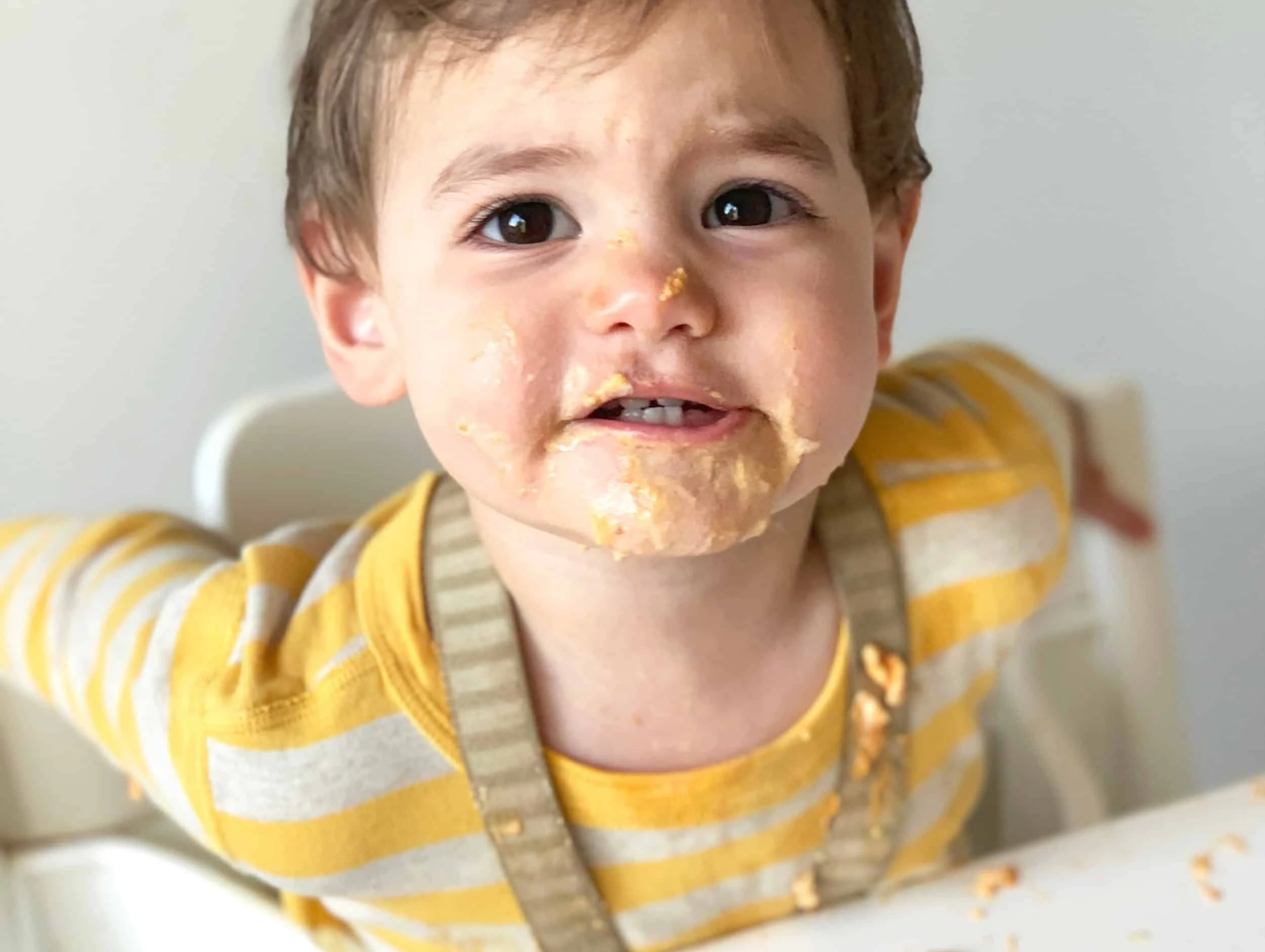
Food exploration is how babies build the skills they need to become confident, capable eaters. The squishing, smearing, and throwing is all part of the process, not a sign that things are going wrong. That said, a little preparation can help reduce the mess and make the clean-up manageable.
The right gear makes a big difference
The right product (like a waterproof splat mat, a bib, a pitcher of warm water at the ready, and a reliable stain remover) and a little bit of set-up before the meal can cut down on clean-up time.
It gets cleaner with practice
The mess is temporary. The more your baby practices self-feeding, the faster they build the hand skills and utensil control that land more food in their mouth and less on the floor, so resist the urge to take over with a spoon.
Dejar que los/las bebés se alimenten solos(as) tiene una serie de beneficios sorprendentes a corto y a largo plazo. ¡Pero mantenerse limpio no es uno de ellos! El BLW puede ser DESASTROSO. Dicho esto, hay algunas cosas que puedes hacer para minimizar el desorden en los primeros días:
Cubre los pisos con tapetes impermeables. ¡Usa más de uno! Si no tienes, puedes usar sábanas viejas o toallas.
Viste al/la bebé entero con una pijama y cúbrelo(a) con un babero. Al final de la comida ¡Simplemente sácale la ropa! También existen baberos de manga larga (cómo los que usas en la escuela para pintar) que ayudan con este propósito.
Siempre ten disponibles muchas toallitas para bebés. ¡Nada funciona mejor!
Usa una jarra llena de agua tibia para limpiar al/la bebé luego de la comida.
No confíes en los platos o tazones de succión para evitar el desorden.
(Pero usa estos fabulosos productos para ayudar a su bebé a alimentarse por sí mismo(a)).
Usa un vaso con popote/pajilla y un vaso abierto en cada comida.
Al comienzo de la comida, ofrece primero el vaso abierto con poco líquido. Luego, a medida que avanza la comida, cambia a un vaso con popote/pajilla. (Al final de la comida es cuando es más probable que los/las bebés tiren las cosas).
Cuando tengan la oportunidad y si la comida va a ser particularmente desastrosa (¡hola sardinas con yogur!), coman afuera.
Cuando no tengas mucho tiempo o ganas de limpiar, o estén fuera de casa, ofrece alimentos resistentes en forma de lanza para que el/la bebé muerda sin hacer tanto desorden.
Consigue un perro. O dos.
(Hablando en serio, ten cuidado con lo que come tu perro y si el/la bebé se distrae demasiado alimentando al perro, pon a tu perro en otra habitación durante la comida para que no se convierta en un juego. xo)
Preguntas frecuentes
No, although you certainly can if you want to. Even for very messy meals, it’s fine to just use a wet washcloth or a pitcher of warm water and clean the spots where baby needs it. Consider baby’s bathtime schedule in the context of your specific child: some babies have sensitive skin, which might get more irritated from frequent, full baths, for example. For meals that tend to stain baby’s skin (like beets or blueberries) or foods that get into baby’s hair, on the other hand, a soak in a full bath can be helpful.
It depends on what you’re trying to get the stain off from, but generally speaking, the sooner you treat a stain, the better your odds. Rinse fresh stains in cool water before they set, and avoid hot water, which can lock them in.
For clothes and fabric bibs, pre-treat with a stain remover or a little dish soap, let it sit, then wash as usual; stubborn marks from foods like tomato, berries, or turmeric often fade with a few hours of sunlight after washing. One of our favorite pre-treatment tips: mix together equal parts hydrogen peroxide, baking soda, and Dawn dish soap. Mix together, then gently rub the mixture onto the stain with a laundry brush or old toothbrush, and let it set for at least 30 minutes before washing.
For high chairs, wipe down the tray and seams after each meal, and every so often give removable parts a soak in warm, soapy water to get into the grooves or run them through the dishwasher if they are dishwasher-safe.
Yes! There is light at the end of this (pretty gross) tunnel. As your baby gets more skilled with their hands, a pincer grasp, and eventually utensils and cups, more food makes it into their mouth and less ends up on the floor or behind their ears. Typically, this happens closer to 18-24 months of age, but this also really depends on how much practice the child gets, not just time passing. Keep this in mind when you’re tempted to keep spoon-feeding baby: the more chances they have to practice feeding themselves, the sooner they’ll get the skills to do it more accurately and cleanly.
Start solids with confidence
- Guided Introduction to 100+ Foods
- Smart Tools to Simplify Mealtime
- Food Allergen 101
- 300+ Meal Ideas
- First Foods® Database

Start solids with confidence
- Guided Introduction to 100+ Foods
- Smart Tools to Simplify Mealtime
- Food Allergen 101
- 300+ Meal Ideas
- First Foods® Database