
Wasabi
Hierba/Especia
- Edad sugerida
- 6 meses
- Rico en hierro
- No
- Alérgeno común
- No
When can babies have wasabi?
Wasabi may be introduced in small amounts, as tolerated, as soon as baby is ready to start solids, which is generally around 6 months of age. Whenever you decide to introduce wasabi, consider starting with a tiny amount mixed into other foods. While spicy foods are safe for babies, large amounts can irritate the mouth or cause temporary digestive upset.
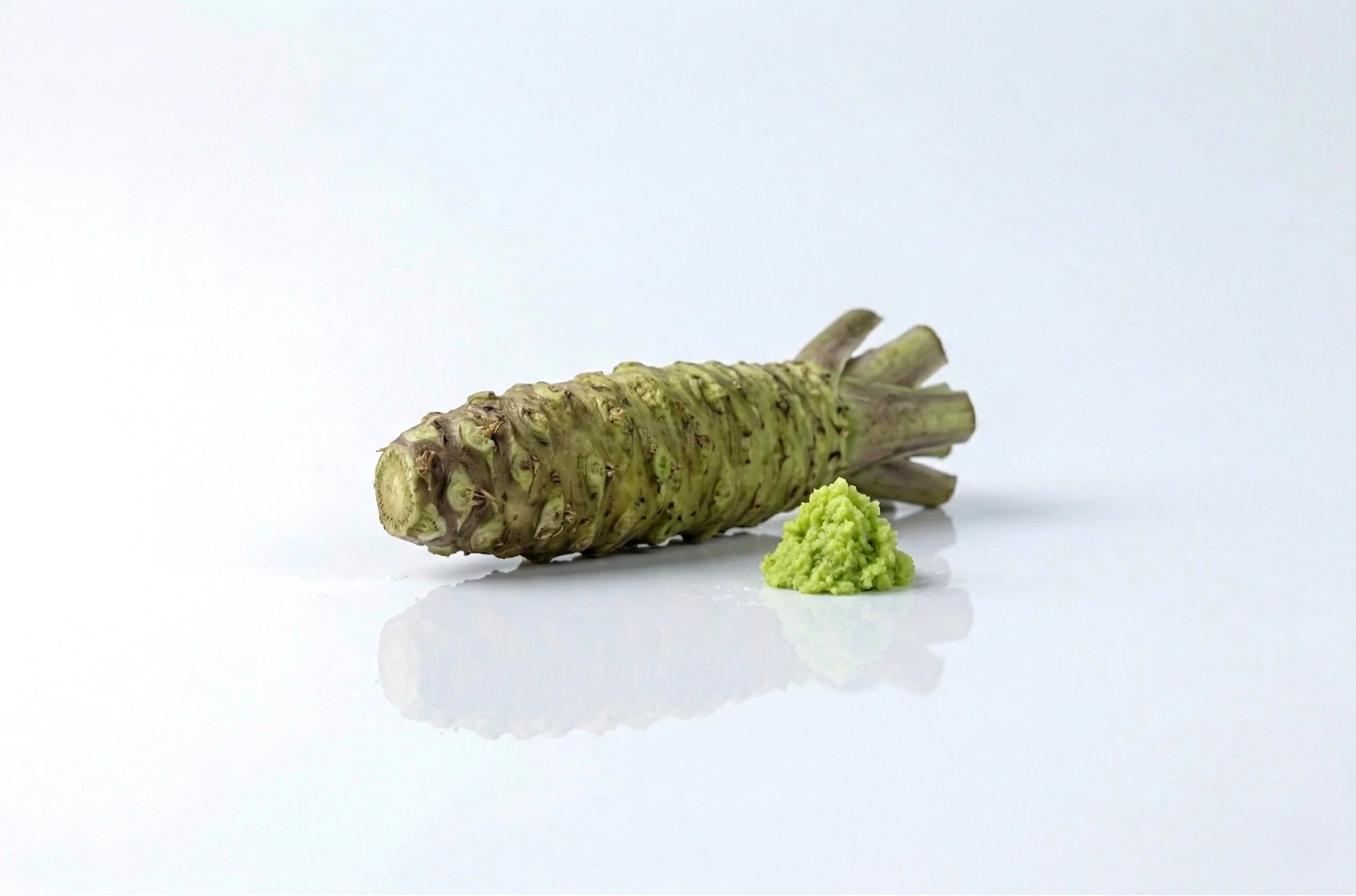
Wasabi comes from a plant native to Japan, where it has been cultivated along cold mountain stream beds for over a thousand years. Its rhizome—the thick underground stem—is grated into a fine paste and served alongside sushi, sashimi, soba, and other dishes, where it is prized for its sharp, pungent heat. However, real wasabi is expensive and highly perishable, so the vast majority of wasabi served outside Japan is imitation wasabi: a mixture of horseradish, mustard, and green food coloring.
How do you serve wasabi to babies?
Cada bebé se desarrolla a su propio ritmo, y las sugerencias que ofrecemos sobre cómo cortar o preparar determinados alimentos son generalizaciones para una amplia audiencia.
6 months old +:
Let baby taste some of your food that contains a tiny amount of wasabi, and consider waiting until baby is a little older to regularly offer dishes with much heat. When you do decide to let baby try food seasoned with wasabi, start with a tiny amount mixed into a mild food, such as mixed into mashed avocado, soft tofu, or rice. Balance wasabi's sharp heat by pairing it with a creamy or cooling food like yogurt. Make sure to taste the dish yourself first to gauge the level of heat, and watch baby's hands—many babies rub their faces while eating, which could cause significant eye irritation if the wasabi gets into their eyes.
24 months old +:
Offer age-appropriate family meals seasoned with a small amount of wasabi, like soba noodles with a mild wasabi dressing or rice dishes with a tiny bit of wasabi paste, continuing to follow the child's lead on their tolerance and preferences. If the child is still building familiarity with the food, offer only a tiny amount and make sure to offer a mild, creamy food alongside. If the child shows curiosity or enthusiasm for the flavor, you can gradually increase the amount over time.
Is wasabi a choking hazard for babies?
No. Wasabi when finely grated or as a paste presents a low choking risk, although wasabi flavored peas, chips, crackers, and other products certainly pose an increased risk. To reduce the risk, prepare and serve wasabi in an age-appropriate way as described in How to Serve. Note that spicy foods like wasabi can cause coughing. As always, create a safe eating environment and stay within reach of baby during meals.
Learn the signs of choking and more about choking first aid in our free guides, Infant Rescue and Toddler Rescue.
Is wasabi a common allergen?
No, wasabi is not a common food allergen. Wasabi is part of the cruciferous vegetable family and individuals who are allergic or sensitive to other members of the cruciferous family such as horseradish and cauliflower could theoretically be sensitive to wasabi as well.[1] [2] [3] When handling wasabi, make sure to wash the hands and any skin that comes into contact with wasabi, as it can be irritating to the skin and cause allergic or contact dermatitis.[4]
Processed wasabi products may be preserved with sulfites.[5] Certain individuals, particularly those with asthma, can have allergy-like reactions to added sulfites. If sulfites are a concern, avoid ingredients such as sulfur dioxide, potassium bisulfate, potassium metabisulfite, sodium bisulfite, sodium metabisulfite, and sodium sulfite, to name a few.[5]
Note that most wasabi products are imitation wasabi, made primarily from horseradish and mustard. Mustard is a common allergen in Canada and the European Union, and mustard can cause significant allergic reactions.[6]
Note that spicy foods like wasabi may cause some coughing or a harmless rash around the mouth while baby eats, or may cause or worsen a diaper rash. Try applying a thin layer of barrier cream or ointment—such as pure petroleum jelly or a plant-based oil/wax balm—to baby’s face and bottom to help prevent contact rashes.
Is wasabi healthy for babies?
What is the difference between real wasabi and imitation wasabi?
Wasabi is derived from the freshly grated rhizome of Wasabia japonica, a plant native to Japan. It produces a clean, bright, sinus-clearing heat that dissipates quickly and is highly prized in Japanese cuisine. However, real wasabi is difficult to cultivate, highly perishable, and expensive, so most wasabi on the market is actually imitation wasabi.
Imitation wasabi is typically made from horseradish (a closely related plant), mustard, and green food coloring.
Is wasabi too spicy for babies?
Wasabi is certainly intense, but it is not inherently too spicy for babies. Babies can have big flavors as soon as they are ready for solid food, including spicy and pungent ones. The key is to start with a truly tiny amount mixed well into a mild, familiar food, and follow baby’s lead, since every child’s tolerance to spice will be different.
Is wasabi powder safe for babies?
Yes, in small amounts. Wasabi powder is typically made from dried horseradish, mustard, and starch — check the label to confirm ingredients, and ensure any allergens in the product have been safely introduced beforehand. Wasabi powder can be reconstituted with water to form a paste, which can then be used in the same small amounts as fresh or prepared wasabi.
Material de referencia
Start solids with confidence
- Guided Introduction to 100+ Foods
- Smart Tools to Simplify Mealtime
- Food Allergen 101
- 300+ Meal Ideas
- First Foods® Database

Start solids with confidence
- Guided Introduction to 100+ Foods
- Smart Tools to Simplify Mealtime
- Food Allergen 101
- 300+ Meal Ideas
- First Foods® Database
Consejos de expertos directo en tu correo
Suscríbete para recibir consejos semanales, recetas y más.