
Straw Mushroom
Hongo
- Edad sugerida
- 6 meses
- Rico en hierro
- Sí
- Alérgeno común
- No
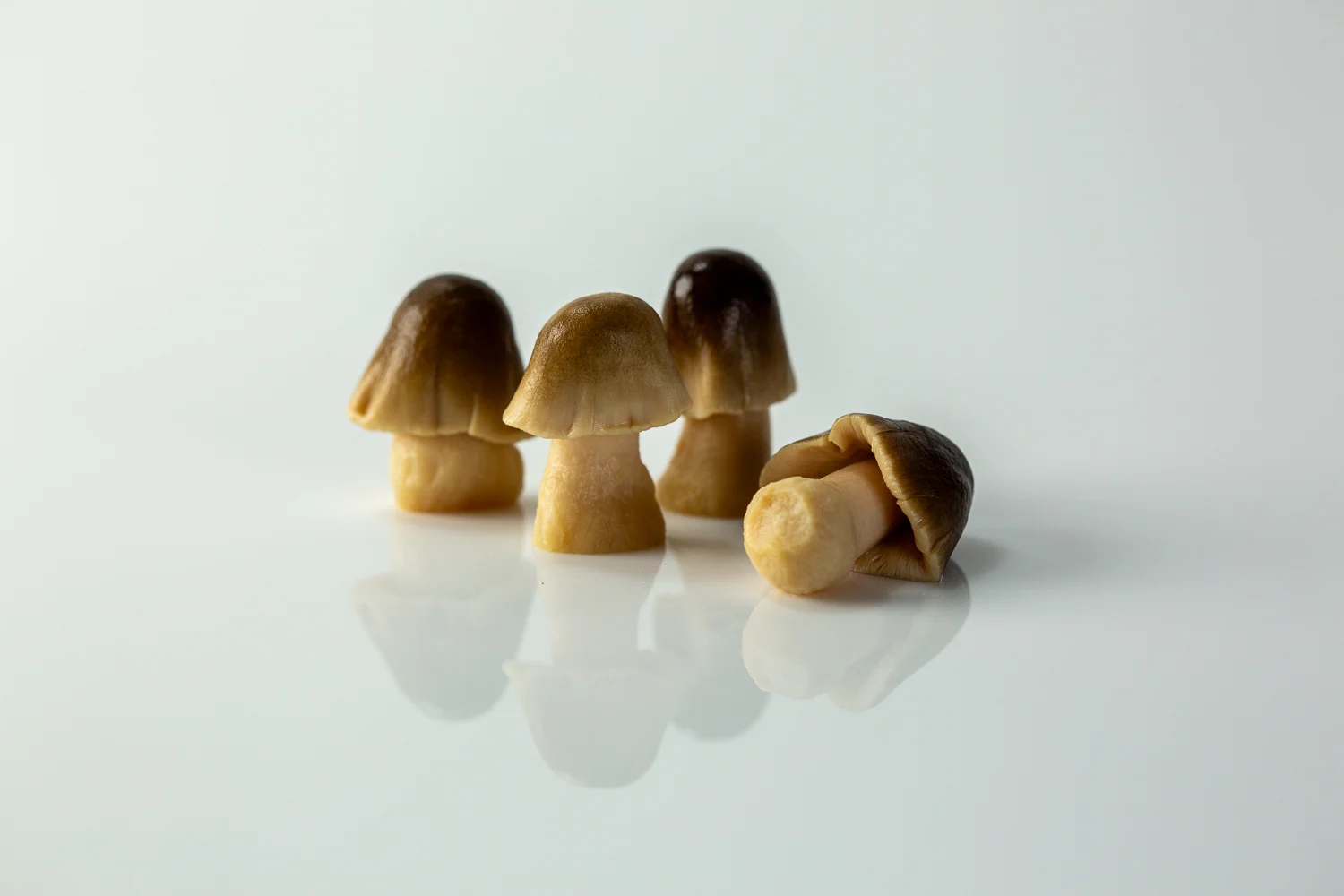
When can babies eat straw mushrooms?
Straw mushrooms, when cooked, may be introduced as soon as baby is ready to start solids, which is generally around 6 months of age. Never feed foraged mushrooms to baby unless you are an expert mycologist, as there are plenty of poisonous look-a-like species growing in the wild.
How do you prepare straw mushrooms for babies with baby-led weaning?
Cada bebé se desarrolla a su propio ritmo, y las sugerencias que ofrecemos sobre cómo cortar o preparar determinados alimentos son generalizaciones para una amplia audiencia.
6 months old+:
Serve canned or cooked straw mushrooms that have been finely chopped in foods that are easy for baby to pick up or scoop, such as congee, egg strips, mashed vegetables, or noodles. To reduce the choking risk, make sure that all pieces of the mushroom are cut so they are no longer round.
9 months old+:
Offer canned or cooked straw mushrooms that have been chopped, either stirred into other foods or on their own, for the child to practice picking up with their developing pincer grasp (where the index finger and thumb meet). Make sure that all parts of the mushroom are cut so they are no longer round to reduce choking risk.
18 months old+:
Offer chopped, cooked straw mushrooms as desired, on their own and as part of a meal. At this age, if a child demonstrates mature chewing skills, consider serving cooked straw mushrooms cut in half lengthwise. As you and the child gain confidence, you can serve whole cooked straw mushrooms in a safe, seated environment.
Videos
Are straw mushrooms a common choking hazard for babies?
Yes. Straw mushrooms’ small size, slippery texture, and round shape pose a high choking risk. To reduce the risk, slice or chop the mushroom so it is no longer round and cook thoroughly. As always, be sure to create a safe eating environment and stay within arm’s reach of baby during mealtime. For more information, visit our section on gagging and choking and familiarize yourself with common choking hazards.
Are straw mushrooms a common allergen?
No. Mushroom allergy is rare, although not unheard of.[1] [2] [3] There have been reports of anaphylaxis, as well as rashes amongst those handling mushrooms.[4] [5] Mushrooms also contain chitin, a common carbohydrate found in crustaceans and insects that may contribute to an allergic response in certain individuals.[6]
Individuals with Oral Allergy Syndrome (also called pollen food allergy syndrome), particularly those sensitive to mold, may also be sensitive to mushrooms.[2] [7] Oral Allergy Syndrome typically results in short-lived itching in the mouth and is unlikely to result in a dangerous reaction. Cooking mushrooms can help minimize and even eliminate the reaction.[8] [9]
Dried straw mushrooms may be preserved with sulfites. While sulfites are not a common allergen, certain individuals, particularly those with asthma, can have allergy-like reactions to added sulfites.[10] If sulfites are a concern, avoid ingredients such as sulfur dioxide, potassium bisulfate, potassium metabisulfite, sodium bisulfite, sodium metabisulfite, and sodium sulfite to name a few.[10]
As you would when introducing any new food, start by offering a small quantity for the first few servings. If there is no adverse reaction, gradually increase the amount over future meals.
Are straw mushrooms healthy for babies?
Yes. Straw mushrooms are rich in iron, zinc, folate, and fiber, which together bolster baby’s blood, brain, immune, and gut health. Plus, they contain the compound ergothioneine, an antioxidant that helps support the body’s resilience.[11]
Many canned and pickled varieties of straw mushroom have sodium in excess of baby’s needs, so try to stick to sharing fresh and dried, rehydrated straw mushrooms when sharing with baby.
Make sure to buy straw mushrooms from a reputable source and do not give baby foraged mushrooms, as there are many poisonous species growing in the wild.[12] [13] In particular, straw mushrooms can be easily mistaken for a toxic look-a-like, the death cap mushroom.[14] [15]
Can babies eat raw straw mushrooms?
Can straw mushrooms help babies poop?
Yes. Straw mushrooms are rich in fiber and fluid to support healthy gut bacteria, bulk up poop, and hydrate the intestines. Mushrooms also offer prebiotics, special carbohydrates that help friendly gut bacteria flourish.[18] [19]Introduce high-fiber foods like mushrooms gradually and regularly in baby’s diet as tolerated; a little gassiness or a few blowouts is just a sign that baby’s digestive system is adjusting, so no need to remove the food from the diet.[20] Remember that pooping patterns can vary significantly from baby to baby. If you have concerns about baby’s pooping and digestive function, talk to your pediatric healthcare provider.
Material de referencia
Start solids with confidence
- Guided Introduction to 100+ Foods
- Smart Tools to Simplify Mealtime
- Food Allergen 101
- 300+ Meal Ideas
- First Foods® Database
Start solids with confidence
- Guided Introduction to 100+ Foods
- Smart Tools to Simplify Mealtime
- Food Allergen 101
- 300+ Meal Ideas
- First Foods® Database
Consejos de expertos directo en tu correo
Suscríbete para recibir consejos semanales, recetas y más.