
Star Apple (Caimito)
Fruta
- Edad sugerida
- 6 meses
- Rico en hierro
- No
- Alérgeno común
- No
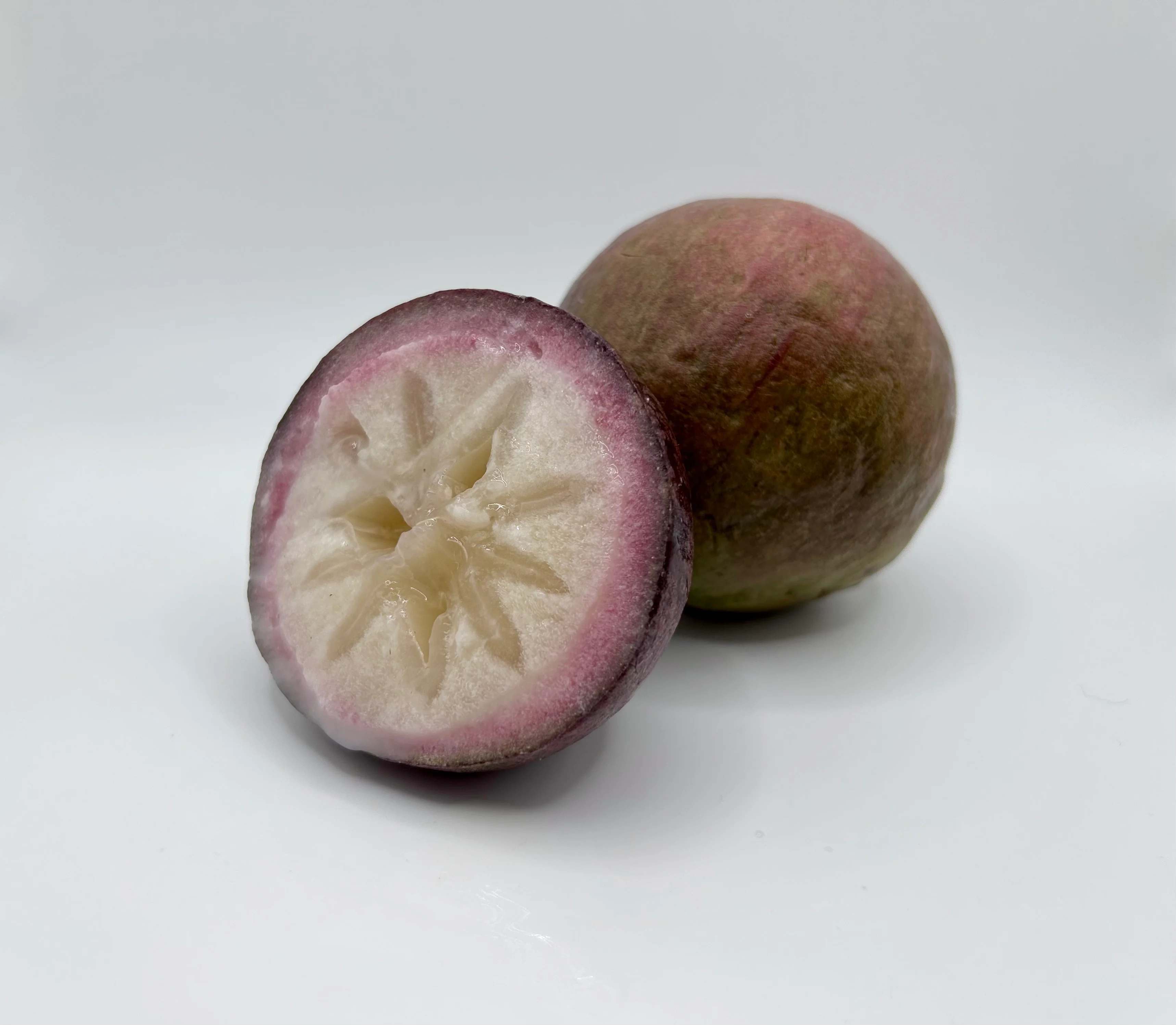
When can babies have star apple?
Star apple, with skin and seeds removed, can be introduced as soon as baby is ready to start solids, which is generally around 6 months of age.
Star apple is also known as caimito, cainito, milk fruit, and Vú Sữa, among other names, and first grew in Central America and the West Indies. Today, this popular fruit is grown in tropical regions throughout the world. Star apples grow in colors ranging from purple to green to yellow, with a sweet, milky flesh inside. These fruits are often eaten fresh on their own, blended into smoothies, or mashed into desserts like sherbet.
How do you serve star apple to babies?
Cada bebé se desarrolla a su propio ritmo, y las sugerencias que ofrecemos sobre cómo cortar o preparar determinados alimentos son generalizaciones para una amplia audiencia.
6 months old +:
Offer a large piece of soft, ripe star apple, with skin and all seeds removed, for baby to munch on. Ripe star apple is soft enough that the piece will likely mash apart in baby’s hands and get a bit messy as they eat, and that’s okay. Alternatively, mash the de-seeded fruit and offer on its own or mixed into another soft food like yogurt for baby to scoop.
9 months old +:
Serve smaller, bite-sized pieces of ripe, soft star apple, skin and seeds removed, for baby to pick up with their developing pincer grasp. If the child struggles with picking up the slippery fruit, try rolling the pieces of star apple in finely ground nut or shredded coconut to help with grip, or make the pieces a little bigger. You can also keep offering a large half with skin and seeds removed, or mash the fruit and mix into other scoopable foods.
18 months old +:
Around this age, toddlers may be ready to try using a spoon to scoop the ripe, soft fruit from a star apple half, still in the skin with all seeds removed. The child will likely be more successful if you use a knife or spoon to loosen the fruit from the skin before offering the half. Remind the child that we only eat the fruit and not the skin, and make sure to carefully supervise the meal.
Is star apple a choking hazard for babies?
No. Ripe, soft star apple, with all the seeds removed, presents a low risk when safely prepared for a child’s age and developmental ability, though, in theory, an individual could choke on any food. To reduce the risk, carefully remove all the seeds before serving and prepare and serve star apple in an age-appropriate way as described in the How to Serve section. As always, make sure to create a safe eating environment and stay within reach of baby during meals.
Learn the signs of choking and more about choking first aid in our free guides, Infant Rescue and Toddler Rescue.
Is star apple a common allergen?
No. Allergies to star apple are rare, though individuals who are allergic to latex may theoretically be at increased risk of sensitivity to fruits in the Sapotaceae family, such as star apple, and irritation may also occur from handling the skin of the fruit.[1] [2] Individuals with a known sensitivity to latex may wish to minimize prolonged contact with the skin while preparing star apple for baby. Wearing gloves while peeling the fruit and washing hands immediately after handling star apple can help minimize the reaction.
Is star apple healthy for babies?
Yes. Star apple is rich in carbohydrates and offers vitamin C, B vitamins, a bit of iron, and plenty of antioxidants like catechin and gallic acids.[2] [3]Together, these nutrients work to support immune and skin health, metabolic processes, and bodily resilience to stress.
Make sure that all of the seeds and skin have been removed before serving. The skin is inedible, and the seeds contain a compound that can cause illness.[2]
¿Es necesario tener una trona/silla alta?
Si bien una silla alta puede ayudar a crear un entorno seguro para comer, existen formas alternativas para que el/la bebé coma de forma segura, así como sostenerlo/a en tu regazo o sentarse juntos en el suelo. Para obtener más información, consulta nuestra Guía detallada de sillas altas para bebés.
¿Qué utensilios necesito para empezar?
¡Ninguno! Sirve los alimentos sólidos directamente en la bandeja, plato o tazón del/a bebé y luego deja que el/la bebé explore con las manos. Si lo deseas, tenga una cuchara o un tenedor disponibles para ayudarlo/a a familiarizarse con los utensilios, pero no se espera que adquiera las habilidades para usarlos hasta que sea un poco mayor.
Material de referencia
Start solids with confidence
- Guided Introduction to 100+ Foods
- Smart Tools to Simplify Mealtime
- Food Allergen 101
- 300+ Meal Ideas
- First Foods® Database
Start solids with confidence
- Guided Introduction to 100+ Foods
- Smart Tools to Simplify Mealtime
- Food Allergen 101
- 300+ Meal Ideas
- First Foods® Database
Consejos de expertos directo en tu correo
Suscríbete para recibir consejos semanales, recetas y más.