
Soybean
Legumbre
- Edad sugerida
- 6 meses
- Rico en hierro
- Sí
- Alérgeno común
- Sí
When can babies have soy?
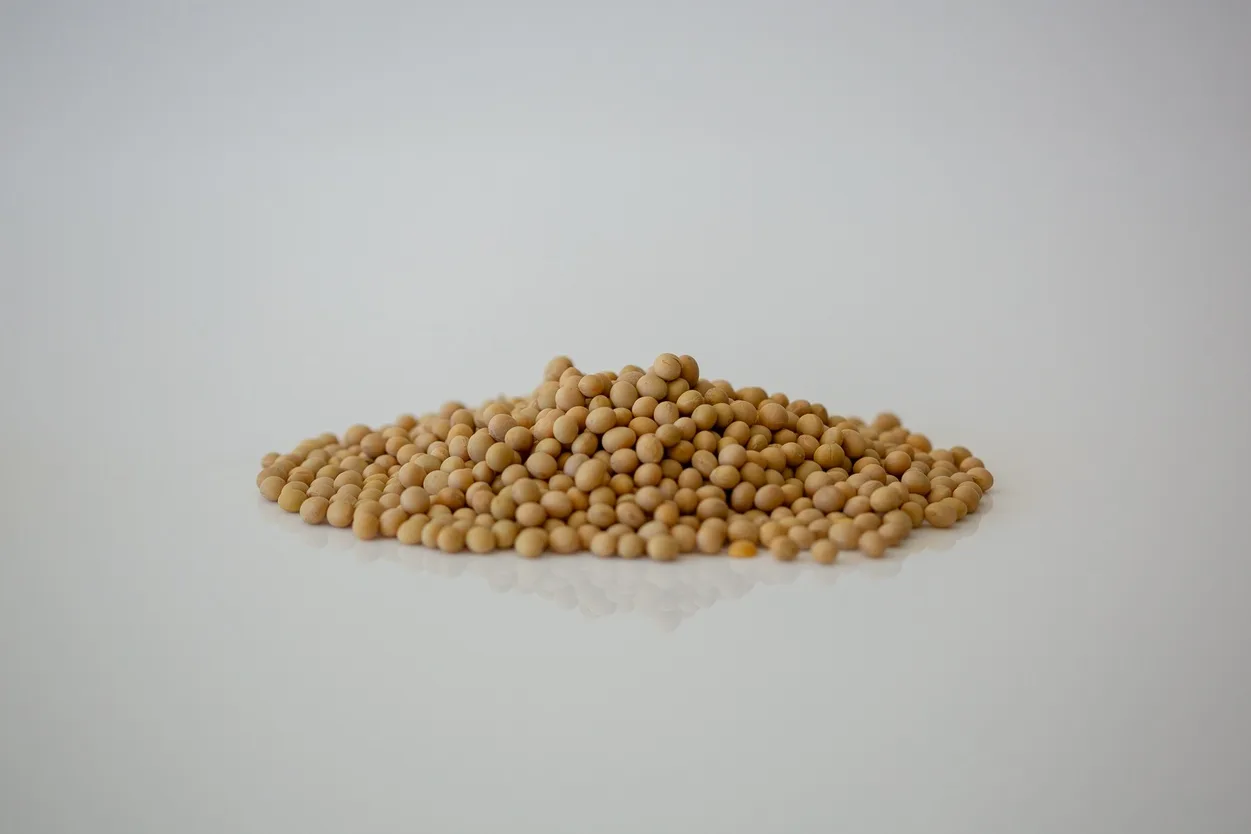
Soybean, also often known simply as soy or soya, may be introduced as soon as baby is ready to start solids, which is generally around 6 months of age.
Soybeans have been a staple crop in East Asia for more than 2,000 years, either picked young and eaten as edamame or left to mature and dry. Over centuries, soybeans became central to food traditions across the region, from Japanese miso to Korean doenjang, to Indonesian tempeh. Soy spread globally through trade and migration, and today soy-based foods are consumed worldwide in both traditional forms and modern innovations such as soy protein powders and plant-based meat alternatives.
How do you serve soy to babies?
Cada bebé se desarrolla a su propio ritmo, y las sugerencias que ofrecemos sobre cómo cortar o preparar determinados alimentos son generalizaciones para una amplia audiencia.
6 months old +:
Offer soy in soft, scoopable forms or as large pieces of finger food for baby to pick up and munch on. For scoopable foods, options include silken tofu, soy yogurt, mashed fruit or vegetable mixed with soy milk, and mashed edamame served on its own or spread on a teething rusk. For large pieces of finger food, offer a long stick of firm or extra-firm tofu or tempeh that is about the size of an adult finger for baby to munch on. You can also serve mashed, fully cooked mature soybeans in soups and stews. Just make sure the soybeans are fully soft and mashable, since soybeans can stay firm even after long cook times. It’s fine to share meals with high-sodium ingredients like soy sauce or miso in moderation. Soy milk may be introduced as an ingredient in solid foods at this stage, but not as a drink until 12 months.
9 months old +:
Offer bite-sized pieces of foods like firm or extra-firm tofu or tempeh, served on their own or as part of a shared meal, or cooked edamame split into halves. Or you can serve tofu or tempeh in long sticks for biting and tearing practice. For scoopable foods, options include silken tofu, soy yogurt, mashed fruit or vegetable mixed with soy milk, and mashed edamame served on its own or spread on a teething rusk. You can also serve fully cooked and flattened mature soybeans in soups and stews. Just make sure the soybeans are fully soft and mashable, since soybeans can stay firm even after long cook times. It’s fine to share meals with high-sodium ingredients like soy sauce or miso in moderation. Soy milk may be introduced as an ingredient in solid foods at this stage, but not as a drink until 12 months.
12 months old +:
Serve pieces of firm tofu, tempeh, or whole, cooked edamame on their own or as part of a shared meal. Or serve scoopable foods like soy yogurt or silken tofu for the child to practice scooping with their hands or an age-appropriate spoon. At this age, it’s also fine to serve soy milk as a drink, if desired, as well as meals that contain high-sodium ingredients like soy sauce or miso.
Videos
Are soybeans a choking hazard for babies?
Yes. Soybeans and edamame are firm, round, and slippery, which are qualities that pose an increased risk of choking, and mature soybeans tend to remain firmer and chewier than other beans, even after long cook times. To reduce the risk, prepare and serve soy in an age-appropriate way as described in the How to Serve section. As always, create a safe eating environment and stay within reach of baby during meals.
Learn the signs of choking and more about choking first aid in our free guides, Infant Rescue and Toddler Rescue.
Is soy a common allergen?
Yes. Soybeans are a common food allergen among infants. However, there is good news: less than 1% of children are allergic to soy, reactions tend to be mild (although severe reactions to soy have been reported), and almost 70% of children outgrow their allergy by age 10.[1] [2] For these reasons, soy is not classified as a Global Priority Allergen by the World Health Organization.[3]
If baby is allergic to soy, avoid soybeans and any products containing soy, such as tofu, tempeh, edamame, miso, natto, soy sauce, tamari, and prepared food that lists soy as an ingredient on the food label. In the United States, soy is designated as a common food allergen and therefore, it will be declared on a food label if soy is present in the ingredients. When shopping, avoid products that contain the phrase “contains soy” on the food label.
Most individuals with soy allergy can tolerate highly refined soy oil and soy lecithin (a common ingredient added to foods) because they contain very little allergenic protein. However, be sure to check with your healthcare provider before offering food with soy oil or soy lecithin to a child with soy allergy.[1]
Although a significant percentage of children with soy allergy may also be sensitized to peanut (and vice versa) on testing, this does not always translate into a clinical allergy.[2] [4] If baby has experienced an allergic reaction to soy, and you have not yet introduced peanut, you may wish to introduce peanut under the supervision of an allergist. However, there is no need to remove peanut from the diet or pursue peanut testing if it is already being eaten without any reaction. Likewise, babies with peanut allergy do not need to eliminate soy if it is already well-tolerated in the diet.
Some babies with cow’s milk allergy are sensitive to soy. In fact, 10 to 14% of young children with cow’s milk allergy also present with allergic reactions to soy.[5] [6] [7] This is more likely to be seen in babies under 6 months of age.[6] For this reason, many pediatricians recommend that babies with a known milk allergy preemptively avoid both cow’s milk and soy for the first 6 months of life, and they may recommend extensively hydrolyzed or elemental infant formula instead of soy formula during this time.
Individuals with Oral Allergy Syndrome (also known as food-pollen allergy syndrome), especially those allergic to birch pollen, may experience symptoms after the ingestion of soy. Oral Allergy Syndrome typically presents with short-lived itching, tingling, or burning in the mouth, and is unlikely to result in a severe reaction. That said, serious reactions to soy in individuals with birch pollen allergy have been reported, most commonly in individuals who are also allergic to peanut.[8] [9]
Soy is a known cause of food protein-induced enterocolitis syndrome, also known as FPIES. FPIES is a delayed allergy to food protein which causes the sudden onset of repetitive vomiting and diarrhea to begin a few hours after ingestion. This is termed acute FPIES. Left untreated, the reaction can result in significant dehydration. When soy is in the diet regularly, FPIES can present as reflux, weight loss, and failure to thrive. This is termed chronic FPIES. Symptoms generally improve with elimination of soy from the baby’s diet. Thankfully, like other forms of soy allergy, FPIES that presents early in life is generally outgrown by the time the child has reached 3 to 5 years of age.[10]
Soybeans and soy-containing products are commonly prepared with other common allergens, such as egg, fish, peanut, and sesame. It is important to introduce common food allergens on their own and rule out an allergy before serving them together.
When introducing soy to baby, start with a simple food that isolates the ingredient, such as cooked and pureed edamame, plain tofu strips, or soy milk mixed into mashed vegetables, and watch for any adverse reactions. As with all common allergens, start by serving a small quantity on its own for the first few servings, and if there is no adverse reaction, gradually increase the quantity over future meals. Once common food allergens are successfully introduced, it is recommended to keep them in the diet regularly (twice weekly, if possible).
Are soybeans healthy for babies?
Yes. Soybeans are rich in protein, fiber, plant-based omega-3 fatty acids, folate, choline, vitamin B6, iron, zinc, and more. Collectively, these nutrients help support muscle function, digestive health, neurodevelopment, metabolic processes, energy, immunity and so much more. Some tofu and fortified products like soy milk and soy yogurt can also provide calcium and vitamin D.
¿Debo preocuparme por los fitoestrógenos en la soya?
No. El edamame, los productos de soya y una amplia variedad de otros alimentos contienen fitoestrógenos, que son compuestos vegetales que pueden comportarse de manera similar al estrógeno en el cuerpo humano.[11] [12] El estrógeno está presente en los humanos de todos los géneros y no se limita únicamente a las mujeres. No hay evidencia que sugiera que es necesario limitar la ingesta de fitoestrógenos para los bebés y niños pequeños, y algunos estudios sugieren que consumir alimentos que contienen fitoestrógenos puede ofrecer propiedades beneficiosas, como disminuir el riesgo de cáncer de mama y promover la salud ósea.[11] [13] [14] Dicho esto, no existe un alimento perfecto y consumir una dieta equilibrada con una amplia variedad de alimentos integrales es clave para la salud.
Can babies drink soy milk?
No. Prior to 12 months, the only liquids an infant should drink are breast milk, infant formula (including soy-based formulas), and if the baby is older than 6 months of age, water in small amounts (about 2-4 ounces / 60-120 milliliters a day) in an open cup. If soy milk is used as an ingredient in solid food, then it is fine to serve before 12 months of age.
If, after the first birthday, you’d like to introduce unsweetened soy milk as a beverage, it’s fine to do so; look for fortified soy milk. See our Milk FAQs to learn more.
Material de referencia
Start solids with confidence
- Guided Introduction to 100+ Foods
- Smart Tools to Simplify Mealtime
- Food Allergen 101
- 300+ Meal Ideas
- First Foods® Database
Start solids with confidence
- Guided Introduction to 100+ Foods
- Smart Tools to Simplify Mealtime
- Food Allergen 101
- 300+ Meal Ideas
- First Foods® Database
Consejos de expertos directo en tu correo
Suscríbete para recibir consejos semanales, recetas y más.