
Pasas
Fruta
- Edad sugerida
- 6 meses
- Rico en hierro
- No
- Alérgeno común
- No
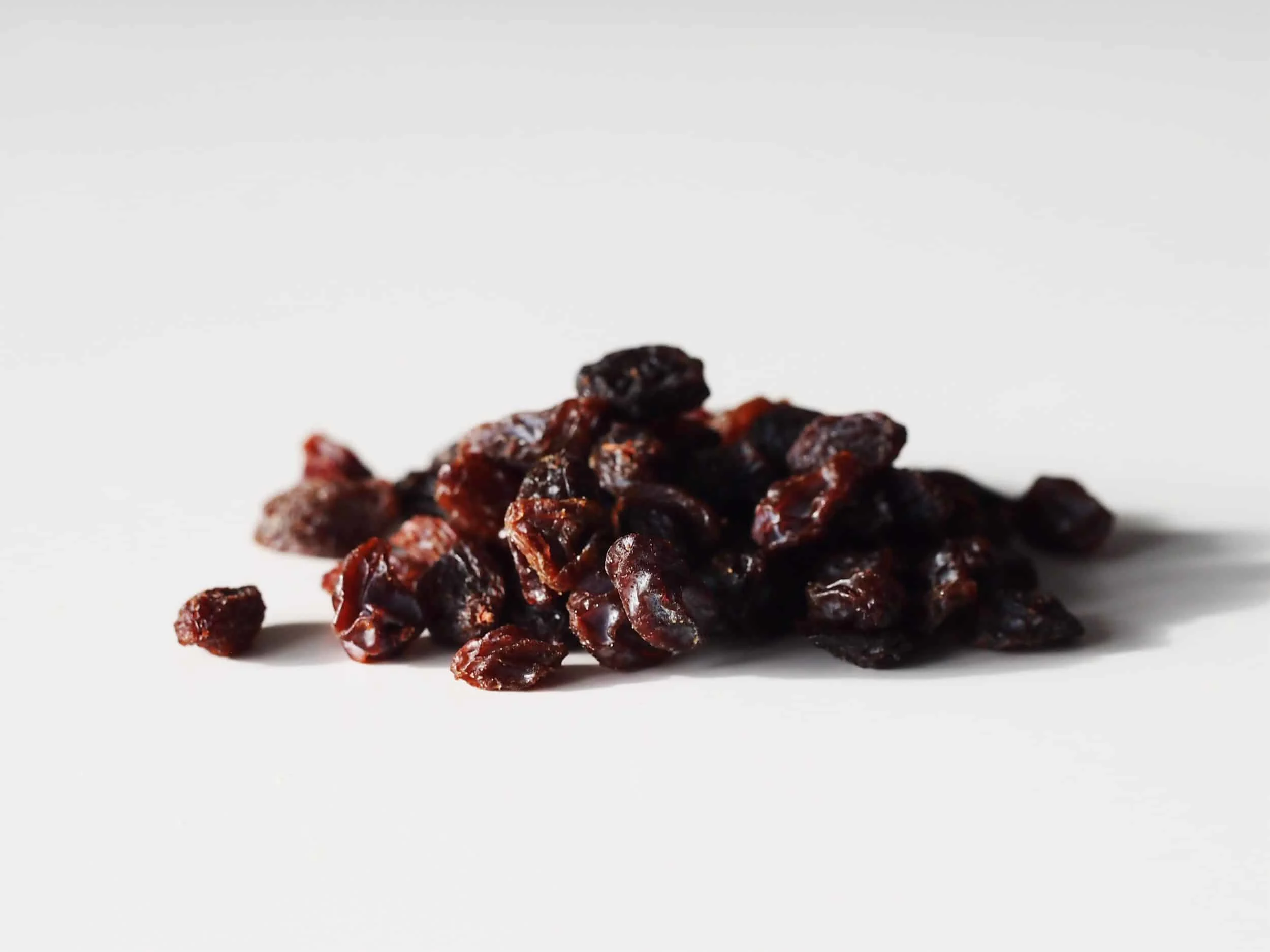
When can babies have raisins?
¡Lo sentimos, esta página aún no está disponible en español! Estamos trabajando tan rápido como podemos para traducir todo nuestro contenido, gracias por tu paciencia y apoyo.
Raisins may be introduced as soon as baby is ready to start solids, which is generally around 6 months of age.
Raisins are grapes dried in the sun or in commercial dehydrators. While many types of grapes grow in warm temperate regions worldwide, most raisins are made from just a handful of varieties of seedless green or red grapes that range in size. Some are quite large and used to make sultanas, another name for raisins. Others are tiny and used to make small raisins like zante currants.
How do you serve raisins to babies?
Cada bebé se desarrolla a su propio ritmo, y las sugerencias que ofrecemos sobre cómo cortar o preparar determinados alimentos son generalizaciones para una amplia audiencia.
6 months old +:
Rehydrate raisins in hot water for 15 minutes. Once the fruit is fully softened, finely chop, mash, or puree. Serve the raisins on their own or mixed into other foods, such as oatmeal or yogurt. Consider starting with a small amount and increasing the serving size as tolerated by baby – raisins have lots of fiber and can cause some uncomfortable gas or blowouts.
12 months old +:
Finely chop raisins that are rehydrated or dried. There’s no need to rehydrate them at this age, though doing so will help reduce choking risk. Serve the finely-chopped pieces on their own or stirred into other scoopable foods, like oatmeal or yogurt.
24 months old +:
Serve rehydrated raisins as desired, either on their own or mixed into a dish. Around the second birthday, many toddlers may have the molars and the chewing skills needed to eat unmodified raisins. To model how to eat whole raisins, start by telling the child: "This is a hard one. Watch me." Show how you move the food to your molars with your tongue. Chew with your mouth open (you can even demonstrate by opening and closing your hands at the same time). Once you have chewed the raisin well, open your mouth to show the toddler how it has been broken down. Say, "I moved it to my big strong teeth to chew it. It needs a lot of chewing." Demonstrate a couple of times before offering a raisin to the toddler. Consider serving only one or two raisins at a time at first to pace the practice.
Are raisins a choking hazard for babies?
Yes. Dried fruit can be firm and difficult to chew, qualities that increase the risk of choking. To reduce the risk, prepare and serve raisins in an age-appropriate way as described in How to Serve. As always, create a safe eating environment and stay within reach of baby during meals.
Learn the signs of choking and more about choking first aid in our free guides, Infant Rescue and Toddler Rescue.
Are raisins a common allergen?
No. Raisins are dried grapes, and grape allergy is rare, but has been reported.[1] Golden raisins are typically quite high in sulfites, which may trigger symptoms that are similar to an allergic reaction in people with sulfite sensitivity, although this is rare in babies.
Are raisins healthy for babies?
Yes. Raisins are rich in carbohydrates and fiber, with a variety of nutrients such as iron, calcium, potassium and vitamin B6. Together, these nutrients work to provide energy, support the digestive system, promote healthy red blood cells, build up bone density, support electrolyte balance and healthy metabolism, and more.
When grapes are dried into raisins, they lose water content, and as a result, the natural fruit sugars become concentrated. Natural sugar in both fresh fruit and dried fruit is not a concern in a balanced diet.
When can babies have baked goods with raisins in them?
Wait until around 18 months of age to offer foods like breads, cakes, cookies, empanadas, with whole raisins cooked into them. While the cooking process often moistens and softens the raisins, they are still difficult to chew and pose an increased risk of choking.
When can babies have yogurt or chocolate covered raisins?
Wait until at least 24 months of age before sharing yogurt or chocolate covered raisins. Around this age, toddlers may have the molars and chewing skills needed to eat these challenging foods. Start by offering one at a time and make sure that the child is safely seated and supervised while eating the snack. Lastly, yogurt or chocolate covered raisins are often high in added sugar, so consider sharing these on occasion rather than regularly with toddlers.
Material de referencia
Bircher, A., Bigliardi, P., Yilmaz, B. (1999). Anaphylaxis resulting from selective sensitization to Americana grapes. Journal of Allergy and Clinical Immunology, 104, 5: 1111-1113.
Start solids with confidence
- Guided Introduction to 100+ Foods
- Smart Tools to Simplify Mealtime
- Food Allergen 101
- 300+ Meal Ideas
- First Foods® Database

Start solids with confidence
- Guided Introduction to 100+ Foods
- Smart Tools to Simplify Mealtime
- Food Allergen 101
- 300+ Meal Ideas
- First Foods® Database
Consejos de expertos directo en tu correo
Suscríbete para recibir consejos semanales, recetas y más.