
Lentejas
Legumbre
- Edad sugerida
- 6 meses
- Rico en hierro
- Sí
- Alérgeno común
- No
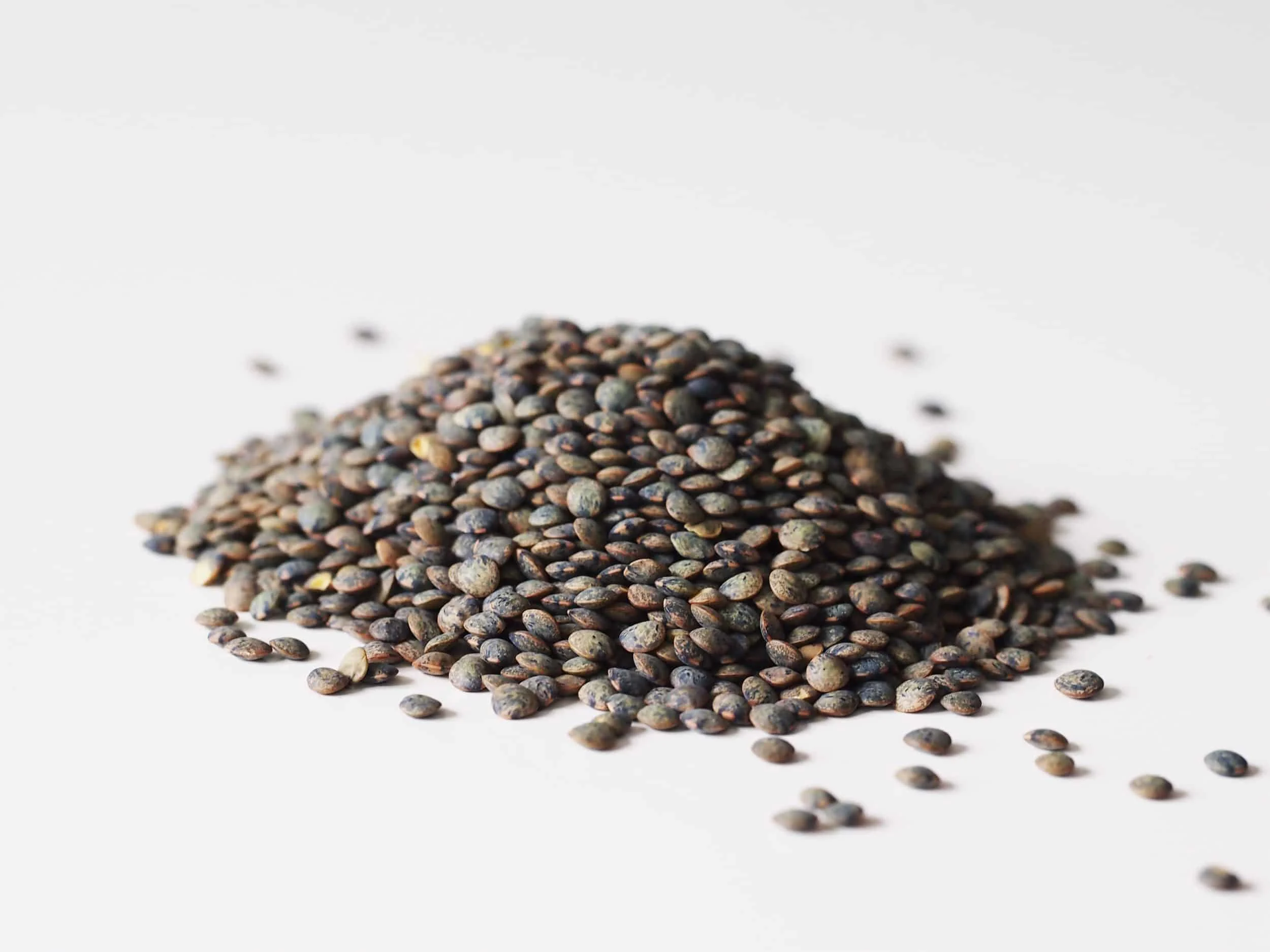
¿Cuándo pueden comer lentejas los bebés?
Puedes introducir las lentejas en cuanto tu bebé esté listo(a) para empezar con los alimentos sólidos, lo que generalmente ocurre alrededor de los 6 meses de edad.
Existen muchos tipos de lentejas, cada uno con un color, un sabor y una textura distintivos. Estas diminutas legumbres se originaron en la zona del mar Mediterráneo y se introdujeron en otras partes del mundo a través de la colonización y el comercio. Hoy en día, las lentejas son una de las legumbres más utilizadas y un alimento básico en África y el sur de Asia, donde las lentejas (llamadas dal) se disfrutan en el desayuno, el almuerzo y la cena.
¿Cómo se sirven las lentejas a los bebés?
Cada bebé se desarrolla a su propio ritmo, y las sugerencias que ofrecemos sobre cómo cortar o preparar determinados alimentos son generalizaciones para una amplia audiencia.
6 meses +:
Sirve platillos de lentejas cocidas que sean suaves y fáciles de recoger con la cuchara, como khichdi, masoor dal o parippu. Otra opción es servir lentejas cocidas mezcladas con alimentos fáciles de recoger con la cuchara, como purés de verduras, papillas de cereales o yogur. Fomenta la autoalimentación dejando que tu bebé las tome con las manos o cargando previamente un cubierto para que tu bebé lo agarre. Esta también es una excelente edad para experimentar usando lentejas para preparar hamburguesas, croquetas y otros alimentos redondos de gran tamaño y textura suave, cuyas formas son más fáciles de tomar y de sostener para los bebés.
9 meses +:
Sirve platillos de lentejas cocidas que sean suaves y fáciles de recoger con la cuchara, como khichdi, masoor dal o parippu. Otra opción es servir lentejas cocidas mezcladas con alimentos fáciles de recoger con la cuchara, como purés de verduras, papillas de cereales o yogur. A esta edad, también puedes servir trozos del tamaño de un bocado de alimentos hechos con lentejas, o incluso montoncitos de lentejas cocidas unidos con un ingrediente aglutinante, pero ten en cuenta que las lentejas individuales pueden ser demasiado pequeñas para que los bebés las tomen con facilidad con su pinza (pincer grasp) en desarrollo.
12 meses +:
Ofrece lentejas en las comidas según prefieras, desde platillos en puré o fáciles de recoger con la cuchara hasta ensaladas y sopas de lentejas. Deja que el (la) niño(a) coma con las manos u ofrécele un cubierto apropiado para su edad para que practique. Solo recuerda que las lentejas cocidas pequeñas y sueltas pueden ser difíciles de mantener en la cuchara sin algún tipo de ingrediente aglutinante, y que usar cubiertos puede ser agotador para quienes empiezan a comer, así que no te sorprendas si el (la) niño(a) alterna entre comer con los dedos y comer con cubiertos. Trata de no presionar demasiado; el uso constante y preciso de los cubiertos llegará a su debido tiempo, a menudo en algún momento después del segundo cumpleaños.
¿Son las lentejas un peligro de atragantamiento para los bebés?
No. Las lentejas bien cocidas presentan un riesgo bajo cuando se preparan de forma segura según la edad y la capacidad de desarrollo del (de la) niño(a), aunque, en teoría, cualquier persona podría atragantarse con cualquier alimento. Para reducir el riesgo, prepara y sirve las lentejas de una manera apropiada para la edad. Como siempre, crea un entorno seguro para comer y mantente al alcance de tu bebé durante las comidas.
Conoce las señales de atragantamiento y más sobre los primeros auxilios para el atragantamiento en nuestras guías gratuitas, Rescate para bebés y Rescate para niños(as) pequeños(as).
¿Son las lentejas un alérgeno común?
No. Las lentejas no se reconocen como un alérgeno común en los Estados Unidos. Sin embargo, la alergia a las lentejas es posible.[1] [2]En España, por ejemplo, la alergia a las lentejas afecta a una parte significativa de la población pediátrica.[3] [4]
Ser alérgico(a) a otras legumbres, en particular a la arveja (chícharo, guisante) y al garbanzo (y, en menor medida, al maní (cacahuate, cacahuete)), puede aumentar el riesgo de alergia a las lentejas.[5] [6] Sin embargo, la reactividad cruzada entre legumbres se observa con más frecuencia en las pruebas de sangre y de piel que en la práctica. Los (las) niños(as) con alergia a las lentejas no necesariamente deben evitar todas las demás legumbres. Las personas con alergia al polen de abedul o con síndrome de alergia oral (Oral Allergy Syndrome) —también llamado síndrome de alergia alimentaria por polen— pueden ser sensibles a las lentejas. [7] El síndrome de alergia oral suele provocar picazón, hormigueo o ardor de corta duración en la boca, y es poco probable que cause una reacción peligrosa. Cocinar las lentejas por completo puede ayudar a minimizar la reacción.
¿Son saludables las lentejas para los bebés?
Sí. Las lentejas son ricas en vitaminas del grupo B, incluido el folato, que ayuda a sostener el sistema nervioso, así como en proteínas que aportan energía a los músculos y en fibra que nutre el microbioma intestinal. De hecho, las lentejas contienen trazas de casi todas las vitaminas y los minerales que los (las) niños(as) necesitan a medida que crecen. Están repletas de hierro y zinc, dos nutrientes esenciales que los bebés a menudo no obtienen en cantidad suficiente a través de su alimentación.[8] Cuando las sirves con alimentos ricos en vitamina C (como bayas, brócoli, coliflor, cítricos o pimentón (pimiento morrón, ají), el cuerpo absorbe más del hierro presente en las lentejas.[9]
¿Es necesario remojar las lentejas antes de cocinarlas?
No, aunque remojar las lentejas secas antes de cocinarlas puede ayudar a reducir significativamente el tiempo de cocción, además de reducir el contenido de lectinas y hacer que el alimento sea más fácil de digerir.[10] [11]
Algunos métodos comunes para remojarlos son:
Remojar durante toda la noche: Usa una proporción de 1lb (454 g) de lentejas secas y 10 tazas (2 ½ litros) de agua y remójalas por 4 horas o más durante la noche. Escúrrelas y enjuágalas antes de cocinarlas.
Remojar en agua caliente: Usa una proporción de 1 lb (454 g) de lentejas secas y 10 tazas (2 ½ litros) de agua, hierve la mezcla durante 2 o 3 minutos. Apaga el fuego y deja remojar un par de horas. Escúrrelas y enjuágalas antes de cocinarlas.
Material de referencia
Martínez San Ireneo, M., Ibáñez, M.D., Sánchez, J.J., Carnés, J., Fernández-Caldas, E. (2008). Clinical features of legume allergy in children from a Mediterranean area. Annals of allergy, asthma & immunology: official publication of the American College of Allergy, Asthma, & Immunology, 101(2), 179–184. DOI:10.1016/s1081-1206(10)60207-4. Retrieved May 24, 2021.
Lyons, S.A., Clausen, M., Knulst, A.C., Ballmer-Weber, B.K., Fernandez-Rivas, M., et al. (2020). Prevalence of Food Sensitization and Food Allergy in Children Across Europe. The journal of allergy and clinical immunology. In practice, 8(8), 2736–2746.e9. DOI:10.1016/j.jaip.2020.04.020.
Pascual, C.Y., Fernandez-Crespo, J., Sanchez-Pastor, S., Padial, M.A., Diaz-Pena, J.M., et al. (1999). Allergy to lentils in Mediterranean pediatric patients. The Journal of allergy and clinical immunology, 103(1 Pt 1), 154–158. DOI:10.1016/s0091-6749(99)70539-7. Retrieved May 24, 2021.
Start solids with confidence
- Guided Introduction to 100+ Foods
- Smart Tools to Simplify Mealtime
- Food Allergen 101
- 300+ Meal Ideas
- First Foods® Database
Start solids with confidence
- Guided Introduction to 100+ Foods
- Smart Tools to Simplify Mealtime
- Food Allergen 101
- 300+ Meal Ideas
- First Foods® Database
Consejos de expertos directo en tu correo
Suscríbete para recibir consejos semanales, recetas y más.