
Kiwi Berry
Fruta
- Edad sugerida
- 6 meses
- Rico en hierro
- No
- Alérgeno común
- No
When can babies have kiwi berries?
Kiwi berry may be introduced as soon as baby is ready to start solids, which is generally around 6 months of age.
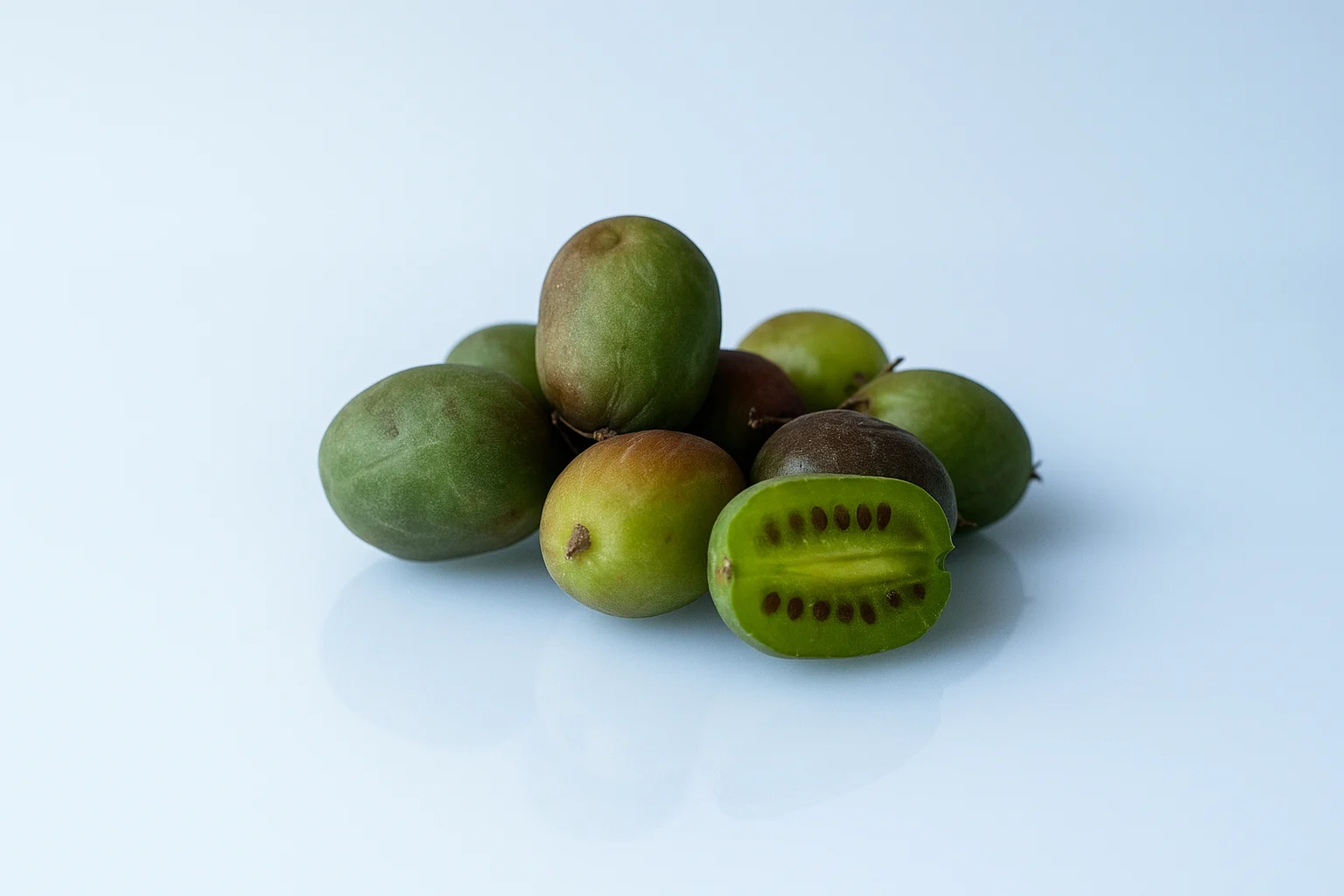
A cousin to the kiwi, kiwi berries originated in the colder regions of Asia including parts of Siberia, China, South Korea, and Japan. The kiwi berry is also known as baby kiwi, cold hardy kiwi, or grape kiwi. Some of these names suggest one of the significant differences from its cousin: kiwi berries are small, roughly the size of a grape. When cut open, they resemble the larger kiwi, with flesh that is often bright green with tiny black seeds, but the peel of the kiwi berry is fuzz-less and tends to be eaten along with the sweet-tart flesh.
How do you serve kiwi berries to babies?
Cada bebé se desarrolla a su propio ritmo, y las sugerencias que ofrecemos sobre cómo cortar o preparar determinados alimentos son generalizaciones para una amplia audiencia.
6 months old +:
Mash soft, ripe kiwi berries and offer the mashed fruit on its own or mixed into a soft, scoopable food like oatmeal or yogurt. Let baby scoop with their hands or hand over a preloaded spoon with some of the mashed fruit on it. It’s fine to remove the pieces of skin from the mashed fruit, or leave them in–just expect some spitting as baby works on managing this challenging texture.
9 months old +:
At this stage, baby’s pincer grasp begins to develop, which enables them to pick up smaller pieces of food. When you see signs of this development, you can offer pieces of soft, ripe kiwi berry that have been quartered lengthwise for baby to pick up independently. You can leave the skin on the berries–just expect some spitting. It is normal for babies and toddlers to spit out fruit and vegetable skins, and does not necessarily indicate dislike for the food.
12 months old +:
Continue to offer soft, ripe quartered kiwi berries for the toddler to pick up independently. If you feel a child is ready, you can offer kiwi berries that have been cut in half (cutting lengthwise is best), knowing there is still some level of choking risk.
24 months old +:
When you feel the child has mature eating skills (moves food around in the mouth well, chews food before swallowing, etc.), consider offering whole kiwi berries in a safe and supervised setting. If you have not yet offered kiwi berries halved lengthwise, you may want to start there first. For whole kiwi berries, we suggest demonstrating chewing with the molars prior to offering the fruit: open your mouth, place the kiwi berry on your teeth and explain “I am using my teeth to crush this fruit.” You may want to consider holding a kiwi berry for your child to practice biting—hold at the corner of the mouth and allow your child to close their teeth on the kiwi berry. Coach your child to push hard to break through the fruit’s skin. You can make a big deal about the fun squish and squirt that happens when they chew through it! Until you are confident that the child will chew and swallow without coaching, do not offer whole kiwi berries unless the child is sitting at the table and supervised.
Videos
Is kiwi berry a choking hazard for babies?
Yes. Kiwi berries are small, round, and can be firm, which are qualities that pose an increased risk of choking. To reduce the risk, prepare and serve kiwi berries in an age-appropriate way as described in the How to Serve section. As always, make sure you create a safe eating environment and stay within an arm’s reach of baby during meals.
Learn the signs of choking and more about choking first aid in our free guides, Infant Rescue and Toddler Rescue.
Is kiwi berry a common allergen?
No. Kiwi berry is not considered to be a common food allergen, although allergies to kiwi, a very closely related fruit, are being increasingly reported, with reactions ranging from mild to severe.[1] [2] Additionally, some individuals may be sensitive to actinidin, an enzyme that is naturally present in kiwi and kiwi berry, and can also be used as a meat tenderizer in other foods.[3] [4]If a child is allergic to kiwi, be sure to read food labels carefully and look out for kiwi berry as well.
Individuals with latex fruit syndrome (including avocado, banana, chestnut) may be allergic to kiwi as well. Kiwi has multiple protein allergens that have been identified, many of which cross-react with other food allergens, such as peanut, tree nuts, and stone fruits. However, it is rare for an individual to be sensitized to all the possible kiwi allergens, and most people with kiwi allergies can safely consume these other foods. Individuals with Oral Allergy Syndrome due to birch or beech pollen allergy (also known as pollen food allergy) may also be sensitive to kiwi and possibly by association, kiwi berry.[5] [6] [7] [2] [8] Oral Allergy Syndrome typically results in short-lived itching, tingling, or burning in the mouth and is unlikely to result in a dangerous reaction. Peeling and/or cooking kiwi berry and kiwi can help minimize the reaction.[8] [9]
Acidic foods like kiwi berry are often mistaken for allergens as they can cause a harmless rash around the mouth as baby eats and can cause or worsen diaper rashes.[10] [11] Barrier ointments can be applied to the face before mealtime to help protect the skin from acidic foods.
Are kiwi berries healthy for babies?
Yes. Kiwi berry has a potent array of 20 vitamins, minerals, and dozens of phytonutrients with antioxidant benefits.[12] [13] For example, the tiny fruit is considered to be the one of the most concentrated food sources of vitamin C, an important nutrient that supports skin and immune health, as well as improves absorption of plant-based iron.[12] [13] Kiwi berry also contains most B vitamins, particularly vitamin B6 for cell energy and an unusually high concentration of a lesser-known B-vitamin called myo-inositol, which is important for cell structure and function.[12]
Are kiwi berries the same as kiwis?
They’re closely related, but not the same fruit. Kiwi berries are a different species with smooth, thin skin, while kiwis are larger and have skin that is thicker and often fuzzy. Both fruits are sweet, tart, and contain similar vitamins and minerals.
Can babies eat the skin of kiwi berries?
Yes. Kiwi berry skin is thin and edible, just wash the fruit before serving.
Material de referencia
Start solids with confidence
- Guided Introduction to 100+ Foods
- Smart Tools to Simplify Mealtime
- Food Allergen 101
- 300+ Meal Ideas
- First Foods® Database
Start solids with confidence
- Guided Introduction to 100+ Foods
- Smart Tools to Simplify Mealtime
- Food Allergen 101
- 300+ Meal Ideas
- First Foods® Database
Consejos de expertos directo en tu correo
Suscríbete para recibir consejos semanales, recetas y más.