
Grape Leaves
Verdura
- Edad sugerida
- 6 meses
- Rico en hierro
- No
- Alérgeno común
- No
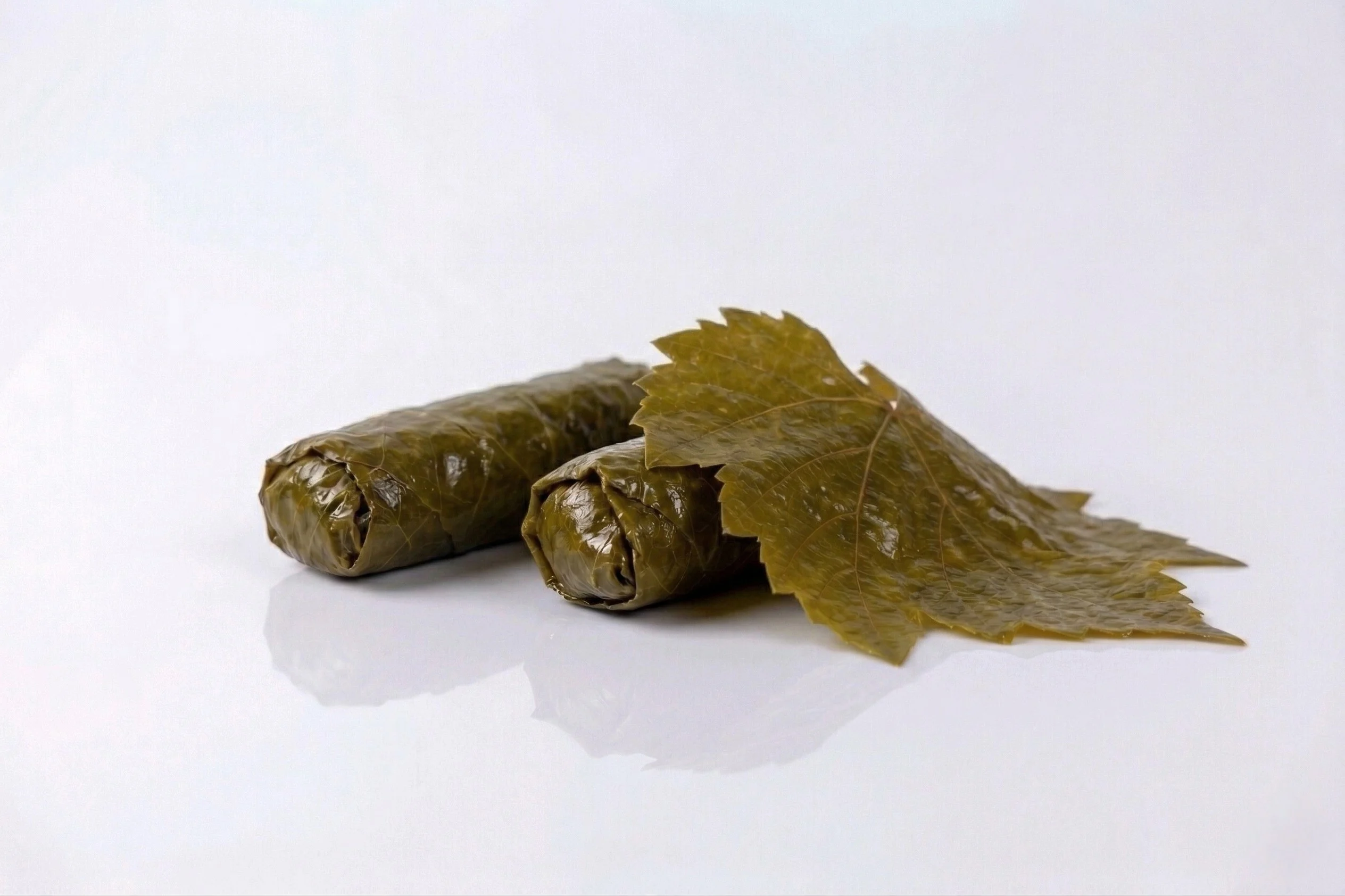
When can babies have grape leaves?
Grape leaves may be introduced as soon as baby is ready to start solids, which is generally around 6 months of age.
The grape vine has fed human communities for millennia, not only through its fruit and juices, but through its leaves, which have long been eaten across the Mediterranean, Southwest Asia, the Caucasus, and beyond. Preserved and fresh grape leaves are used to wrap spiced rice, grains, and meat in dishes known by many names: dolma or dolmades in Turkish and Greek, warak dawali or warak enab in Arabic, tolma in Armenian, dolmeh in Persian, and sarma in some parts of the Balkans.
How do you serve grape leaves to babies?
Cada bebé se desarrolla a su propio ritmo, y las sugerencias que ofrecemos sobre cómo cortar o preparar determinados alimentos son generalizaciones para una amplia audiencia.
6 months old +:
Cook grape leaves until completely soft—either by simmering in water or broth, or by steaming—then finely chop and stir into soft, scoopable foods like rice porridge, soft lentils, or mashed vegetables. You can also blend cooked grape leaves into a sauce or dip; combined with yogurt, olive oil, and lemon, they make a flavorful spread that can be served on a soft strip of bread or mixed into porridge. If the family is serving stuffed grape leaves, finely chop the soft, cooked leaf and mix it into a portion of the soft, mashable filling for baby. Avoid or remove any choking hazards in the filling like dried fruit, pine nuts, or large, firm chunks of ground beef.
9 months old +:
Serve chopped cooked grape leaves mixed into scoopable foods, or served on their own for the child to pick up with their developing pincer grasp. If your family eats stuffed grape leaves, you can offer them deconstructed for baby: mash and chop the leaves into the filling and serve as a scoopable food, as long as any choking hazards in the filling have been modified or removed.
12 months old +:
By this age, as long as the child has had practice with chewable foods, is chewing their food well, and following directions, they can likely manage a whole stuffed grape leaf, as long as there are no choking hazards like pine nuts or dried fruit in it. The outer leaf should be fully tender, not leathery or chewy, and the filling should be moist and soft throughout. Encourage toddlers to take bites from the rolled leaf rather than putting the whole thing in their mouth at once. Know that it’s normal for the child to take the leaf apart and pick out bites of the filling rather than keep the food whole.
Videos
Are grape leaves a choking hazard for babies?
No. Cooked grape leaves present a low choking risk when safely prepared for a child's age and developmental ability, though, in theory, an individual could choke on any food. To reduce the risk, prepare and serve grape leaves in an age-appropriate way as described in How to Serve. As always, create a safe eating environment and stay within reach of baby during meals.
Learn the signs of choking and more about choking first aid in our free guides, Infant Rescue and Toddler Rescue.
Is grape leaf a common allergen?
No. Grape leaves are not a common allergen. While rare, allergies to grapes, grape byproducts, and grapevine pollen have been reported.[1] [2] [3] [4]Individuals with known allergy to lipid transfer proteins (LTP), particularly those allergic to mugwort pollen, may also be sensitive to grape leaves.
Are grape leaves healthy for babies?
Yes. Grape leaves contain plenty of important nutrients for a developing child. They offer lots of vitamin A and carotenoids like alpha and beta carotene, as well as lutein and zeaxanthin. They are also a good source of plant-sourced omega three fatty acids and vitamin K and offer a bit of fiber, calcium, folate, and vitamin B6.[5] Plus grape leaves are packed with antioxidants and polyphenols and are thought to be even more concentrated in these phytochemicals than grapes themselves.[6] [7] All of these nutrients work to support vision, immunity, neurodevelopment, digestive health, bodily resilience, and much more.
While canned grape leaves can be high in salt, grape leaves are typically used in small amounts in dishes and are fine to offer on occasion to babies in an age-appropriate way.
Can babies eat jarred or canned grape leaves?
Yes. Babies can have jarred or canned grape leaves when served in an age-appropriate way. Note that preserved grape leaves are packaged in a brine, which is high in sodium. If the family cooks with grape leaves regularly, consider rinsing the leaves, simmering them in fresh water, or cooking with fresh grape leaves to reduce baby’s sodium intake, although a taste of jarred or canned varieties for baby is perfectly fine on occasion.
Can babies eat stuffed grape leaves (dolma)?
Yes, when served in an age-appropriate way. For babies 6 months and up, the filling can be removed from the leaf and served on its own as a scoopable food, as long as the ingredients are appropriate for baby's age. Wait to serve a whole stuffed grape leaf until the child has practice with chewable foods and mixed textures, typically closer to 12 months.
Material de referencia
Start solids with confidence
- Guided Introduction to 100+ Foods
- Smart Tools to Simplify Mealtime
- Food Allergen 101
- 300+ Meal Ideas
- First Foods® Database

Start solids with confidence
- Guided Introduction to 100+ Foods
- Smart Tools to Simplify Mealtime
- Food Allergen 101
- 300+ Meal Ideas
- First Foods® Database
Consejos de expertos directo en tu correo
Suscríbete para recibir consejos semanales, recetas y más.