
Empanada
Comida preparada
- Edad sugerida
- 6 meses
- Rico en hierro
- No
- Alérgeno común
- Sí
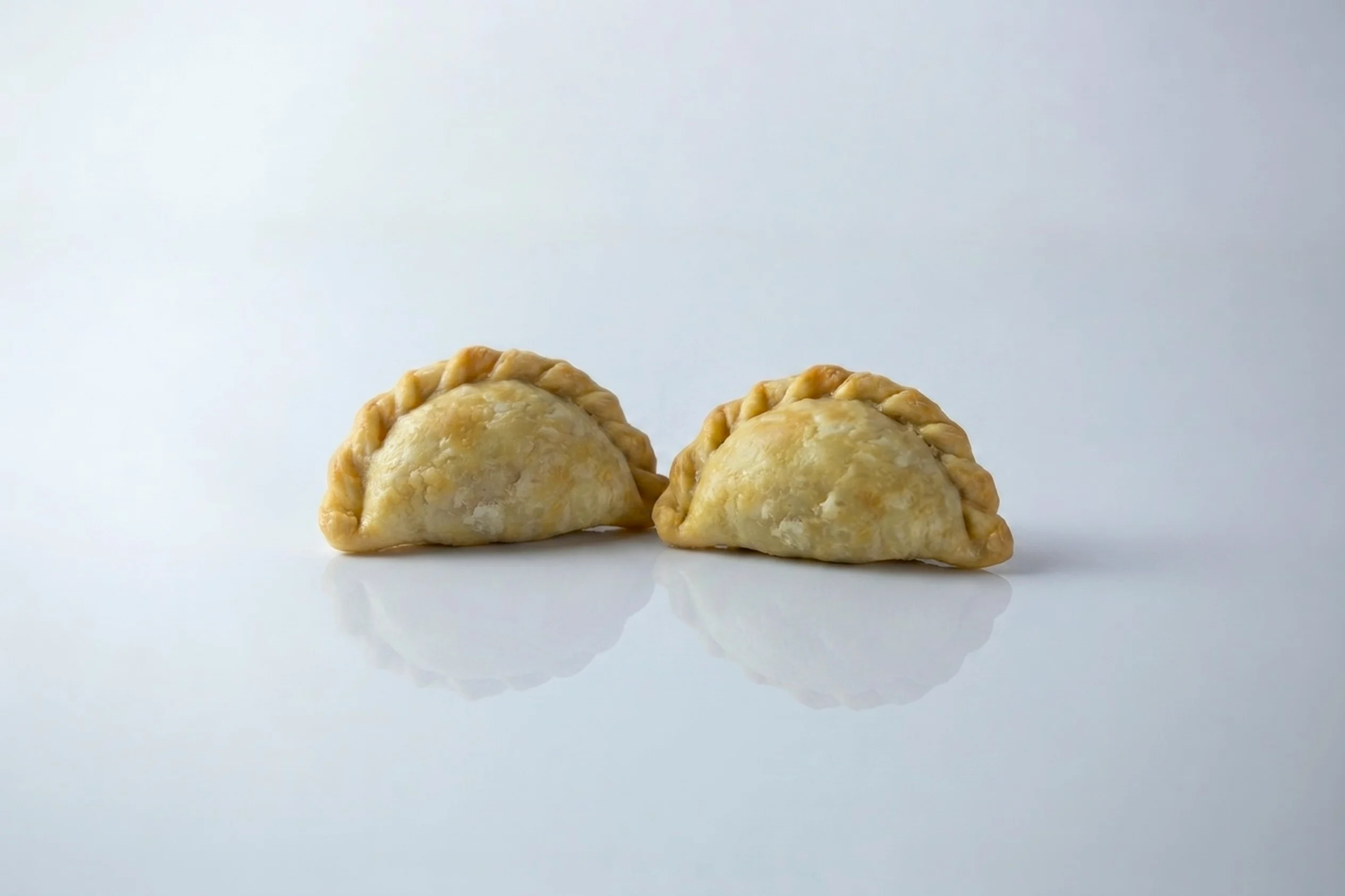
When can babies have empanadas?
Empanadas may be introduced as soon as baby is ready to start solids, which is generally around 6 months of age, as long as any cheese used is pasteurized and any choking hazards have been modified for a child’s age and eating ability. Globs of cheese, cubes of meat, firm pieces of vegetable, corn kernels, and raisins are some of the filling ingredients that can increase choking risk, so read on to learn how to safely prepare empanadas for babies by age.
Empanadas are filled pastries found across Central and South America, Spain, the Philippines, and beyond. The name comes from the Spanish word empanar, meaning to bread or coat. At their most simple, they are a piece of dough folded around a filling and either baked or fried. Fillings vary widely by country, region, and family: seasoned ground beef with olive and hard-boiled egg in Argentina; chicken with potatoes and ají amarillo in Peru; sweet corn and cheese in Colombia; tuna with sofrito in Spain, and many more.
How do you serve empanadas to babies?
Cada bebé se desarrolla a su propio ritmo, y las sugerencias que ofrecemos sobre cómo cortar o preparar determinados alimentos son generalizaciones para una amplia audiencia.
6 months old +:
Offer a whole, large empanada with a soft, mashable filling for baby to explore and munch on. Make sure the empanada is large enough that baby can’t put the whole thing in their mouth at once. Serving it dipped in a bit of sauce can make the food easier for baby to manage in the mouth. Young babies may not have the biting skill needed to pierce the outside of the empanada, and that’s okay. If you want baby to taste the inside, offer just the soft filling mixed into another scoopable food for baby to try. If the empanada’s filling contains ingredients that are firm or challenging to chew, qualities that can increase the choking risk, you can finely chop or thoroughly mash them before mixing into a scoopable food.
9 months old +:
Serve a soft empanada cut into bite-sized pieces for baby to pick up with their developing pincer grasp, or continue to offer whole empanadas as long as they are large and soft. Baby may be able to tear open or take bites of the outside of the empanada more easily at this age, and that’s okay. It’s normal to see baby spit out pieces of the empanada as they practice managing the challenging textures. If the empanada’s filling contains choking hazards like chunks of meat, large globs of cheese, corn kernels, or raisins, you can finely chop or thoroughly mash them before mixing into a scoopable food.
24 months old +:
Serve whole empanadas for the child to practice tearing and biting. The resistive texture of the dough makes for great practice with these skills, and at this age, you may see the child better able to take bites, even from empanadas with a firmer exterior. At this age, toddlers may be ready to try empanadas with fillings like chunks of meat, cheese, or vegetables, dried fruit like raisins, or olives. The key is to consider the child’s ability to chew, familiarity with managing different textured food in the mouth, and ability to follow directions. Some toddlers may be ready around the 2nd birthday, while others will need more time to practice. If the toddler has had plenty of practice chewing the foods inside an empanada, and they are able to sit calmly and follow directions, offer the whole empanada and explain how there are hard-to-chew foods inside. Eat an empanada alongside the child to model how to use your teeth to break down the food, then let the toddler try.
Videos
Are empanadas a choking hazard for babies?
Yes. The outside of an empanada can be firm or dry, and it may include fillings that are firm, sticky, or challenging to chew, qualities that increase the risk of choking. To reduce the risk, prepare and serve empanadas in an age-appropriate way as described in How to Serve. As always, create a safe eating environment and stay within reach of baby during meals.
Learn the signs of choking and more about choking first aid in our free guides, Infant Rescue and Toddler Rescue.
Do empanadas contain common allergens?
Yes. Empanadas are commonly made with dairy (cheese and butter) and wheat, and may contain other common allergens such as shellfish, egg, tree nuts, or soy. Read the ingredients carefully when buying pre-made empanadas to check for common allergens.
It is important to introduce common food allergens individually and rule out a food allergy before offering baby prepared foods that contain multiple potential food allergens. This way, when you are ready to share an empanada, you will be confident that baby has already safely eaten any common food allergens in it. This approach can also help you quickly identify potential culprits in the unlikely event that baby experiences an allergic reaction after eating an empanada.
Are empanadas healthy for babies?
Yes. Empanadas can be made with a variety of ingredients, but most include wheat flour, which offers essential nutrients for babies, including carbohydrates, B vitamins, and more. Empanada fillings can also offer key nutrients, such as iron from ingredients like beans and meat, fiber from vegetables, and calcium from cheese.
Empanadas can be high in sodium, and sweet empanadas can contain lots of added sugar. Delaying the introduction of highly salty or sweet foods can help establish a foundation for a varied and nutritious diet and can help ensure that baby has motivation and room in the belly to try a wide variety of foods.[1] [2] [3]
Can babies have restaurant or store-bought empanadas?
Yes, as long as they are shared in an age-appropriate way to reduce choking risk. While empanadas from restaurants or stores can be higher in sodium than homemade ones, it’s fine for baby to share tastes of these on occasion.
Material de referencia
Start solids with confidence
- Guided Introduction to 100+ Foods
- Smart Tools to Simplify Mealtime
- Food Allergen 101
- 300+ Meal Ideas
- First Foods® Database
Start solids with confidence
- Guided Introduction to 100+ Foods
- Smart Tools to Simplify Mealtime
- Food Allergen 101
- 300+ Meal Ideas
- First Foods® Database
Consejos de expertos directo en tu correo
Suscríbete para recibir consejos semanales, recetas y más.